
Robotic Welding for Production: Speed, Consistency & Cost
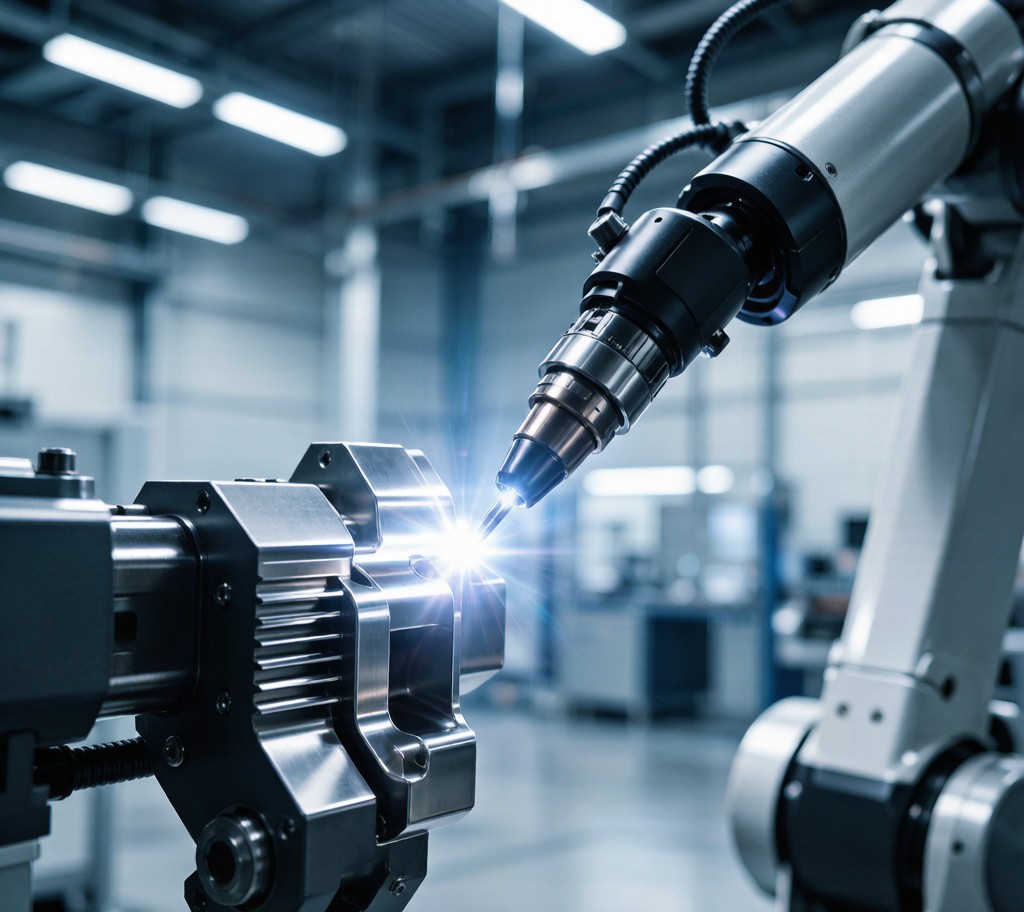
When a welded part moves from dozens to thousands, the economics flip hard in favor of automation. Our robotic welding cells lay down consistent, repeatable beads at a pace no manual welder can match – and they do it shift after shift without fatigue-induced defects. This guide explains when robotic welding pays off, how we set up a cell, and what it takes to qualify a production weld.

When Robotic Welding Pays Off
Robotics earns its keep above roughly 100-500 repeated parts of the same geometry. Below that, manual or low-volume manufacturing is cheaper because there is no fixture and program to amortize. Volume, joint repeatability, and labor cost are the three levers.
Cell Setup: Fixture, Torch, and Program
A robotic cell is only as good as its fixture. We design locators that present the joint at the ideal angle and hold heat-induced movement. The robot path – weave, travel speed, wire feed – is programmed once and replayed exactly. Integration with CNC bending and laser cutting feeds consistent blanks into the cell.
Consistency and Quality
| Metric | Manual | Robotic |
|---|---|---|
| Repeatability | Operator-dependent | Near-identical |
| Throughput | Limited | High, 24/7 |
| Defect drift | Rises with fatigue | Stable |
| Setup cost | Low | Higher (fixture/program) |
Robotic welding is the backbone of our high-volume welded assemblies.
Process Options in a Robot Cell
Most cells run MIG (or pulse MIG for aluminum); TIG can be robotized for thin, cosmetic work. For mixed programs we may combine manual TIG welding on critical seams with robotic MIG on fill – the same hybrid approach used across our floor.
Cost and Lead Time
The trade is clear: higher upfront fixture/program cost, lower per-part cost and shorter cycle time at scale. We model the break-even in the quote so you see exactly where automation becomes cheaper. Our contract manufacturing team manages the ramp from prototype to automated production.
Quality Systems and Traceability
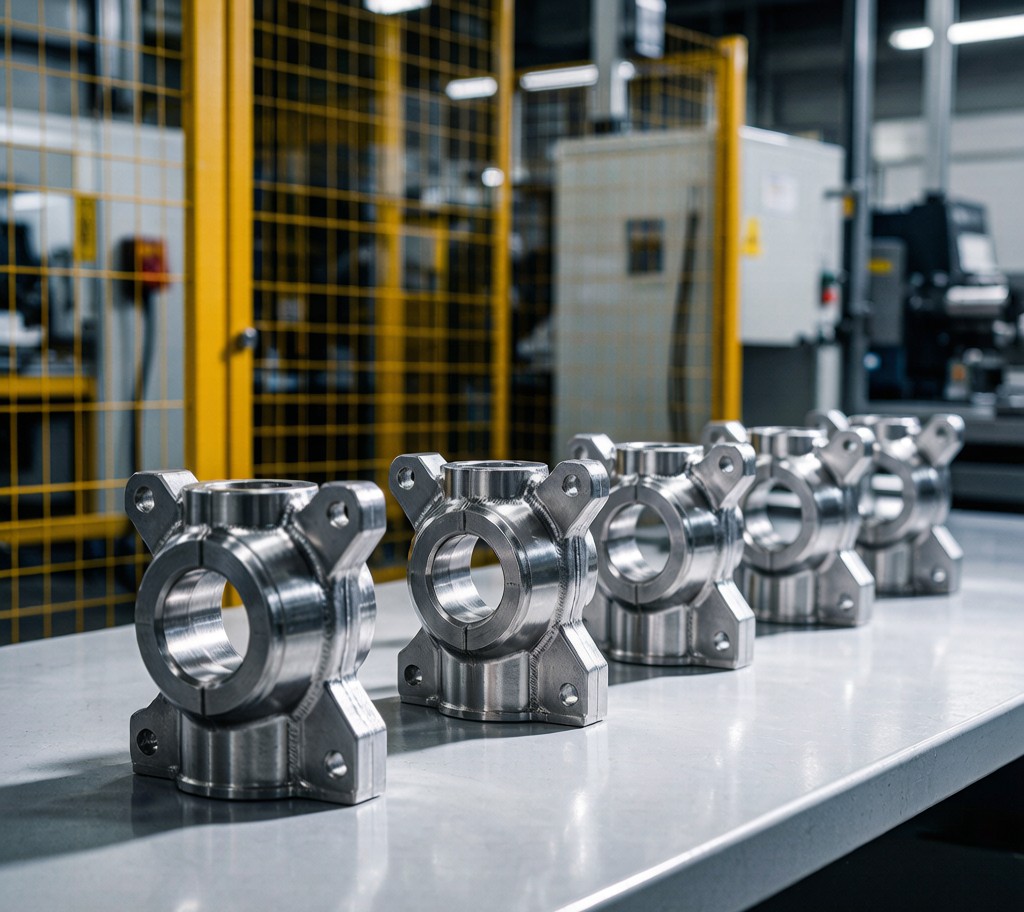
Production welds get first-article validation, in-process checks, and batch records. For regulated work, our aerospace machining and medical device manufacturing lines add full material and process traceability.
Frequently Asked Questions
What volume makes robotic welding worth it?
Roughly 100-500 identical parts is the usual break-even, depending on fixture complexity and labor cost. Below that, manual welding is usually cheaper.
Can robots weld aluminum?
Yes – pulse MIG and, less commonly, robotic TIG handle aluminum well, provided blanks are consistent and fixturing controls distortion.
Is robotic welding lower quality than manual?
Not at all. It is more consistent: the same path every time means fewer fatigue-driven defects, which is why it is favored for production volumes.
Ready to Start Your Project?
Get a build-ready quote on your custom metal parts within 24 hours. Share your drawing and our engineers will respond with process, lead time, and pricing.

