
Automotive metal parts span the structural, powertrain, and interior systems that make a vehicle safe and functional—brackets, rails, shafts, housings, and stamped body components. As vehicles electrify and lightweight, the demand for precision stampings and machined parts that meet stringent automotive standards keeps rising. This guide explains how automotive metal parts are made, which processes and coatings fit which systems, and how OEMs and Tier-1 suppliers should choose a manufacturing partner.

The Automotive Metal Parts Landscape
A single vehicle contains thousands of metal parts, from millimeter brackets to meter-long rails. Most are produced by stamping, machining, or a combination, then finished and assembled. Sourcing these from a supplier with sheet metal laser cutting and forming under one roof reduces the vendor count and the coordination risk that causes line stoppages.
Stamping and Forming
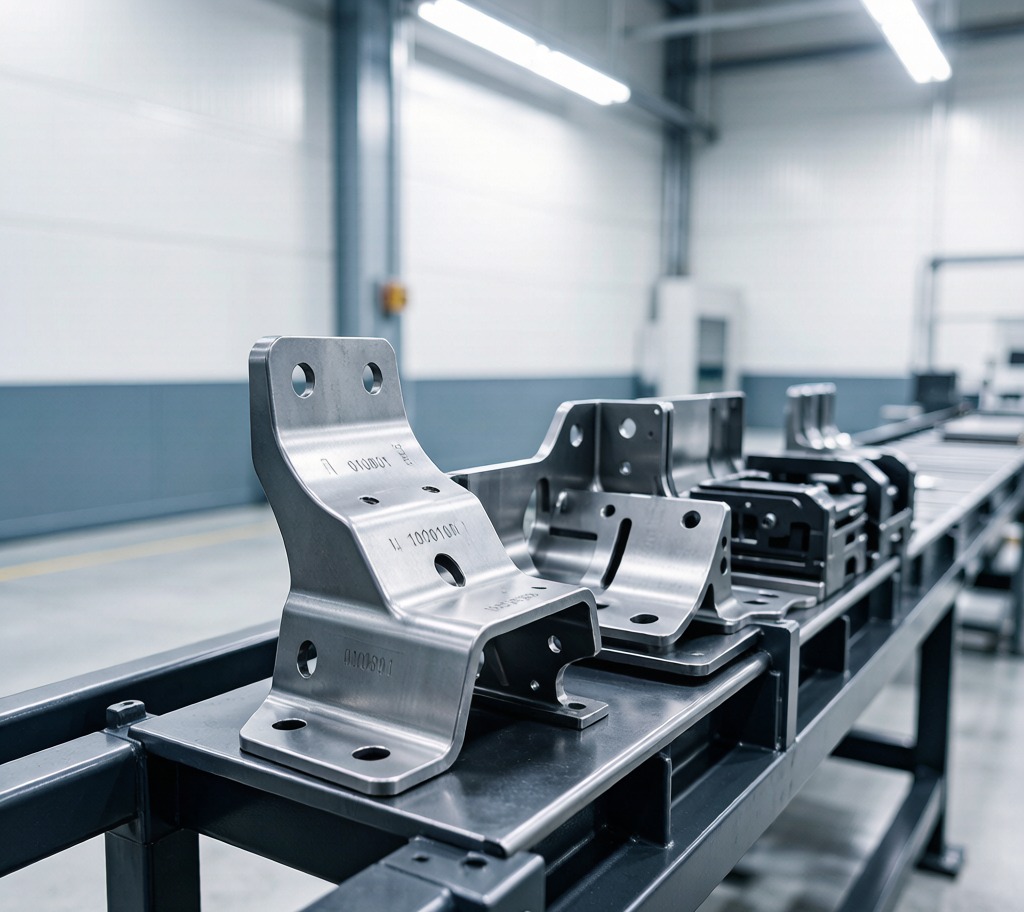
High-volume body and chassis parts are stamped from coils on progressive dies, while lower-volume or larger parts are laser-cut and bent. CNC bending forms brackets and reinforcement plates to tight angles. Stamping excels at repeatability across millions of parts, which is why it anchors automotive supply. Our sheet metal fabrication guide covers the broader process chain.
Machining and Welding
Shafts, hubs, and precision housings are machined, while sub-assemblies are welded. Robotic welding delivers the consistency needed for structural joints, and MIG welding handles heavier sections. Robotic cells also document every weld parameter for traceability—essential in automotive quality systems where a single defective batch can halt a line.
Materials and Coatings
Advanced high-strength steel, aluminum, and stainless each serve different systems: steel for structure, aluminum for weight savings, stainless for exhaust and corrosion zones. Protection comes from powder coating and galvanizing, which prevent rust through years of service. You can compare finishing options in our metal surface treatment article.
Quality and Certification
Automotive suppliers are expected to hold IATF 16949 alongside ISO 9001, with PPAP documentation, SPC on critical features, and full material traceability. A capable partner runs in-process inspection and supplies first-article and batch reports. The discipline parallels the tolerance control described in our steel fabrication services guide, scaled to automotive rigor.
How to Source Automotive Parts
Share the part drawing, annual volume, the systems it serves, and the required certifications. Confirm welding, coating, and assembly scope, and ask about PPAP and traceability up front. A supplier that offers die design, stamping, machining, welding, and finishing internally is easier to audit and faster to scale than a broker stitching vendors together.
Electrification and Lightweighting
The shift to electric vehicles is reshaping automotive metal parts. Battery trays, busbars, and cooling plates demand large aluminum stampings and extrusions, while electric drivetrains replace many hydraulic components with machined housings and shafts. Lightweighting is no longer optional—every kilogram saved extends range—so designers substitute aluminum and advanced high-strength steel for heavier grades wherever safety allows. This raises the bar on joining: robotic welding and adhesive bonding must hold dissimilar metals without corrosion, and coatings must survive new thermal and chemical environments. Suppliers are expected to support rapid design changes and tighter traceability as models iterate faster than ever. A partner with stamping, machining, welding, and finishing under one roof can absorb these changes without re-qualifying multiple vendors, which is a real advantage when launch schedules slip. Our sheet metal fabrication capabilities are built for exactly this mix of volume, variation, and documentation that modern automotive programs require.
Choosing an automotive supplier is as much about systems as about machines. A credible partner welcomes audits, publishes its certifications, and can show traceability from raw coil to finished part. Ask about contingency—second sources for critical dies, buffer stock for long-lead items, and a quality team empowered to stop a line on a deviation. Communication cadence matters too: regular PPAP updates and fast deviation response prevent small issues from becoming recalls. For global programs, export documentation and multilingual engineering support reduce friction across time zones. The lowest unit price rarely wins when a line stoppage costs more per hour than the part savings across a year, so weigh total program risk alongside the quote.
Typical automotive metal parts we support include seat-system brackets and rails, body-in-white reinforcements, chassis control arms, exhaust and heat-shield stampings, brake and transmission components, and battery enclosure structures for EVs. Each carries its own material and tolerance story—structural parts favor high-strength steel, thermal and lightweight parts favor aluminum, and corrosion zones call for stainless or protective coatings. Defining the system and duty up front lets the supplier propose the right process mix of stamping, machining, and welding rather than a one-size approach that costs more or performs worse.
Frequently Asked Questions
Which certification matters most for automotive?
IATF 16949 is the automotive quality benchmark; ISO 9001 alone is usually insufficient for Tier-1 work.
Can one supplier handle stamping and machining?
Yes—vertically integrated shops manage dies, stamping, CNC, welding, and finishing under one quality system.
How are high volumes kept consistent?
Progressive tooling plus SPC on critical dimensions keeps every part within tolerance across the run.
What finishes resist road salt and corrosion?
Galvanizing and powder coating both perform well; the choice depends on appearance and film thickness needs.
Ready to Start Your Project?
Get a build-ready quote on your custom metal parts within 24 hours. Share your drawing and our engineers will respond with process, lead time, and pricing.

