
Metal brushing lays a uniform directional grain on a surface that hides fingerprints, adds grip, and gives products a considered, premium look. It is not the same as polishing, and the two are often confused. This article explains what brushing actually does, how grain direction and abrasive choice change the result, and how to spec it so a panel reads consistently across a batch. We link brushing to the polishing and deburring steps that often surround it.
What Brushing Does to the Surface
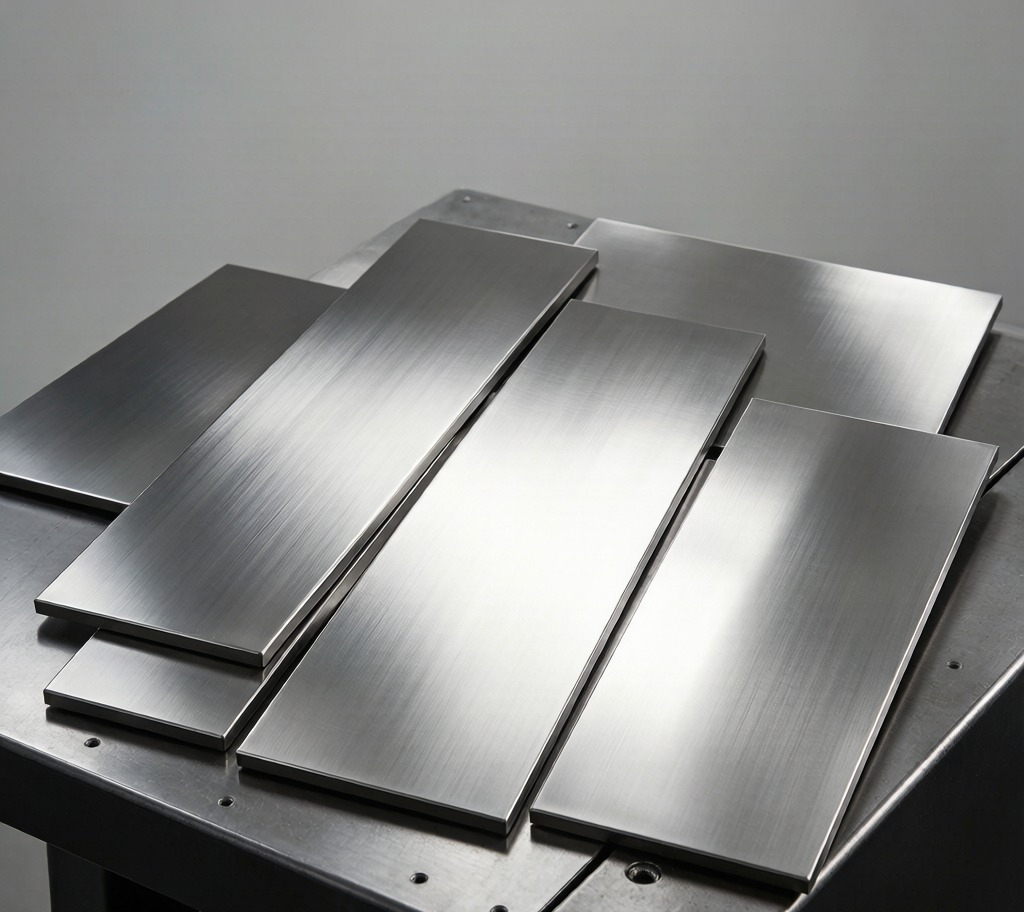
Brushing abrades the surface with a moving belt or wheel to leave fine parallel scratches, called a grain. The scratches scatter light into a soft satin that masks handling marks far better than a mirror finish, which shows every fingerprint.
It also breaks sharp edges slightly, so a brushed part feels safer to handle. We usually deburr first so the grain is even and not interrupted by burrs.
Grain Direction and Number
Grain is specified by abrasive grade, often as a ‘grit’ like 180 or 320, and by direction, lengthwise or cross, relative to the part. Direction must be called out or two panels on the same product will look different. Long-grain reads as elegant; fine cross-grain reads as technical.
For flat plates we run a through-feed belt; for contoured parts a surface grinding or flap-wheel pass follows the shape so the grain stays continuous.
Brushing vs Polishing
Polishing removes material to close the scratches into a reflective surface; brushing leaves a controlled scratch pattern on purpose. You pick polishing for mirrors and hygiene, brushing for satin and grip. They are sequential, not interchangeable.
Our polishing services page explains when to go brighter; brushing is the cheaper daily finish for most enclosures.
Masking and Two-Tone Looks
Mask areas you do not want grained, then brush the rest, to get a two-tone face with a bright logo on a satin field. Masking must be tight or the edge will feather. This is common on control panels and trim.
After brushing, keep the part clean; a final passivation on stainless or a light oil on steel stops the fresh grain from staining in storage.
Prep and Compatibility
Brushing follows forming and cutting, so laser scale or weld tint should be removed first by sandblasting or pickling. Brushing over scale leaves a patchy grain that cannot be fixed without re-doing the surface.
On aluminum, brush then anodize if you want the grain locked under a clear coat; the grain shows through and stays protected.
Specifying for a Consistent Batch
Give the grit, direction, and which faces are brushed, plus any masked zones. Samples beat words: send one approved panel and we match it across the run. Consistency comes from a fixed belt, pressure, and feed, not from hand work.
Brush is one step in a full metal surface treatment plan that may also include cleaning, passivation, and coating.
Quality Control and Inspection
Every metal brushing services order begins with a first-article inspection. We measure the critical dimensions on a CMM or dedicated gauge and compare them to your drawing before any volume runs start. Only after you approve the report do we release production, so the first batch is already at spec rather than a learning curve.
For functional features we add targeted checks, from thread gauging on fasteners to flatness, squareness, and runout on frames and shafts, and we keep a traveller with the lot so a later question can be traced to the exact machine setup. That discipline is what keeps reject rates low across repeat orders.
We also confirm the finish and any marking against the approved sample, because a good dimension on a badly finished part still fails on the line. Surface, color, and legend are inspected alongside the numbers so what ships matches what you signed off.
Lead Time and How to Request a Quote
Quoting metal brushing services is fast when you send a drawing, a sample, or even a marked sketch with the key dimensions called out. We return a price with DFM feedback, a recommended material, and a realistic lead time, usually within one business day, so you can plan the build without waiting on a vendor.
Prototype quantities run in days; production batches scale with material and finish, and we can hold your drawing on file for fixed-schedule replenishment so you keep stock without tying up cash in inventory you do not need yet. Tell us annual volume and we set the cadence.
If you are unsure of the best process, ask. A short call before release often saves a costly rework, and we would rather steer you to the cheaper capable route than quote the one you assumed. The goal is a part that assembles first time at the right cost.
Common Specification Mistakes to Avoid
The most expensive mistake on metal brushing services is over-tightening tolerances the assembly never needed. Every step past process capability adds cost per feature, so call out only the dimensions that locate or seal another part and leave the rest to standard commercial limits. Tight where it counts, loose where it does not.
The second mistake is forgetting the datum and the environment. State which surface everything is measured from, and name the service condition, indoor, outdoor, washdown, or vacuum, so the material and finish are chosen once and not reworked after a field failure.
The third is treating finish as an afterthought. Plating, anodize, or coating change dimensions and must be in the tolerance stack from the start. Tell us the final coated size you need and we will machine to suit, instead of discovering the coat pushed you out of spec at the end.
Frequently Asked Questions
Brushing or polishing?
Brushing for satin grip and fingerprint hide; polishing for mirror and hygiene.
How do I keep grain consistent?
Specify grit, direction, faces, and send an approved sample panel.
Can brushing hide welds?
Only light tints; heavy weld scale needs blasting or pickling first.
Does anodize keep the grain?
Yes, clear anodize on aluminum locks the brushed grain under the coat.
Is brushed steel stainless safe to touch?
After passivation yes; we passivate stainless to prevent crevice rust on the fresh grain.
Ready to Start Your Custom Part?
Send us your drawing or sample and get a competitive quote with DFM feedback, lead time, and material recommendation within one business day.

