
When a standard catalog bolt cannot meet the strength, material, or geometry your assembly demands, custom metal bolts become the sensible engineering choice. From corrosion-resistant fasteners for marine and chemical service to high-strength structural bolts for heavy equipment, made-to-drawing bolts let you control every variable that affects performance. At Huaxiao we produce custom bolts through a combination of CNC machining, precision forging, and controlled heat treatment, then finish them to match the environment they will serve. Whether you need a single prototype or a recurring production run, the part is built around your drawing rather than a compromise with shelf stock.
This guide covers when to specify custom bolts, the materials and grades available, the head styles and threads we can hold, and the surface treatments that protect the part in service. If you already know what you need, our engineering team can return a build-ready quote within 24 hours, including process route, lead time, and pricing.
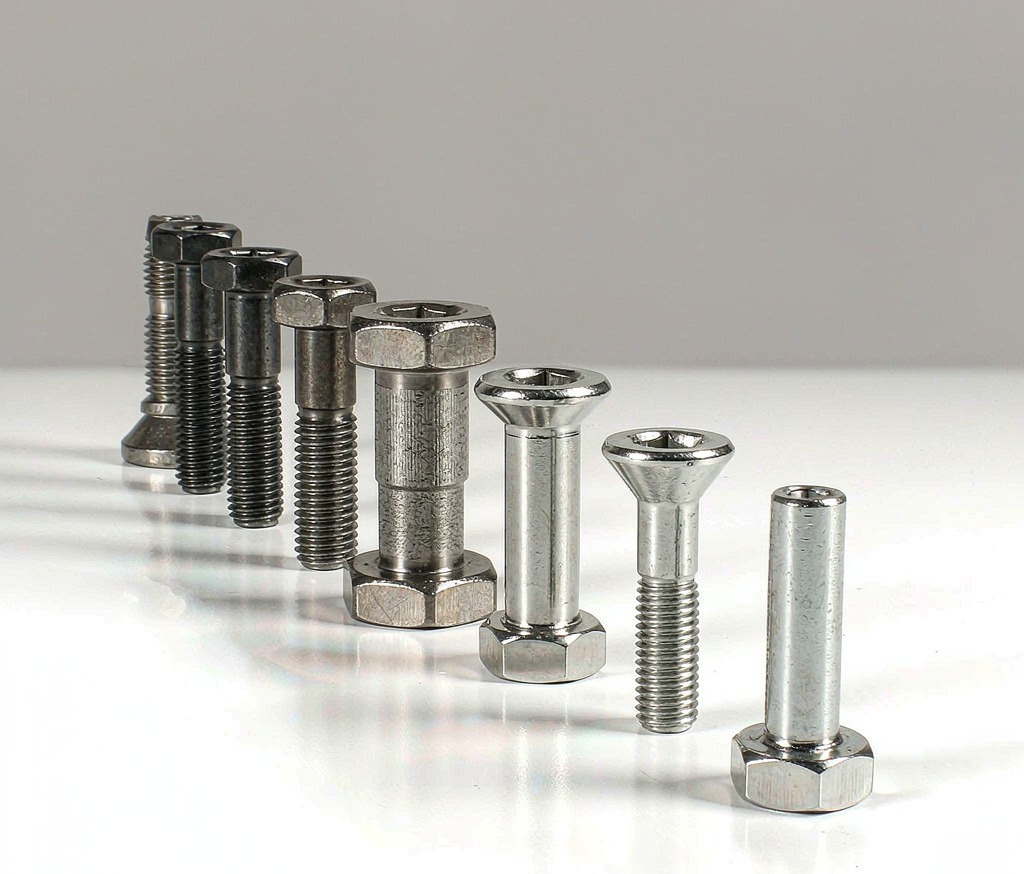
Why Specify Custom Metal Bolts
Off-the-shelf bolts are optimized for general use, not for your specific load, clearance, or corrosion scenario. Our custom metal fasteners program exists for the cases where a standard part falls short: non-standard lengths or diameters, special head geometries, exotic alloys, or combined features such as a threaded shank plus a precision shoulder. Specifying custom lets you eliminate washers, simplify assembly, and improve joint reliability.
For low and mid volumes, CNC turning“>CNC turning delivers excellent repeatability without the tooling cost of a cold-header. For higher volumes with simple geometries, heading is more economical. We help you choose the right route during quoting so the finished bolt meets both the performance target and the budget.
Materials and Grades We Machine
Common choices include stainless steel 304/316, alloy steels up to grade 12.9, carbon steel, brass, and aluminum. For aggressive environments we machine exotic alloys such as titanium, duplex stainless, Inconel, and Monel. Each material is sourced with mill certification so the bolt’s chemistry and mechanical properties are documented and traceable back to the melt.
Material selection drives both the fastening strength and the corrosion strategy. CNC milling“>CNC milling is used where the head or feature requires multi-axis work that turning alone cannot produce, such as a countersunk flange or an integrated wrenching feature on the same body as the thread.
Head Styles, Threads, and Tolerances
We produce hex, socket, flange, button, and slotted heads, plus fully custom profiles shaped to your assembly tooling. Threads can be rolled, cut, or chased to ISO metric, UNC/UNF, or DIN standards, with left-hand, double-start, or trapezoid forms available. Critical dimensions such as shoulder diameter and thread runout are held to your drawing tolerance.
For large diameters or special head forms, hot forging“>hot forging consolidates the grain structure for better strength, while upset forging“>upset forging is ideal for headed bolts where the head is larger than the shank. Forged heads also resist the shear and tensile loads seen in structural and heavy-equipment joints.
Surface Treatments and Corrosion Protection
Coatings are selected to match the service environment. zinc plating“>Zinc plating provides economical corrosion resistance for indoor and mild-outdoor use, nickel plating“>nickel plating adds hardness and chemical resistance, and black oxide“>black oxide gives a low-reflective finish with mild protection. For demanding chemical or marine duty we recommend duplex systems or exotic base materials paired with the right coating.
Manufacturing: Turning, Forging, and Heat Treatment
Most custom bolts pass through heat treatment“>heat treatment to reach the required hardness and tensile strength. We control the quench and temper cycle and verify results with hardness testing. The combination of forming method, heat treatment, and finishing determines the final performance envelope of the fastener.
For prototypes and low volumes we typically turn the bolt complete in one or two operations, holding the critical shoulder and thread runout to drawing. Where a heading operation is used, we follow it with a trim and, if required, a precision machining pass on the bearing face so the fastener seats correctly under load and torques predictably in service.
Quality Control and Inspection
Every batch is checked for thread fit with gauges, hardness, coating thickness, and critical dimensions. Our CNC machining services operate under documented quality controls, and first-article reports are available on request so you can validate the part before full production begins and avoid costly line-down surprises.
Lead Time and How to Request a Quote
To quote accurately we need a 2D drawing (or sample), material and grade, thread standard, quantity, finish, and application conditions. Prototypes are typically turned in days, with production following after approval. Send your drawing and we will respond with process, lead time, and pricing, and flag any design-for-manufacture changes that could lower cost without hurting performance.
Frequently Asked Questions
What information is needed for a custom bolt quote?
Provide a drawing or sample, material grade, thread standard, head type, length, finish, tolerance, and annual volume. The more precise the spec, the tighter the quote.
Can custom bolts be made without a standard catalog size?
Yes. Bolts are produced to drawing whenever diameter, length, head, thread, and inspection requirements are defined, including non-standard and combined-feature geometries.
Which materials are available for corrosive environments?
Stainless 316, duplex, Inconel, Monel, titanium, and Hastelloy are all machinable here, paired with appropriate coatings for the application.
How is bolt quality risk reduced?
Confirm material certification, heat treatment, thread gauges, coating thickness, hardness, and batch traceability before production begins.
What are typical lead times?
Prototypes are usually delivered within days; production lead time depends on volume and material, and is confirmed at quotation.
Do you support both low and high volumes?
Yes. CNC machining covers low and mid volumes economically, while heading is offered for higher volumes with simple geometries.
Ready to Start Your Project?
Get a build-ready quote on your custom metal parts within 24 hours. Share your drawing and our engineers will respond with process, lead time, and pricing.

