
When a part’s geometry defeats machining or casting, metal additive manufacturing steps in. Selective laser melting services use a fiber laser to fuse metal powder layer by layer into fully dense components with complexity that traditional processes cannot match.
This guide explains what SLM is, which materials and densities are achievable, the design freedom it unlocks, and how support removal and CNC finish-machining complete a production-ready part. It also covers the trade-offs in cost and lead time so you can decide when additive truly beats subtraction.
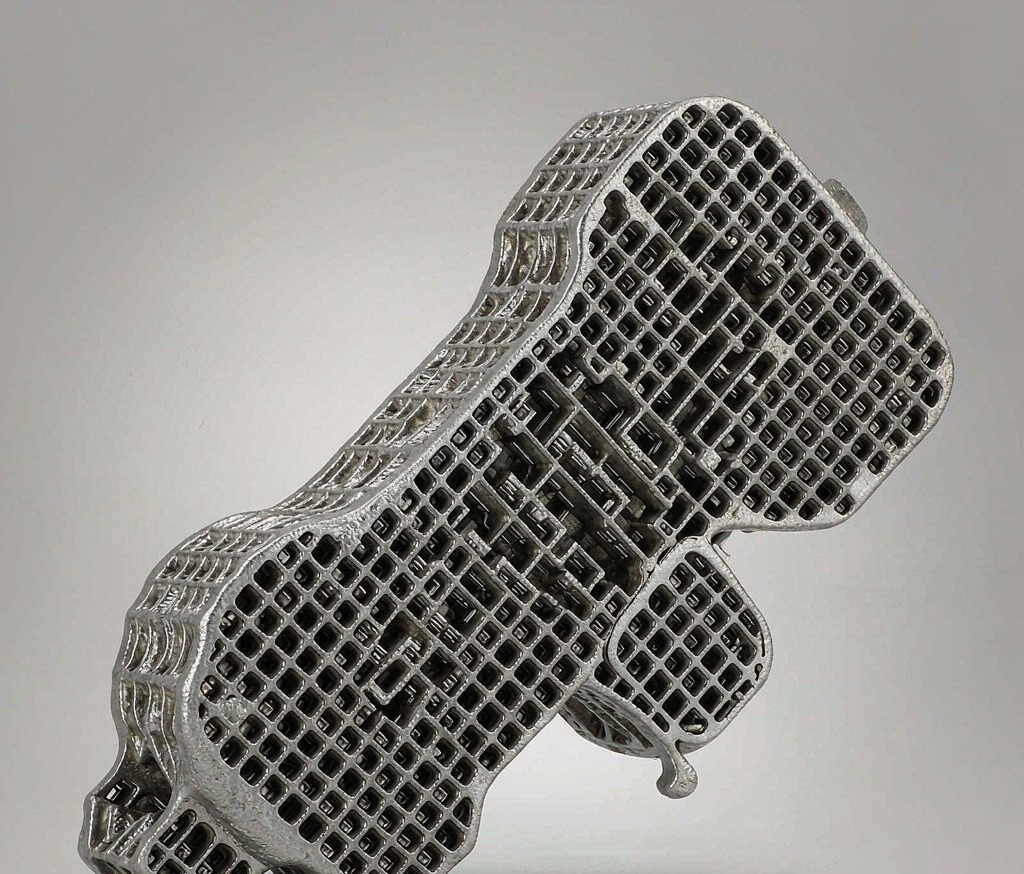
What Selective Laser Melting Is
SLM spreads a thin layer of metal powder, then a laser scans the cross-section to fully melt it, bonding to the layer below. Repeating this builds a solid, near-fully-dense part directly from a CAD model – no tooling, no molds. Each layer is a thin cross-section scan, so geometry is driven by the model, not by a fixture or die.
It is the production-grade branch of the metal 3D printing family we support for functional parts. Unlike binder jetting, SLM fuses each layer fully, so parts come out solid rather than porous. The laser scans at speeds that build a small part in hours, not days.
Materials and Density
Common SLM powders include 316L and 17-4PH stainless, Ti-6Al-4V titanium, AlSi10Mg aluminum, and tool and superalloys. Proper parameters yield densities above 99%, with mechanical properties close to wrought material. Porosity is controlled by laser power, scan strategy, and powder quality, all tuned per alloy.
Material choice overlaps our metal binder jetting program, but SLM gives higher density and strength. It also suits end-use parts, not just prototypes, once the process is qualified.
Design Freedom
SLM builds internal channels, lattices, thin walls, and consolidated assemblies that would need welding or cannot be machined. Topology-optimized brackets and conformal-cooled tooling are classic wins that cut weight and part count.
For early concept parts, metal rapid prototyping by SLM validates a design before committing to production tooling. Internal conformal channels, for example, let a mold cool evenly in ways machining cannot achieve.
Support and Post-Processing
Overhangs need supports that are removed after the build, then the part is stress-relieved, heat treated, and often CNC finish-machined on critical faces. Surface grinding and boring restore tight tolerances on key features.
Knowing which faces need machining up front shapes the build orientation and support strategy. A good orientation balances support volume against achievable accuracy on the as-built surfaces.
SLM vs Other Additive and Conventional Routes
Versus CNC machining, SLM wins on complexity and buy-to-fly weight but is slower and dearer per kilo. Versus casting it avoids tooling and matches intricate internal features. For a handful of parts, SLM’s lack of tooling usually beats casting’s mold cost.
For tooling and bridge production, rapid tooling often combines SLM cores with conventional frames.
Where SLM Pays Off
Aerospace brackets, medical implants, conformal-cooled molds, and low-volume complex housings are ideal. The business case is strongest when complexity or consolidation offsets the higher per-part cost.
Because SLM parts are often finished on 5-axis CNC centers, planning the hybrid route early shortens delivery. A single consolidated part also cuts the assembly labor and inspection points a multi-piece build would need.
Quality Control and Inspection
SLM parts are checked by CT or X-ray for internal defects, CMM for critical dimensions, and mechanical tests on witness coupons. Process parameters and powder lot are logged for traceability, which aerospace and medical buyers require before acceptance. First-article scans confirm the build matches the model before volume parts are released.
Lead Time and How to Request a Quote
Share the STEP file, material, density target, and which faces need CNC machining . CNC versus 3D printing is assessed together so you get the most cost-effective route, not just the newest one. Build orientation and volume set lead time. Sharing the annual need lets the shop schedule furnace time and quote a realistic delivery window.
Common Cost Drivers in Selective Laser Melting
Build time, powder cost, and post-processing dominate the quote. Support structures and the amount of finish machining add hours. Designing for the process – fewer supports, self-supporting angles, consolidated assemblies – is the single biggest lever on both price and delivery. Thin features and very large parts need slower scan strategies, so flag the true performance need rather than a generic fine resolution. Powder reuse limits and inert gas consumption also enter the cost, while a stable build orientation reduces both scrap and support-removal hours on every part produced; fewer supports also shorten post-processing and lower the per-part price.
Frequently Asked Questions
How dense are SLM parts?
Typically above 99% dense, with mechanical properties near those of wrought material.
Which metals can be SLM printed?
316L and 17-4PH stainless, Ti-6Al-4V, AlSi10Mg, tool steels, and some superalloys.
Is post-processing required?
Yes. Supports are removed, then stress relief, heat treatment, and CNC machining of critical faces.
When is SLM better than CNC machining?
For complex internal features, consolidation, or low buy-to-fly weight where machining would waste material.
Can SLM replace casting?
For low volumes and intricate internal geometry, yes, without the tooling cost of casting.
How are SLM parts inspected?
By CT or X-ray for internal defects, CMM for dimensions, and mechanical tests on coupons.
Ready to Start Your Project?
Get a build-ready quote on your custom metal parts within 24 hours. Share your drawing and our engineers will respond with process, lead time, and pricing.

