
Electroforming grows a precision metal shell atom by atom onto a mandrel in an electrolytic bath, then separates the shell to leave a seamless part that replicates the mandrel surface to sub-micron fidelity. It is the process of choice for ultra-thin walls, mirror-finish internal surfaces, sharp micro features and geometries that no cutting tool can reach.
This guide explains how electroforming differs from plating and machining, which metals and tolerances are realistic, the applications where it wins on cost, and what to include in an RFQ. If you are weighing it against machining or additive, our engineers will run the comparison on your actual part.
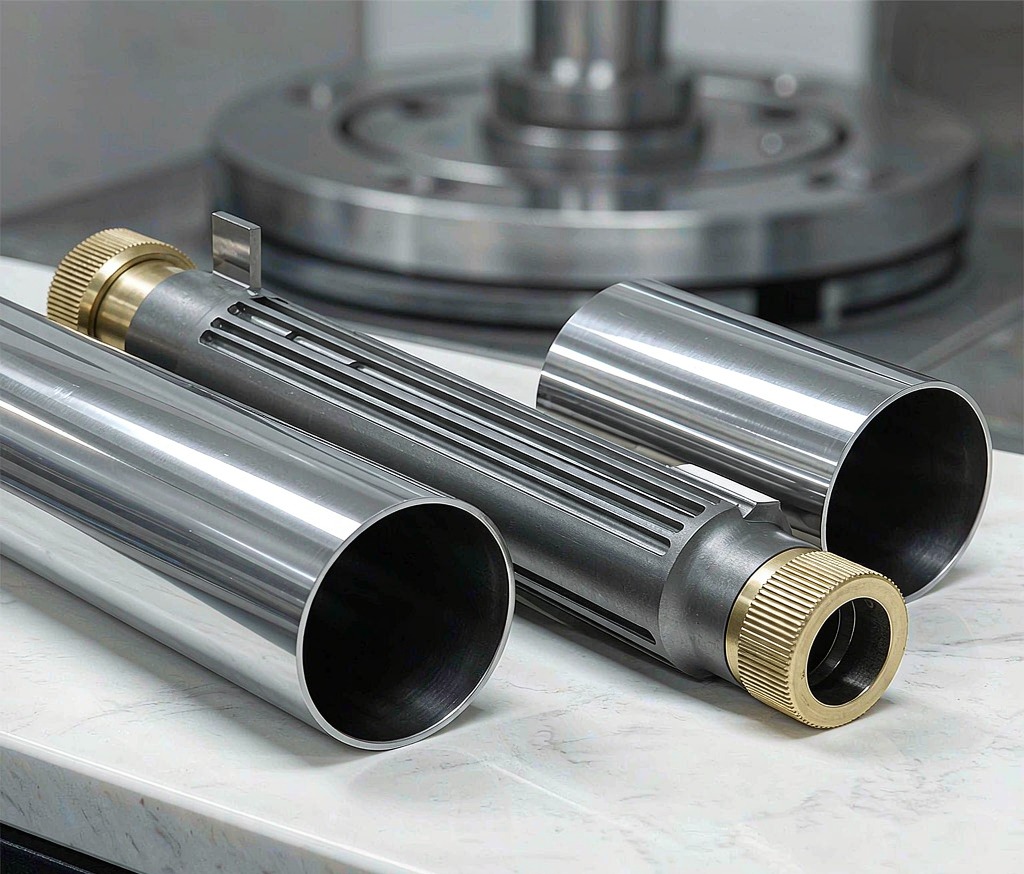
Electroforming vs Plating vs Machining
Electroplating adds a functional coating to a part that stays in service. Electroforming uses the same electrochemistry but the deposit itself is the product: the mandrel is a temporary tool that is dissolved, melted or mechanically withdrawn afterwards. Because the metal grows onto a master surface, the inside of an electroform is as good as the mandrel, which is how mirror-finish internal channels are made.
Against machining, electroforming wins where wall thickness drops below what a cutter can support, where an internal surface must be optically smooth, or where a feature is too fine to machine. It loses where the part is chunky, where structural bulk is needed, or where volumes are high enough that CNC milling amortises quickly.
It is worth understanding the plating side of the family too. Our nickel plating services article covers the deposit chemistry, and photochemical etching is the other subtractive route to very fine flat features.
Metals, Thickness and Achievable Tolerances
Nickel is the dominant electroforming metal, offering 400 to 700 MPa tensile strength with sulphamate baths for low-stress deposits and Watts baths for harder ones. Copper is used for thermal and electrical applications and for RF waveguide interiors. Gold and silver serve optics and microwave work, and nickel-cobalt raises hardness for wear surfaces.
Practical wall thickness runs from about 5 µm up to 5 mm, with 25 µm to 1 mm the commercial sweet spot. Thickness uniformity of plus or minus 5 to 10 percent is normal, improved by shielding and thieving. Dimensional tolerance on mandrel-defined surfaces reaches plus or minus 2 to 5 µm, and surface finish under 0.025 µm Ra is achievable because the deposit mirrors a polished master.
Mandrel making is where most of the engineering sits. We produce masters by CNC turning with diamond finishing, wire EDM for fine profiles and polishing to optical quality before the bath. Sinker EDM machining handles cavities that cannot be turned or milled.
Where Electroformed Parts Are Used
Optics and aerospace use electroformed nickel mirrors, X-ray optics and lightweight reflector shells. RF and microwave engineers electroform waveguide runs and horn antennas because a seamless, mirror-smooth interior minimises insertion loss. Precision fluidics uses it for nozzles, orifice plates and filtration meshes with pore geometry that cannot be drilled.
Medical device makers electroform stent mandrels, catheter tips, cannulae and micro-surgical tooling. Print, textile and coating industries use rotary screens and micro-mesh drums. Sensor and instrumentation builders use electroformed bellows, diaphragms and shielding cans.
Where the part is very small but must be machined from solid rather than grown, micro machining is the alternative, and metal 3D printing covers geometries that need bulk and internal lattice rather than thin shells.
Process Control and Inspection
Bath chemistry, current density, temperature, pH, agitation and additive concentration are all monitored, because deposit stress and grain structure follow directly from them. Low-stress sulphamate nickel is specified when the part must not distort after separation from the mandrel, which is critical for optics and long thin shells.
Inspection combines contact and non-contact methods: wall thickness by micrometre, eddy current or cross-section; internal form by interferometry or CMM on witness features; surface roughness by profilometer; and adhesion or tensile data from parallel coupons. Optical parts add figure and slope error measurement.
Post-processing is often minimal by design, but electroforms accept laser marking for traceability and can be selectively coated. Where a corrosion barrier or solderable surface is needed we apply electroless nickel or a precious metal flash over the shell.
Cost Structure and Design Guidance
Two costs dominate: mandrel tooling and bath time. Mandrels are precision tools in their own right, so the first article carries real engineering cost. Permanent mandrels that release mechanically can be reused across a programme and dramatically improve unit price; expendable mandrels that must be dissolved are consumed every cycle.
Bath time scales with thickness. Deposition typically runs 25 to 250 µm per day depending on metal and current density, so a 1 mm wall is a multi-day job. Designers save real money by asking whether 300 µm carries the load instead of 800 µm, and by allowing thickness to taper where stress is low.
Avoid deep, narrow internal recesses that starve of current, provide generous draft for mandrel release, and keep sharp internal corners as small radii instead of true corners. Send the model early and our DFM support team will mark up the mandrel strategy and expected thickness distribution.
Lead Time and What to Send Us
Typical prototype timing is three to five weeks: one to two weeks for mandrel design and manufacture, then the deposition cycle, separation, inspection and finishing. Repeat orders on an existing permanent mandrel ship in one to three weeks depending on wall thickness.
For a quote we need a 3D model, the surfaces that must be mandrel-controlled, target wall thickness with tolerance, metal and hardness requirement, surface finish target, quantity per release and annual volume, plus any optical, electrical or leak specification.
If you are still deciding between processes, send the functional requirement rather than a finished print. We will quote electroforming against machining and, when relevant, against metal injection molding so you can compare unit cost at your real volume.
Frequently Asked Questions
What is the difference between electroforming and electroplating?
Electroplating adds a coating to a part that remains in service. In electroforming the deposit is the finished part and the mandrel is a temporary tool that is removed afterwards, which is why the internal surface can be optically smooth.
How thin or thick can an electroform be?
Roughly 5 micrometres to 5 mm is possible, with 25 micrometres to 1 mm the commercial range. Thickness uniformity of plus or minus 5 to 10 percent is normal and can be tightened with shields and thieves.
Which metals do you electroform?
Nickel is the standard, including low-stress sulphamate and harder Watts deposits and nickel-cobalt for wear. Copper is used for thermal and RF work, and gold or silver for optics and microwave surfaces.
How accurate is an electroformed part?
Surfaces defined by the mandrel hold plus or minus 2 to 5 micrometres and can reach below 0.025 micrometre Ra. The free surface away from the mandrel is less controlled, so put your critical geometry on the mandrel side.
Is electroforming cheaper than machining?
It depends on geometry. Thin shells, optically smooth interiors and features finer than a cutter can produce usually favour electroforming. Bulky structural parts and high volumes usually favour machining, and we will quote both if you are unsure.
Can the mandrel be reused?
Permanent mandrels that release mechanically are reused across a programme and give the best unit cost. Expendable mandrels are dissolved or melted out and are consumed each cycle, which raises per-part cost but allows closed internal geometry.
Ready to Start Your Project?
Get a build-ready quote on your custom metal parts within 24 hours. Share your drawing and our engineers will respond with process, lead time, and pricing.

