
Aluminum bronze is one of the toughest copper alloys you can specify. With 9-15% aluminum plus iron and nickel, grades like C95400 deliver tensile strength above 600 MPa while shrugging off seawater, cavitation, and galling. That combination makes aluminum bronze machining a core capability for marine hardware, pump components, and heavy-wear bearings. This guide covers the grades buyers actually order, the tooling that keeps scrap low, and how to brief a shop for first-time-right parts so your program stays on cost and on schedule.
Why Engineers Choose Aluminum Bronze
Aluminum bronze earns its keep where steel would corrode and brass would wear out. It forms a hard, self-healing aluminum-oxide surface that resists biofouling and erosion, so it is the default for ship propellers, valve seats, and non-sparking tools in offshore environments. Its high fatigue strength also suits machined gear blanks and worm wheels that see continuous load. The trade-off is machinability: the same hardness that protects the part also blunts tools, which is why process selection matters as much as material selection.
Common Grades and Where They Fit
C95400 (9-4-4) is the workhorse: strong, castable, and good for bushings and wear plates. C95500 adds more nickel for even higher strength in bearing sleeves, while C95800 (nickel aluminum bronze) is favored for subsea and desalination where PREN matters. Pick the grade from the duty cycle, not the catalog photo—corrosion margin and load usually decide, and over-specifying just adds cost without benefit.
Machining Challenges You Should Plan For
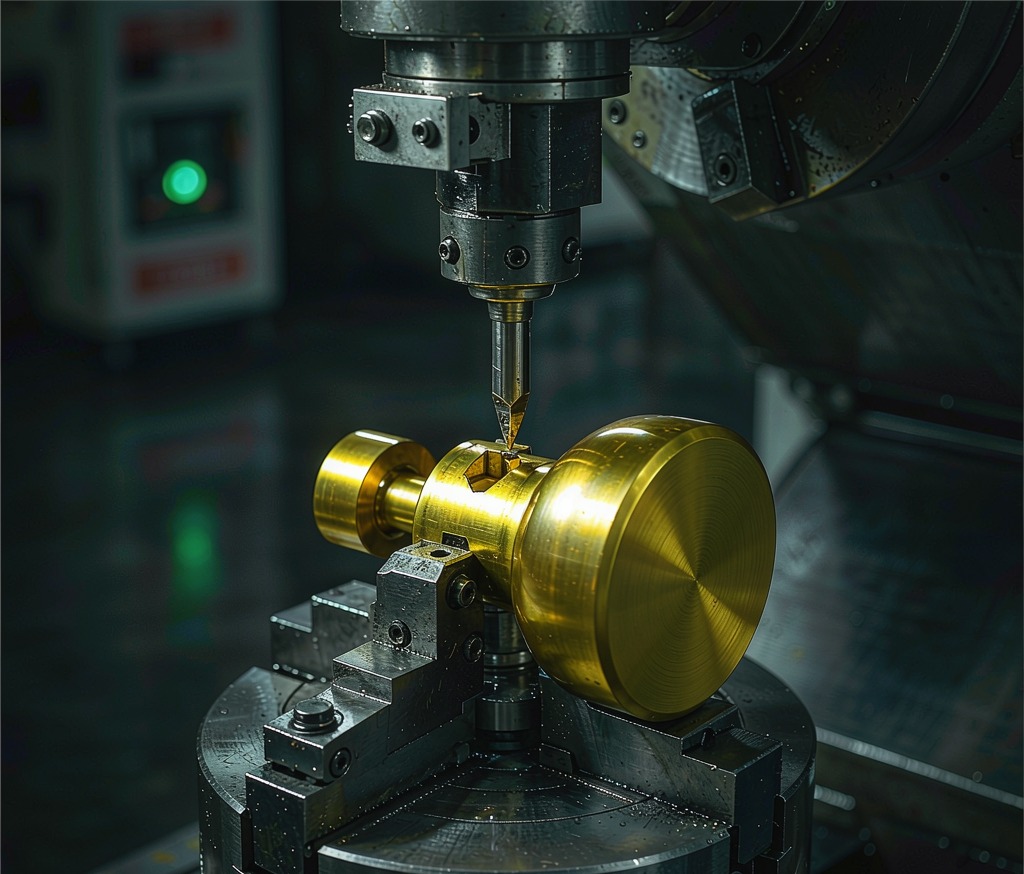
Aluminum bronze work-hardens under light cuts and is mildly abrasive thanks to iron-rich intermetallics. The fix is rigid setups, positive rake carbide or PCBN tools, and consistent feed so the tool stays in cut. Our CNC turning cells use sharp inserts and flood coolant to keep the chip flowing instead of smearing. Bronze specialists also watch for built-up edge, which ruins surface finish on sealing faces and forces a costly second operation.
Turning and Milling the Profile
For round parts we rough on CNC lathes then finish bores and grooves in one clamp to protect roundness. Flats, keyways, and oil grooves go to 3- and 5-axis mills so features line up without re-fixturing. Holding tolerances to ±0.01 mm on a 200 mm sleeve is routine when turning and milling share the same datum, and it removes the roundness error that comes from moving a heavy part between machines.
Finishing and Inspection
Most aluminum bronze ships as-machined, but mating surfaces often need precision grinding to Ra ≤ 0.8 µm, then polishing for bearing tracks. We deburr every edge because sharp fins score seals during assembly. Material-certified shops add PMI and CMM reports so you can trace every heat from raw bar to finished part without a separate audit request.
Design Tips to Save Cost
Keep wall sections uniform so casting or machining removes material evenly, and avoid tiny internal radii that force custom form tools. If a feature only needs wear resistance locally, machine the base from bar and let us grind just the contact band. Specifying a realistic tolerance—not the tightest your CAD default allows—is the single biggest lever on price, because every extra micron of accuracy costs cycle time.
Quality Control and Inspection
We verify chemistry by PMI, dimensions by CMM, and surface finish by profilometer on critical faces. First-article inspection is standard, and SPC runs on production volumes so drift shows up before it becomes scrap. For pressure parts we can add NDT and a hydrostatic test on request, which is why copper-alloy machining programs for fluid service tend to bundle inspection up front rather than after the fact.
Lead Time and How to Request a Quote
Send the drawing in STEP or DWG, the alloy and temper, the duty environment, and the quantities. Prototypes typically run in days from bar stock; cast-and-machine runs add foundry lead time. We return a quote with the suggested process route, so you see exactly where the money goes before you commit. A short call on the motion or load profile often saves a redesign later.
Real Parts, Real Lessons
Specs are easier to defend with examples. A desalination operator replaced 316 impeller rings with C95800 and saw chloride crevice corrosion stop after three seasons, because the nickel-aluminum bronze holds its passive film in brine. A valve maker moved worm wheels from cast iron to C95400 and halved replacement downtime even at higher piece cost, since the bearing track no longer scored. A shipyard swapped brass rudder bushings for aluminum bronze and dropped the annual refit. In every case the buyer won by matching alloy to duty rather than buying the cheapest bar. When you inquire, name the fluid, temperature, and load—those three let us pick grade and finish so the first quote is the right one and you skip the failure report.
Frequently Asked Questions
Can aluminum bronze be welded?
Yes, with matching aluminum-bronze filler and preheat control; we TIG-weld repairs and build-ups under procedure.
What tolerance can you hold?
Typically ±0.01 mm on turned diameters and ±0.02 mm on milled features, tighter on request.
Is it magnetic?
No. Aluminum bronze is non-magnetic and non-sparking, which is why it is used in explosive atmospheres.
How does it compare to steel for wear?
It runs cooler and resists galling better than mild steel, often removing the need for a separate bushing.
Do you certify material?
Yes—mill certs, PMI, and CMM reports ship with every order on request.
Ready to Start Your Project?
Get a build-ready quote on your custom metal parts within 24 hours. Share your drawing and our engineers will respond with process, lead time, and pricing.

