
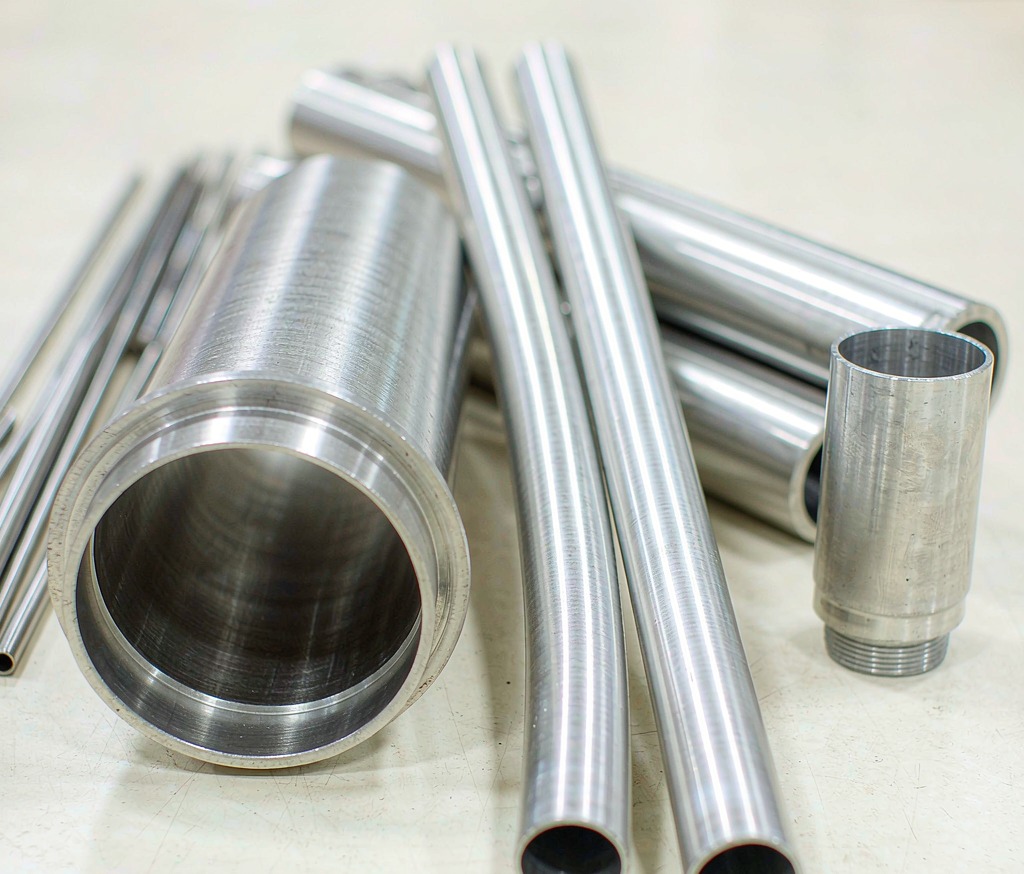
When a design calls for round, square, or profiled sections that must carry fluid, hold pressure, or bear structural load, custom metal tubing is usually the fastest and most cost-effective route. Off-the-shelf pipe rarely matches the exact wall thickness, bend radius, or end condition your assembly needs, which is why engineers turn to fabrication partners who cut, form, and join tube to drawing. At Huaxiao Parts we produce tubing from stainless steel, aluminum, carbon steel, and copper, delivering everything from simple cut-to-length bars to multi-bend frames with welded flanges and fittings. This guide walks through materials, processes, tolerances, and how to select a supplier you can trust for production.
What Is Custom Metal Tubing?
Custom metal tubing describes hollow profile stock that is cut, formed, and joined to a buyer’s specification rather than purchased as a commodity length. Unlike catalog tube, every dimension, wall thickness, and end condition is controlled so the part drops straight into your assembly without rework. We routinely deliver simple cut-to-length bars, precision-bent rails, and complex welded sub-frames that integrate directly with surrounding components. The defining advantage is fit: a tube made to your print eliminates the trimming, facing, and fixturing that off-the-shelf stock forces downstream. For buyers, that translates into lower labor cost on the line and fewer inspect-and-reject loops.
Materials: Stainless, Aluminum, Steel and Beyond
Material choice drives corrosion resistance, weight, weldability, and price. 304 and 316 stainless excel in food, medical, and outdoor service because they resist rust without coating. Aluminum grades such as 6061 and 6063 are light, easy to anodize, and ideal for framing, heat exchangers, and robotics links. Carbon steel brings strength at the lowest cost but needs protection for wet environments, while copper and brass serve thermal and decorative roles. Our material consulting team helps match grade to duty cycle and budget so you are not over-paying for properties you do not need. We stock common sizes and can source specialty alloys with mill certification for traceability.
Fabrication Processes: Cutting, Bending and Welding
Modern tubing starts with precise cutting. Our tube laser cutting delivers burr-free, square ends on round, square, and rectangular tube without a heat-affected zone that would distort thin walls. Bends are formed on CNC mandrel and press-brake equipment for consistent radii and minimal wall thinning, then joined by TIG welding for thin-wall and cosmetic work, MIG welding for heavier sections, and robotic welding when repeatability at volume matters most. For structural profiles we also offer aluminum extrusion as an alternative to welded tube, which can remove joints entirely. Each process is chosen against wall thickness, tolerance, and order quantity to keep cost per part realistic.
Tolerances and Surface Finish
We hold linear tolerances to ±0.1 mm on cut lengths and control ovality and wall variation to drawing so parts seat correctly on every build. Surface options range from mill finish through brushed, bead-blasted, or polished, and we can apply coatings in-line so components arrive ready to assemble. Every batch ships with an inspection report that records critical dimensions, and first-article samples are offered before any production run so you can validate form and fit early. For medical or food contact we provide passivation and documented cleanliness on request.
Applications Across Industries
Automotive fuel and structural lines, robotics linear guides, medical device frames, and HVAC components all rely on tight-tolerance tube to perform safely. You can see how we support automotive metal parts and robotics metal parts programs, and how tubing pairs with precision machined parts inside complete sub-assemblies. Beyond these, furniture, lighting, and exercise equipment all use custom tube for both structure and style. The common thread is a part that must be both light and strong while meeting a specific envelope.
How to Choose a Tubing Supplier
Ask any candidate for material certs, weld procedure qualification, and realistic sample lead times before committing. A capable partner offers design-for-manufacture feedback before tooling and transparent pricing per length and bend rather than a vague per-piece number. The right supplier reduces scrap and catches design risk early, which protects your schedule more than a slightly lower unit price. Visit the shop if you can, review their inspection equipment, and confirm they can scale from prototype to volume on the same fixtures and programs you qualify.
Cost Drivers in Custom Tubing
The price of a tube order is shaped by material, wall thickness, bend count, and weld complexity more than by length alone. Thin walls and tight radii need slower, more careful bending, while exotic alloys cost more per kilogram and machine slower. We help you trade a slightly heavier wall for a simpler bend when it lowers total cost without hurting function, and our material consulting input often finds savings you would miss in isolation. Ordering related tubes together also spreads setup across parts, which is a practical way to cut per-piece price on a family of components.
Frequently Asked Questions
What wall thickness can you fabricate?
We handle walls from 0.5 mm on small-diameter tube up to heavy-wall structural sections, limited mainly by bend radius and the formability of the chosen material.
Can you weld dissimilar metals?
Yes for compatible pairs such as steel-to-stainless using qualified procedures; we advise on metallurgy to avoid corrosion or cracking at the joint.
Do you provide bent prototypes before production?
Always. We cut and bend a first-article set for sign-off so tooling and fixtures match your expectation before any full run begins.
Ready to Start Your Project?
Get a build-ready quote on your custom metal parts within 24 hours. Share your drawing and our engineers will respond with process, lead time, and pricing.

