
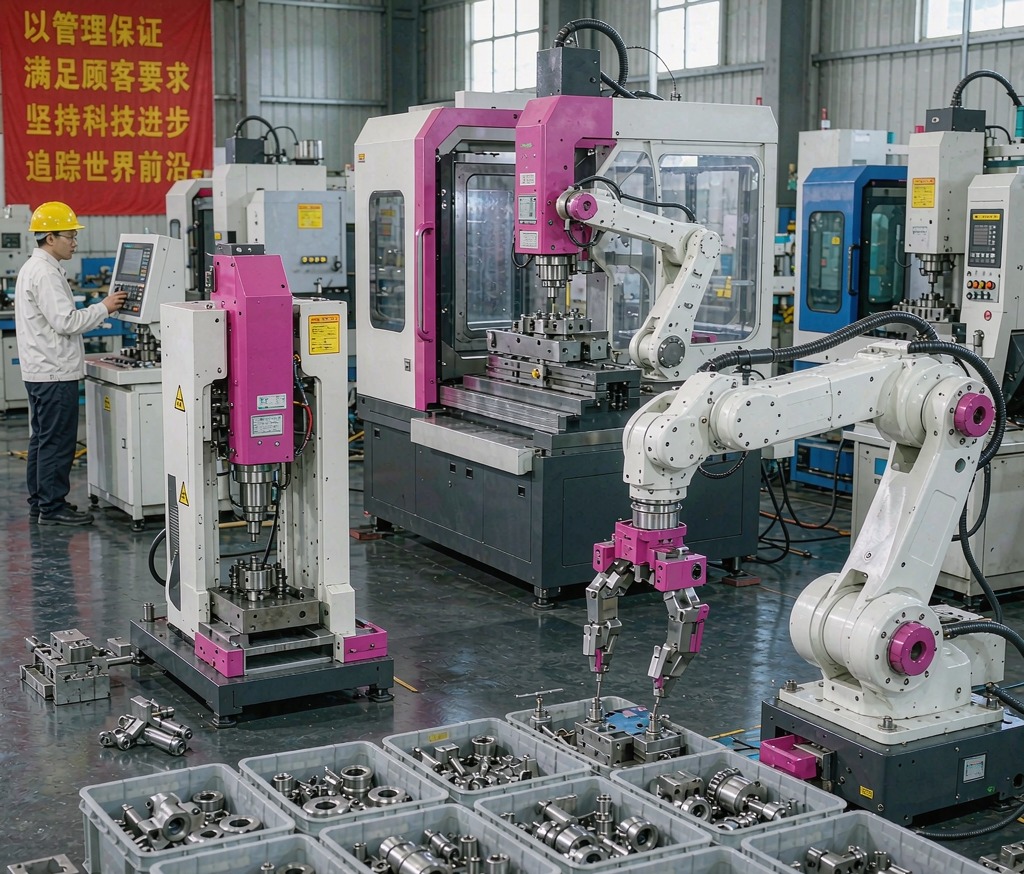
Sourcing from a metal parts supplier in China can cut component cost by thirty to sixty percent while keeping quality world-class, but only if you pick the right partner. Huaxiao Parts combines in-house CNC, forging, casting, and stamping with rigorous quality control so overseas buyers get reliable parts instead of unpleasant surprises. Language, distance, and payment risk are real, yet thousands of teams source successfully by following a disciplined process. This guide covers what to source, how to qualify a supplier, and how to protect your interests.
Why Source Metal Parts from China?
Mature supply chains, skilled labor, and deeply integrated processes let Chinese suppliers offer competitive pricing on everything from a single machined bracket to a million stamped clips. Clusters of downstream shops mean plating, heat treat, and coating are minutes away, which compresses lead time and logistics cost. The trade-off is distance, which good communication, clear drawings, and independent inspection manage well. For many Western manufacturers, China remains the default for cost-sensitive, mid-to-high volume metal parts where speed to scale matters.
Types of Parts You Can Source
We cover CNC machining for complex geometries, hot forging for strength-critical components, and die casting plus sand casting for net-shape volume parts. Added OEM services and DFM support take you from drawing to finished goods without juggling sub-vendors. Because one supplier can run several processes, you reduce interface risk and get a single point of accountability for the whole part. That integration is often a bigger saving than the labor rate alone.
Quality Control and Certifications
Expect material mill certificates, in-process gauging, and final inspection reports with coordinate-measuring-machine data on critical features. We run PPAP-style documentation for automotive and industrial customers so every dimension is traceable to a measured value, not an assumption. Third-party inspection before shipment is cheap insurance on large orders and catches issues while there is still time to rework. A supplier who resists documentation is a supplier to avoid regardless of price.
Lead Times and Logistics
Prototypes can be turned in days, production in two to four weeks, then consolidated by air or sea freight depending on urgency and weight. We handle export packing and documentation so parts arrive inspection-ready at your dock rather than held at customs. Building buffer for Chinese New Year and holiday shutdowns protects your line from seasonal gaps. Planning freight alongside production, not after, is what keeps total landed cost predictable.
How to Vet a Supplier
Check capability breadth, sample quality, and response discipline before sending a purchase order. Our sourcing guide and supplier checklist walk through the red flags, and the quote guide explains what a fair quote includes so you can compare offers on equal terms. Ask for references from buyers in your region and start with a small paid pilot to prove the relationship. Trust is earned through delivered batches, not through a polished sales deck.
Payment Terms and Risk Management
Beyond unit price, the terms decide your real exposure when sourcing overseas. We commonly work on a modest tooling deposit with balance on qualified samples, then net terms on production once trust is built, which limits your risk on a new program. Escrow and third-party inspection before release protect both sides, and splitting a risky order across two shipments lets you validate before committing the full run. Pair this with the discipline in our sourcing guide and the quote guide and the China cost advantage becomes safe rather than stressful.
Communication discipline matters as much as price when sourcing abroad, so we assign a single English-speaking engineer to your program who owns the drawing, samples, and inspection from first inquiry to shipment. That one point of contact removes the telephone game that causes defects, and it means questions get answered with authority rather than guesswork. Combined with the structure in our supplier checklist, you get the China cost advantage without the usual coordination headaches that scare buyers away.
Frequently Asked Questions
Is IP safe when sourcing from China?
Use NDAs, split critical operations, and keep final finishing in-house if needed; we sign standard confidentiality terms with every client.
What is the minimum order quantity?
Prototypes from one piece; production MOQs depend on process, typically one hundred to one thousand for machined and five thousand plus for stamped.
How do you handle rejects?
We rework or replace at no cost and issue a corrective-action report so the root cause is fixed and does not repeat on the next shipment.
How do you keep lead times predictable?
We freeze a production slot when you release the order and stock common raw materials ahead of time, so material sourcing never gates your build. Tooling is qualified on samples before the run, which removes the late surprises that cause delays, and we send progress photos at key stages so you are never wondering where the batch stands. Predictable weeks beat a cheap quote that slips by a month.
Do you handle export documentation?
Yes, we prepare commercial invoices, packing lists, and certificates of origin, and we work with freight forwarders familiar with metal parts so customs clearance is smooth. Proper paperwork avoids the delays and demurrage that eat the savings from a lower unit price.
Ready to Start Your Project?
Get a build-ready quote on your custom metal parts within 24 hours. Share your drawing and our engineers will respond with process, lead time, and pricing.

