
The term “screw machine” dates to cam-driven automatics that cranked out screws and fittings by the million. Today the work is done on CNC Swiss and multi-spindle lathes, but the economics are the same: screw machine parts are the cheapest way to make small, round, high-volume turned components with consistent quality. This guide explains the modern process and how to decide if it fits your part, so you do not pay for capability you do not need or under-specify and get burned at scale.
If your component is a small rotated solid and you will ever buy more than a few thousand, this is the process family to understand first. The setup cost is modest, the cycle times are seconds, and the per-piece price drops fast as volume climbs — which is why it underpins everything from appliance hardware to automotive sensors.
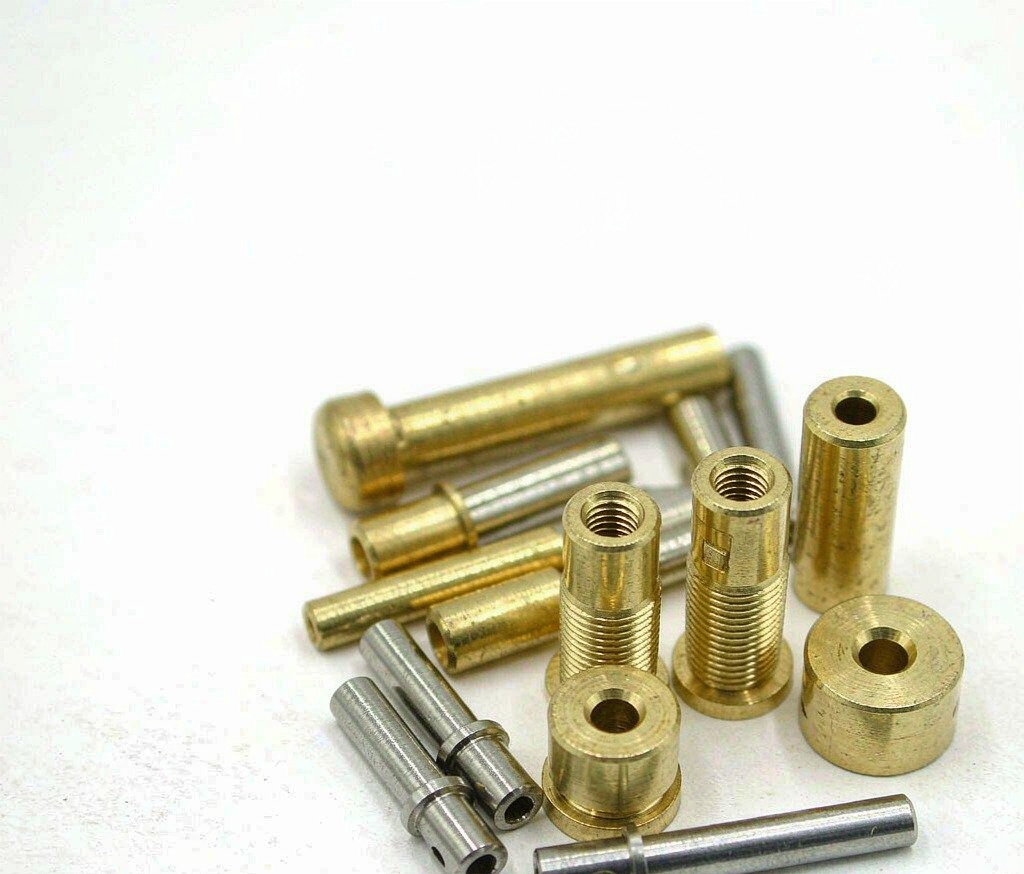
What “Screw Machine Parts” Means Today
Modern screw machining is CNC turning optimized for repetition. Bar stock feeds through a guide bushing (on Swiss types) or a chucker, and one or many spindles cut the diameter, form the thread, and part-off in seconds. The parts are small and cylindrical: pins, standoffs, connectors, spacers, and fittings. If your component is a rotated solid under about 32 mm, a screw machine is almost always the lowest-cost route. The CNC control means changeovers are fast and the process is repeatable part to part, unlike the old cam machines that needed a mechanic to re-time.
Swiss vs Multi-Spindle vs CNC Turning
Swiss turning supports the workpiece right at the cut, so long slender parts stay straight — ideal for medical and electronic pins. Multi-spindle machines run several parts at once for the highest throughput. Single-spindle CNC turning is the flexible default for shorter runs and mixed features. The choice is about volume and geometry, not prestige: a Swiss lathe is magical for a 1 mm pin and wasteful for a 50 mm pulley that a chucker does in one grip.
Materials and Volumes That Fit the Process
Free-machining brass, 12L14 steel, 303 stainless, and 6061 aluminum are favorites because they cut fast and hold tolerance. Volumes from a few thousand to millions justify the setup; below that, standalone CNC milling or turning is simpler. Lead-free and RoHS alloys are available when the end market requires them. Material also sets the residual stress after parting — soft alloys relax less, while hardened steels may need a stress-relief if the pin must stay straight over years in service.
Tolerances and Straightness at Scale
Screw machines hold diameters to ±0.01–0.02 mm routinely, and critical lengths to similar bands. For shafts that must run true, centerless grinding post-process brings OD and straightness to bearing quality. The key at volume is process control: once the machine is set, every part is nearly identical. That repeatability is what lets you skip 100% inspection and move to attribute sampling, which is where the real savings live on a million-piece order.
Grinding, Deburring, and Finishing
Part-off leaves a tiny pip that must go. We deburr every part and, for cosmetic or low-friction needs, polish or tumble-finish. Threads are rolled or cut to spec, and plating or passivation is added when the environment demands it. For parts that stack or seat against a face, we also control the part-off flatness so the next assembly does not wobble — a small thing that prevents a line-down at your customer.
When to Move from Screw Machines to CNC
If the part has significant milled features, is large, or the annual volume is low, a Swiss cell adds cost you will not recover. In that case a standard turning center or a precision turned parts workflow is leaner. For true high-volume fasteners and connectors, our custom metal fasteners line is purpose-built. As a rule of thumb: if you cannot fill a bar in one cycle economically, question the screw-machine choice.
Cost Drivers You Can Control
On high-volume turned parts, the money is in cycle time and yield, not the machine rate. Designing from standard bar diameters, avoiding deep blind holes, and specifying only the tolerances that matter keeps the spindle cutting instead of dwelling. A small change — a 30° chamfer instead of a full radius, a relief groove at a part-off — can shave seconds per part and thousands over a run. The cheapest screw machine part is the one that needs no secondary operation.
Yield is the silent cost. A process that needs 100% sorting because of one tricky feature costs more than simply redesigning that feature for the machine. Bring the shop in before tooling and let them flag the prints that will fight the process; that conversation is worth more than any per-piece discount negotiation later.
Frequently Asked Questions
What is the minimum volume for screw machining? Typically a few thousand pieces; below that, CNC turning is more economical.
How tight can the diameter tolerance be? ±0.01–0.02 mm standard, tighter with post-grind.
Which materials run best? Free-machining brass, 12L14, 303 SS, and 6061 aluminum.
Can Swiss machines hold long thin parts straight? Yes — the guide bushing prevents deflection.
Do you handle threads? Rolled or cut, internal and external, to class per print.
Is Swiss turning available? Yes — see our Swiss turning capabilities.
Ready to Start Your Project?
Get a build-ready quote on your custom metal parts within 24 hours. Share your drawing and our engineers will respond with process, lead time, and pricing.

