
Carbonitriding services add a thin, hard, wear-resistant case to steel parts by diffusing both carbon and nitrogen into the surface at a relatively low temperature, then quenching to lock in the hardness. It is one of the most dependable ways to make small, high-volume components, gears, pins, and fasteners survive abrasive and fatigue-loaded service without the distortion and long cycle time of deeper carburizing. If your part sees rolling contact, sliding, or repeated impact, a heat treatment plan built around carbonitriding is often the cheapest route to a long life.
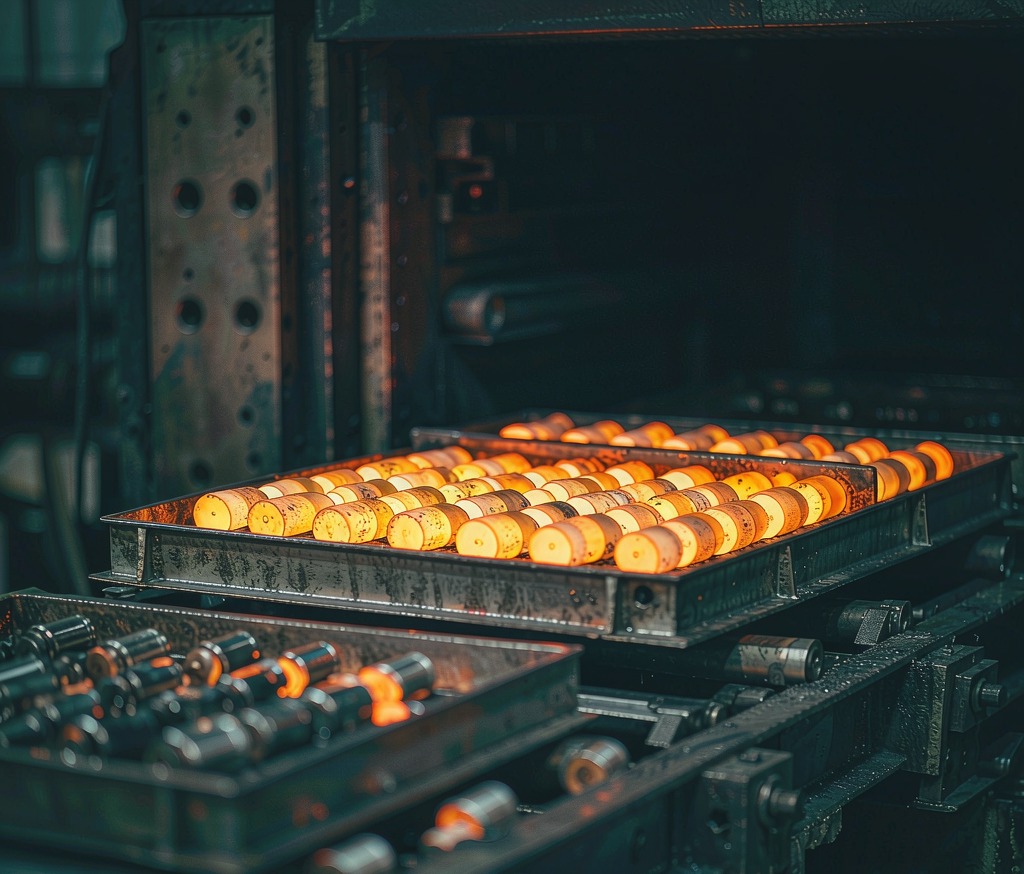
What Is Carbonitriding
Carbonitriding is a thermochemical surface-hardening process carried out in a sealed furnace, usually between about 800 and 875 C, in an atmosphere containing carbon-bearing gases plus ammonia. The carbon and nitrogen diffuse into the steel together, forming a hardened case roughly 0.1 to 0.75 mm deep. The nitrogen lowers the transformation temperature and boosts hardenability, so parts can be quenched from a lower temperature than in carburizing, which means less distortion. After quenching, a low-temperature temper restores toughness while keeping the case hard.
Carbonitriding vs. Carburizing vs. Nitriding
Carburizing adds only carbon and runs hotter, giving deeper cases but more distortion. Nitriding adds only nitrogen and is done at even lower temperature with almost no distortion, but it is slower and limited to nitriding-friendly alloys. Carbonitriding is the middle ground: faster than nitriding, less distortion than carburizing, and it works on plain low-carbon steels without special alloy content. For a deeper dive on the nitrogen-only route, our nitriding services guide covers when that lower-distortion process is worth the slower cycle.
The Process Step by Step
A load of clean parts is loaded into the furnace, brought to temperature in the carburizing-ammonia atmosphere, and held while carbon and nitrogen diffuse to the target case depth. The parts are then quenched, most often in oil, though some setups use gas or salt quenching for tighter distortion control. A tempering cycle around 150 to 200 C follows to relieve quench stress and set the final toughness. Because the process is batch or continuous furnace work, it scales well to high volumes with consistent case chemistry.
Materials and Depth Limits
Low-carbon and low-alloy steels respond best, including many free-machining grades used for pins, bushes, and spacers. Medium-carbon steels can also be carbonitrided for a harder skin over a stronger core. The process is less suited to high-alloy or stainless parts, which are better served by heat treatment services tuned to those alloys. Case depth is intentionally shallow, so carbonitriding is a surface-fatigue solution, not a through-hardening method.
Design and Tolerances
Because quench distortion is low, carbonitrided parts often need little straightening or finish grinding. Still, design for symmetry so the part heats and cools evenly, and avoid sharp corners that concentrate quench stress and can crack. Holes, keyways, and threads should be considered carefully: threads are sometimes rolled after treatment to avoid distorting them, and bores may be ground after if they must hold tight limits. When a ground seat or bore is critical, plan surface grinding as a final step, just as you would after other hardening processes.
Fatigue and Wear Benefits
The nitrogen in the case improves hardenability and gives a tough, compressive surface layer that resists fatigue cracking, which is why carbonitrided gears and shafts outlast untreated ones under cyclic load. The hard case also stands up to adhesive and abrasive wear. A light shot peening step is sometimes added after treatment to further compress the surface and extend fatigue life on highly loaded parts.
Typical Parts
Carbonitriding is everywhere in drivetrain and mechanism hardware: transmission gears, cam lobes, valve parts, pins, bushings, sprockets, and fasteners. It is a workhorse for any small steel part that must resist wear and fatigue at volume. In many builds it pairs with machining of the pre-treated blank, so combining the hardening with forging and machining or casting and machining under one supplier simplifies the supply chain and the quality paperwork. Because the case is thin while the core stays tough, carbonitrided parts absorb sudden loads without brittle failure, which is why they are trusted in safety-related automotive and power-tool components. Sampling and hardness testing on production lots confirm the case depth and surface hardness stay in spec before parts ship.
Frequently Asked Questions
What is the difference between carbonitriding and carburizing?
Carbonitriding adds both carbon and nitrogen at a lower temperature, giving less distortion and faster cycles, while carburizing adds only carbon and runs hotter for deeper cases.
How deep is a carbonitrided case?
Typically 0.1 to 0.75 mm. It is a surface-hardening process for wear and fatigue, not through-hardening.
Does carbonitriding distort parts?
Less than carburizing because of the lower quench temperature, though symmetric design and controlled quenching keep distortion minimal.
Which steels can be carbonitrided?
Low-carbon and low-alloy steels are ideal, including free-machining grades; medium-carbon steels also work for a hard skin over a stronger core.
Is carbonitriding better than nitriding?
It is faster and works on plain steels, while nitriding offers even less distortion but is slower and needs nitriding-friendly alloys.
Do parts need grinding after carbonitriding?
Often not, due to low distortion, but critical bores or seats may be ground to hold tight limits.
Carbonitriding is one option in a wider surface-hardening toolbox. Comparing it with induction hardening, covered in our induction hardening services guide, helps match the process to batch size, case depth, and distortion limits.
Ready to Start Your Project?
Get a build-ready quote on your custom metal parts within 24 hours. Share your drawing and our engineers will respond with process, lead time, and pricing.

