
When a part needs a hole that is long, straight and tight in diameter — a fuel injector body, a hydraulic valve, a cooling-channel core, a rifle barrel blank or a medical cannula — ordinary twist drilling simply runs out of steam. The drill wanders, the hole goes bell-mouthed, and tolerances collapse. That is exactly the problem gun drilling was invented to solve. It is the process of record for deep, high-precision holes where length-to-diameter ratios exceed what conventional drilling can hold.
This guide explains gun drilling services in practice: what the process is, when to use it, the length-to-diameter ratios and tolerances it can hold, how honing finishes the bore, and which materials and design choices keep cost under control. If your part has a deep hole, the points below decide whether gun drilling is the right call.
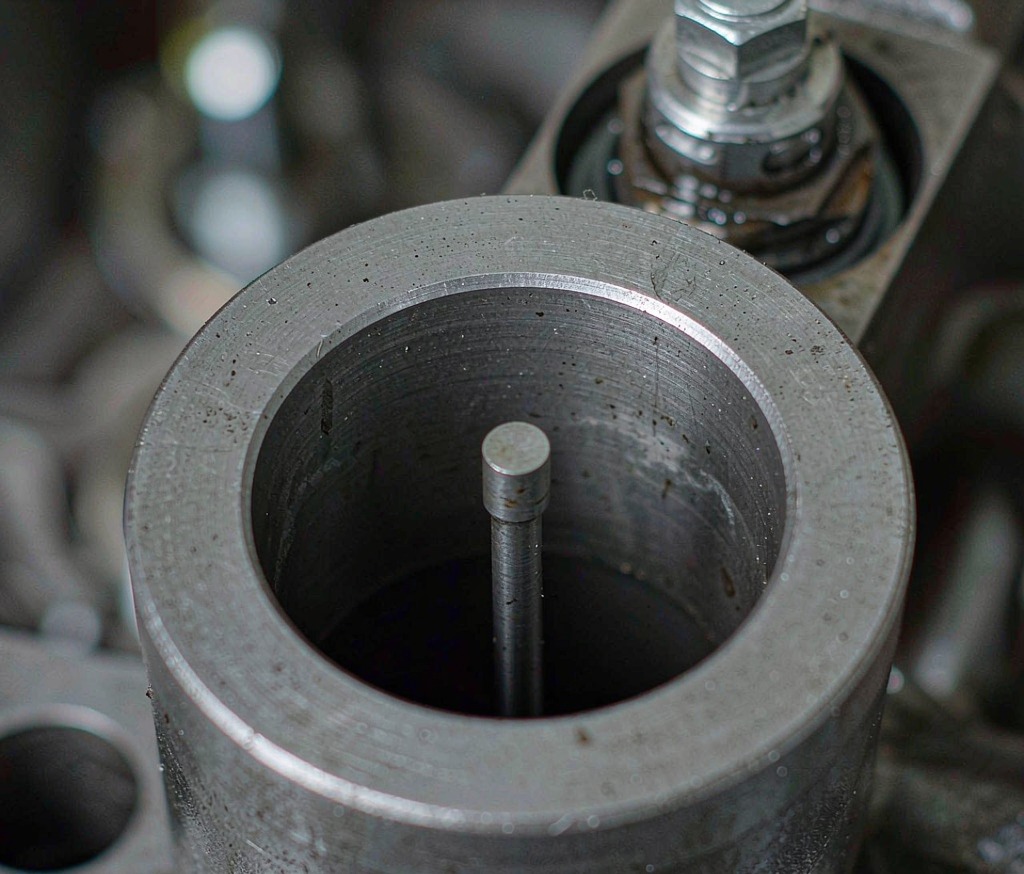
What Gun Drilling Is
Gun drilling uses a long, thin, single-fluted drill with a brazed carbide tip and an internal coolant channel. High-pressure coolant is pumped down the drill’s centre, exits at the cutting tip to cool and lubricate, and carries chips back out along the flute — so the hole stays open and the cut stays cool even at great depth. The drill is supported in a bushing at the workpiece entry, which is what keeps it straight over lengths that would defeat a conventional twist drill.
The name comes from its origin drilling gun barrels, but today the process serves far broader industries. Where a through or blind deep hole must be straight and round, gun drilling is usually the only economical answer. For shallow precision holes our standard CNC drilling is faster and cheaper; gun drilling earns its place as depth grows.
When to Use It
The rule of thumb: gun drilling becomes the right process once the hole’s length-to-diameter (L/D) ratio climbs past about 10:1, and it remains viable well beyond 100:1 for small diameters. Below that, twist or peck drilling on a CNC milling or CNC turning centre is usually cheaper. Above it, gun drilling’s straightness and repeatability win decisively.
Typical applications include fuel system components, hydraulic manifolds, extrusion dies, heat-exchanger tubes, mould cooling channels, sensor housings and aerospace structural members with internal bores. Our deep hole drilling services overview covers the wider family, including BTA and trepanning alternatives for larger diameters.
Length-to-Diameter Ratios and Capabilities
Gun drilling handles diameters from under a millimetre up to roughly 50 mm, with depths limited mainly by machine stroke and quill length rather than the process itself. Small-diameter holes routinely reach L/D of 50:1 to 100:1 and beyond with consistent results. Straightness is held to a few hundredths of a millimetre per metre of depth, far better than conventional drilling can manage at those ratios.
Tooling and High-Pressure Coolant
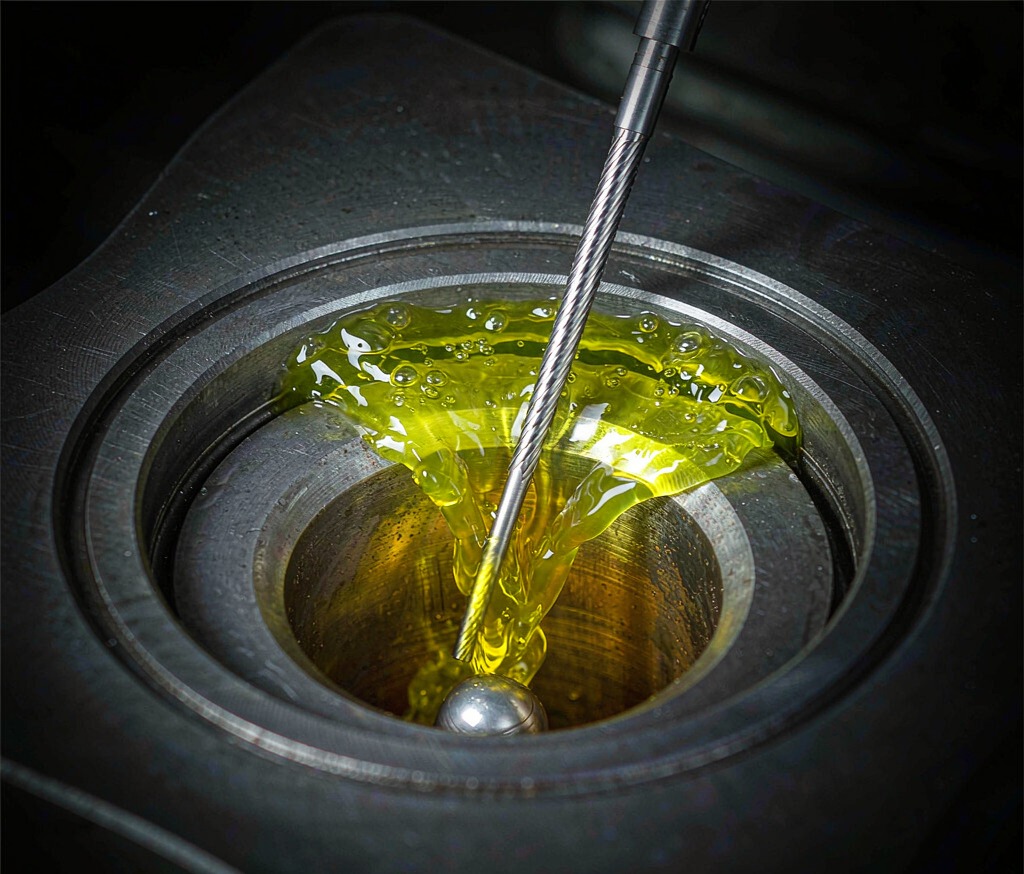
Success depends on the coolant system. We run high-pressure, filtered coolant through the drill shank at pressures tuned to the diameter and depth, because chip evacuation — not cutting force — is the limiting factor in deep holes. The carbide tip geometry is matched to the material, and the bushing that supports the drill at entry is sized to the hole, because that bushing is what guarantees straightness.
Achievable Tolerances and Straightness
Gun-drilled holes typically hold diameter tolerances around ±0.05 mm and straightness within 0.1 mm per 300 mm of depth, with as-drilled surface finish near Ra 0.8 to 3.2 µm depending on parameters. For tighter diameter or finish, the hole is left with stock and finished by honing — the natural downstream step for precision bores.
Honing After Drilling
Many gun-drilled holes go straight to honing to bring diameter, roundness and finish into bearing-grade territory. Honing corrects residual taper and out-of-round left by the drill and delivers a cross-hatched surface that retains lubricant — essential for hydraulic and fuel bores. Where a hole must seat a valve, a bearing or a seal, plan honing into the routing from the start rather than treating it as a fix-up.
Materials
Gun drilling works across the material map: steels, stainless, aluminium, titanium, superalloys and even some hardened stock. Harder, gummy or abrasive alloys slow feed rates and shorten tool life, so they cost more per hole — but the process handles them where twist drilling would simply fail. For very hard materials with fine features, EDM machining can complement or substitute where conventional cutting is impractical.
Cost and DFM
Gun drilling cost is driven by depth, diameter, material and required finish. The biggest savings come from specifying only the tolerance and finish the part actually needs, avoiding unnecessary honing, and designing entry/exit faces that let the bushing seat properly. For thin-wall parts, support the wall so it does not collapse under coolant pressure. Compared with laser drilling for very small holes, our laser drilling services may suit micro-holes where a mechanical drill is impractical.
Frequently Asked Questions
At what L/D ratio should I switch to gun drilling?
Around 10:1 length-to-diameter is the usual crossover; below that, twist or peck drilling on a CNC centre is cheaper. Gun drilling remains viable well beyond 100:1 for small diameters.
What tolerances can gun drilling hold?
Diameter typically ±0.05 mm with straightness around 0.1 mm per 300 mm of depth; honing brings diameter, roundness and finish to bearing grade.
Do I always need honing afterward?
Only if the bore must seat a valve, bearing or seal to tight tolerance or finish. As-drilled holes are straight and round enough for many non-critical deep bores.
What materials can be gun drilled?
Steels, stainless, aluminium, titanium, superalloys and even some hardened stock. Harder or gummy alloys cost more per hole but are still feasible.
How is it different from laser drilling?
Gun drilling produces a straighter, larger, more dimensionally precise mechanical hole; laser drilling suits very small micro-holes where a mechanical drill cannot reach but offers less geometric control.
Ready to Start Your Project?
Get a build-ready quote on your custom metal parts within 24 hours. Share your drawing and our engineers will respond with process, lead time, and pricing.

