
Zinc plating vs galvanizing is one of the most common finishing decisions for steel parts, and the wrong call costs you either money or service life. Both coat steel in zinc to sacrifice itself to corrosion, but they differ sharply in thickness, appearance, and where they shine. Huaxiao applies both, so this comparison is practical, not promotional: here is how to choose between electroplated zinc and hot-dip galvanize for your components, with the trade-offs that actually decide the purchase.
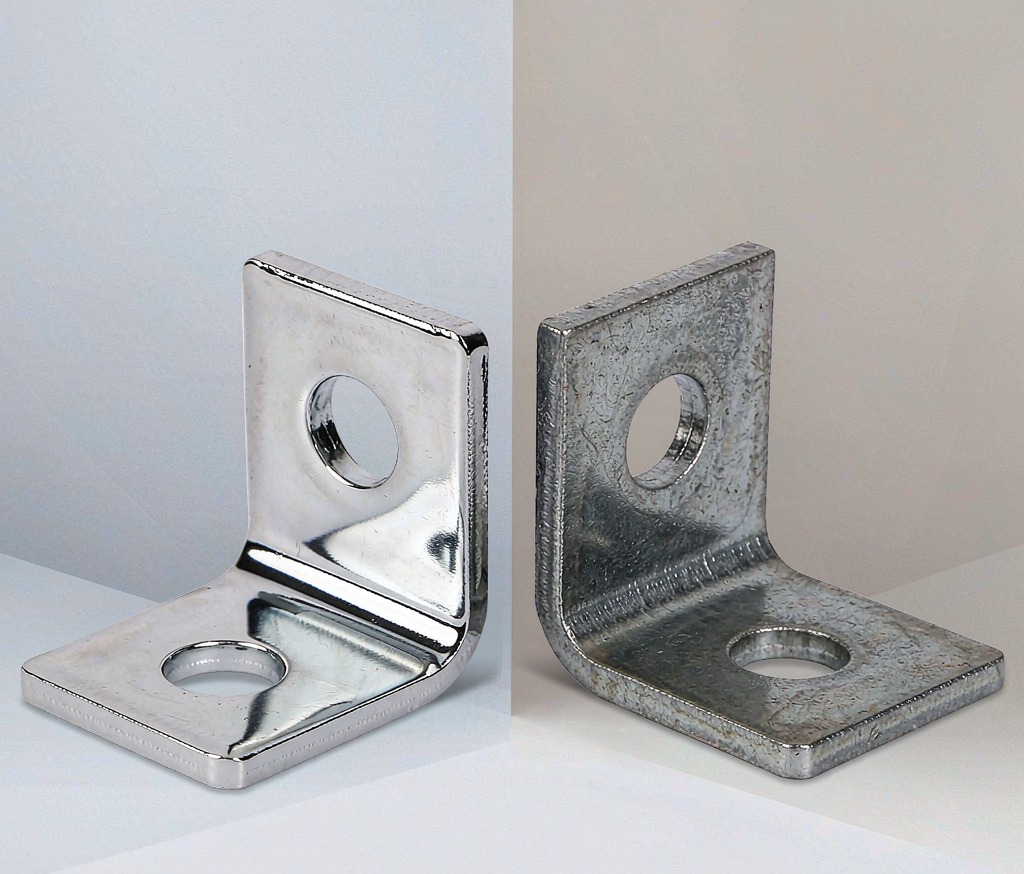
How Zinc Plating Works
Zinc plating is an electroplating process that deposits a thin, even zinc layer (typically 5-25 microns) from a bath onto the part. It gives a bright, uniform, tightly-controlled finish ideal for fasteners, brackets, and interior hardware.
Because thickness is precise, plated parts keep tight tolerances. It is covered in depth in our zinc plating services article.
The plating line also lets you vary the coating by zone and add chromate conversion layers for extra protection or color, so a single batch can meet several customer specs. That control is why plating is the default for catalog hardware.
How Hot-Dip Galvanizing Works
Hot-dip galvanizing dips cleaned steel into molten zinc around 450 C, forming a thick, metallurgically bonded coating (often 50-150 microns). The result is rugged, self-healing at scratches, and extremely long-lived outdoors.
Our galvanizing services guide details bath sizes, specs, and typical life in service.
Because the zinc alloys into the steel surface, the coating is not just sitting on top; it is part of the part. That metallurgical bond is why galvanize survives handling, abrasion, and field cuts far better than a plated layer.
Coating Thickness and Corrosion Life
Plating protects for years in mild, indoor, or light-outdoor use. Galvanizing protects for decades in harsh, coastal, or buried environments because the coating is far thicker and bonds to the steel. If the part lives outside for its whole life, galvanize usually wins on life per dollar.
Both are contrasted with other finishes in our metal plating services overview.
Life also depends on coating damage: a scratch in plating exposes bare steel locally, while a scratch in galvanize is bridged by surrounding zinc through sacrificial action. For parts that get bumped in service, that self-healing behavior is decisive.
Cost, Appearance, and Weldability
Plating is cheaper per part for small items and looks cleaner and more precise; it is also easier to weld through. Galvanizing costs more and leaves a spangled, matte look, and weld smoke contains zinc, so welding needs ventilation and sometimes local stripping.
For a decorative or tight-tolerance part, plating is the safer choice; for a structural beam, galvanize.
Life-cycle cost is the honest yardstick: a plated bracket may be cheaper at purchase but need replacement mid-life, while a galvanized one outlasts the equipment. We help buyers model that trade over the expected service life rather than comparing only the line-item price on the purchase order.
Threaded galvanized fasteners need special tap drills because the thick coat shrinks the clearance; we flag this on drawings so the mating hole is sized correctly the first time rather than reamed in the field.
Which to Choose by Application
Choose zinc plating for fasteners, enclosures, and components assembled indoors or with cosmetic needs. Choose galvanizing for fences, structural steel, poles, and anything exposed to weather for decades. Threaded galvanized fasteners may need oversized tap drills to clear the thick coat.
Consider electroless nickel or nickel plating where hardness or chemical resistance beats pure corrosion life.
When the part sees both indoor and occasional washdown, a thicker plating or a sealed chromate often bridges the gap without the cost and weight of galvanize. Matching the coating to the actual duty cycle beats a blanket rule.
Combining with Other Finishes
Neither zinc plate nor galvanize loves to be painted directly, but both accept chromate or passivation conversion layers that improve adhesion and color. Passivation and sealing extend life further in aggressive service.
Where appearance must be uniform across a mixed assembly, plating is easier to match than galvanize.
For a two-tone product where only some parts are exposed, mixing plated and galvanized members is fine as long as you accept the color difference; we help customers decide when a single finish across the bill of materials is worth the compromise.
When appearance and life pull in opposite directions, we often propose a hybrid: plate the visible parts and galvanize the hidden structural ones, so the product looks uniform from outside while the frame still outlasts the warranty.
Frequently Asked Questions
Which lasts longer outdoors?
Hot-dip galvanizing, with 50-150 microns of bonded zinc, lasts decades versus years for thin plating.
Is zinc plating thinner than galvanize?
Yes, typically 5-25 microns versus 50-150 microns, which is why plating keeps tight tolerances.
Can I weld galvanized steel?
Yes, but ventilate well and consider stripping zinc locally at the weld to avoid toxic fumes.
Which is cheaper?
Zinc plating is cheaper per small part; galvanizing costs more but wins on life-per-dollar outdoors.
Do both protect by sacrificial action?
Yes, zinc corrodes before the steel, protecting the base metal even at scratches.
Can plated parts be painted?
With a chromate or passivation layer for adhesion; bare plate paint adhesion is poor.
Ready to Start Your Project?
Get a build-ready quote on your custom metal parts within 24 hours. Share your drawing and our engineers will respond with process, lead time, and pricing.

