
Aluminum is the default choice when weight, corrosion resistance, and speed-to-market all matter. CNC machined aluminum parts deliver tight tolerances straight from the spindle, with no tooling investment for low and mid volumes. From 6061 brackets to 7075 structural components, CNC machining gives you design freedom that casting and extrusion cannot match for complex, low-volume geometry. Here is how to specify, machine, and finish aluminum parts that perform.
Why Machine Aluminum
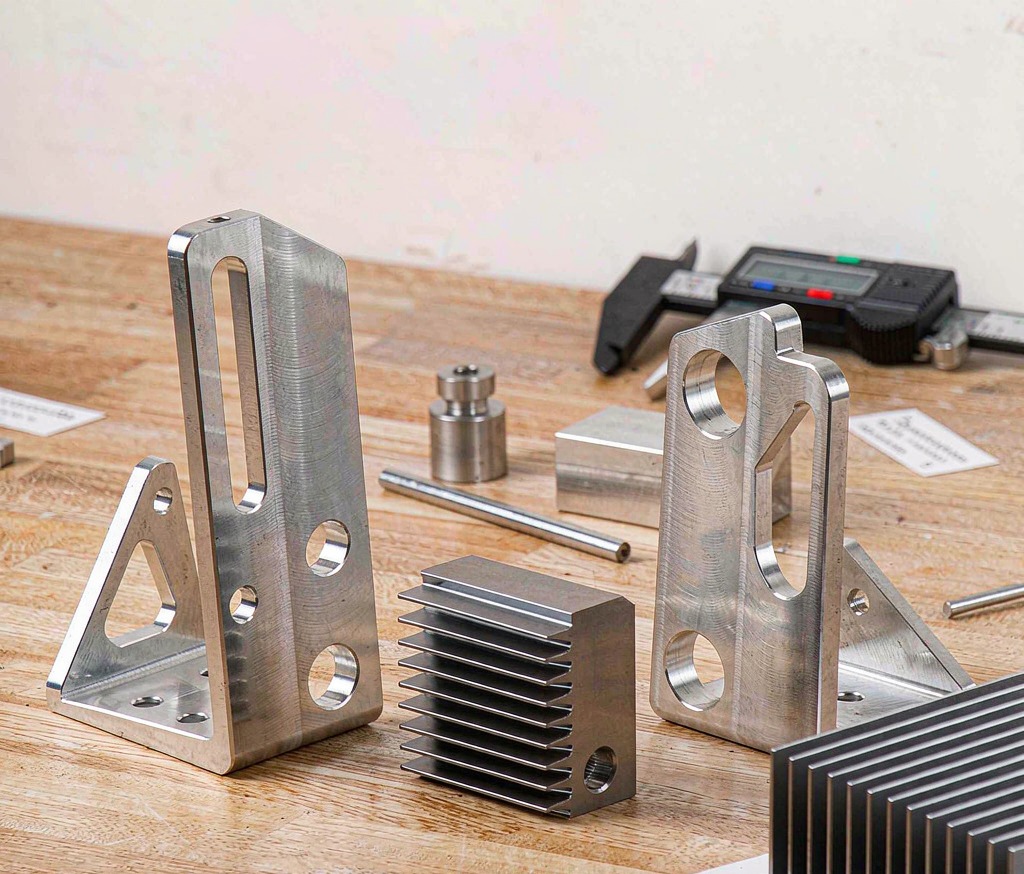
Aluminum machines faster and cheaper per minute than steel, with excellent surface finish and no rust concerns. CNC milling and CNC turning remove material precisely, so you get true 3D features, internal cavities, and threaded holes without secondary tooling. For buyers, that means lower risk on prototypes and the ability to iterate design quickly before committing to casting or forging dies.
Aluminum also conducts heat well, which keeps cutting temperatures low and tool life high. That efficiency shows up as lower cycle times and a lower quote. And because there is no tooling to amortize, the price per part stays reasonable even at a few dozen units — something casting and forging cannot usually match.
Choosing the Right Alloy: 6061 vs 7075
6061-T6 is the general-purpose alloy — weldable, corrosion resistant, and easy to anodize — ideal for brackets, fixtures, and enclosures. 7075-T6 is the high-strength aerospace grade, used where stiffness-to-weight is critical, though it is less corrosion resistant and not weld-friendly. Our aluminum CNC machining program runs both daily, and our machined aluminum parts guide helps you pick the right temper for strength, formability, and finishing.
If neither standard alloy fits, 2024 offers high strength with poor corrosion resistance (cladding needed), while 5052 and 5083 are excellent for forming and marine use. We help you trade off strength, corrosion, weldability, and anodize appearance so the alloy serves the part rather than the catalog.
Milling vs Turning for Aluminum
Use CNC turning for round, concentric parts such as bushings, shafts, and fittings. Use 5-axis CNC machining for complex prismatic bodies with features on multiple faces, eliminating setups and improving accuracy. Many parts combine both: turn the base, then mill the detailed features. Swiss-style and aluminum extrusion stock can also feed machined components when long profiles are involved.
Setup reduction is where 5-axis really pays. Every time a part is re-fixtured, a small error is introduced; doing the work in one clamp removes that risk and shortens lead time. For parts with tight true-position callouts across faces, 5-axis is often the only economical way to hold the print.
Surface Finishing Options
The most common finish is anodizing, which grows a hard, corrosion-resistant, and colorable oxide layer — Type II for general use, Type III (hard coat) for wear. Bead blasting, polishing, and powder coating are also available. Proper finishing not only protects the part but also defines its look, which matters for consumer and enclosure applications.
Anodizing also insulates the part electrically, which matters if you need a non-conductive surface; if you need conductivity, a clear chem-film or bare machined finish is the better call. We flag these trade-offs during quoting so the finish supports the function.
From Prototype to Production
CNC shines because the same program scales from one piece to thousands. We combine deburring and machining with CNC machining services and anodizing services so your prototype and production parts are identical in material and finish. Our 5-axis CNC machining capability reduces fixtures and shortens lead times on complex parts.
Machining vs Other Processes
It is worth being clear about when CNC is the right call. For very high volumes of a simple shape, die casting or extrusion can beat machining on unit cost, because the per-part machining time is replaced by a near-instant press or extrusion hit. But for low-to-mid volume, complex geometry, or parts that change during development, CNC machining wins on flexibility and speed to first part. Many programs start with machined aluminum for validation, then migrate only the proven winners to a casting or extrusion process once volume justifies the tooling. That staged approach limits your risk and keeps capital free until demand is proven.
Getting a Quote
Send your STEP or IGES model, alloy and temper, quantity, tolerance, and finish. We return a build-ready quote with lead time. Early DFM notes from our aluminum CNC machining team often simplify features and cut cost before cutting metal.
Frequently Asked Questions
Is 6061 or 7075 better for my part?
Choose 6061 for general, weldable, corrosion-resistant parts. Choose 7075 when you need maximum strength and stiffness and do not need to weld.
What tolerance can CNC aluminum hold?
Standard machining holds +/-0.1 mm easily, and critical features can reach a few microns with our precision process controls.
Should I anodize my aluminum part?
If the part is exposed to wear or environment, yes. Anodizing improves corrosion resistance and lets you specify a color.
Can you go from prototype to production on the same file?
Yes. The same program scales from one part to volume, keeping design intent consistent across the lifecycle.
Which is cheaper, casting or machining aluminum?
For very high volumes, casting or extrusion wins; for low-to-mid volume and complex geometry, CNC machining avoids tooling cost and is faster to start.
Ready to Start Your Project?
Get a build-ready quote on your custom metal parts within 24 hours. Share your drawing and our engineers will respond with process, lead time, and pricing.

