
Brass combines three properties that keep it in high demand: it machines beautifully, conducts electricity, and resists corrosion without plating. Brass machined parts — connectors, fittings, terminals, and decorative hardware — are ubiquitous in electrical, plumbing, marine, and consumer products. This guide covers alloy choice, machining approach, finishing, and how to get a reliable brass quote.
Why Choose Brass
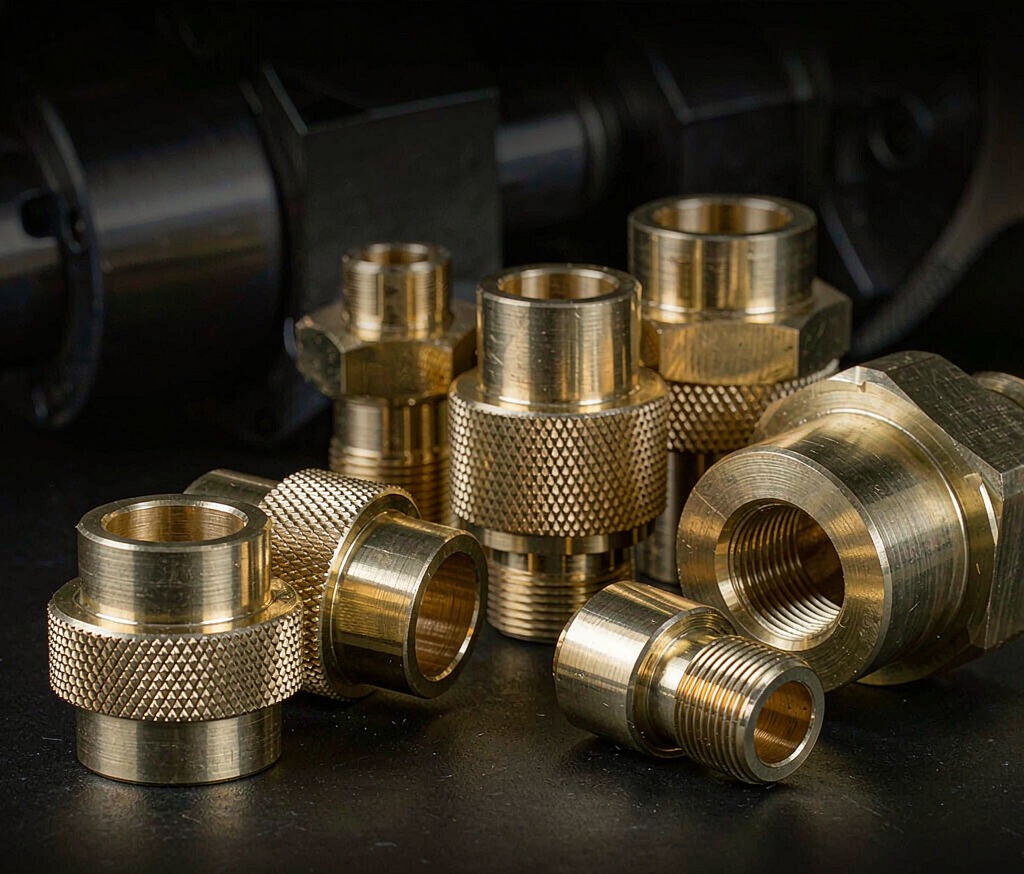
Brass is the easiest common metal to machine, with low tool wear and excellent surface finish straight off the tool. It is naturally antimicrobial and corrosion resistant, and its conductivity makes it the standard for electrical contacts. Compared with steel, brass parts often cost less to produce at volume because cycle times are short. We run brass on both CNC turning and CNC milling cells daily.
That machinability also means cleaner chips and less heat, so we can push higher speeds and feed rates than with steel. The upshot is a lower cost per part and a better surface without extra finishing steps — a rare combination that keeps brass competitive despite its material price.
Common Brass Alloys
C360 (free-cutting) is the machining champion, with lead for chip control — ideal for screws, fittings, and high-volume turned parts. C260 (cartridge brass) offers better formability and is common in electrical and decorative uses. Specialty alloys tune corrosion or spark-resistance. Our brass CNC machining and copper CNC machining programs cover the full copper-alloy family.
For lead-free requirements — common in plumbing and drinking-water parts — we offer silicon and bismuth brasses that machine well and meet regulatory limits. Specifying the right lead-free alloy up front avoids rework and compliance headaches later.
Machining Brass: Turning and Milling
Brass loves high spindle speeds and sharp tools. CNC turning produces fittings, bushings, and pins at speed; CNC milling shapes complex bodies and connector housings. Because the material is stable and non-abrasive, we hit tight tolerances with minimal tool wear — a cost advantage passed to you. Finishing such as nickel plating or polishing adds function or looks.
Surface Finishing for Brass
Brass can ship bright as-machined, be polished to a mirror, or plated for solderability and tarnish resistance. Nickel plating improves wear and corrosion protection; tin and silver are options for electrical contacts. We also deburr and passivate where required. Our nickel plating services and polishing services integrate into the same production flow.
Unplated brass tarnishes over time, which is fine for many industrial uses but undesirable for visible consumer parts. A clear lacquer or thin plating preserves the shine; we help you pick the lightest finish that meets the duty.
Applications
Brass parts dominate electrical connectors, plumbing fittings, marine hardware, musical and decorative items, and RF components. Our CNC machining services support everything from prototypes to high-volume turned brass, and we pair them with passivation where a corrosion certificate is required.
Lead-Free Brass and Compliance
For plumbing, potable-water, and many consumer applications, lead content is regulated, and legacy free-cutting brass with lead no longer qualifies. We machine lead-free silicon and bismuth brasses that still turn and mill cleanly while meeting RoHS and drinking-water limits. Specifying the right lead-free grade at the design stage avoids a costly material change later, and we document composition so your compliance file is complete.
Where conductivity is the priority, tell us early so we balance the lead-free choice against electrical performance, because some lead-free alloys trade a little conductivity for machinability. We keep a qualified range of alloys on hand so switching does not stall your schedule. Finishing also matters for compliance: a clear lacquer or light plating can preserve appearance without introducing restricted substances.
The practical upshot is that lead-free brass is now a default in our shop, not an exception. If your drawing predates the regulations, we will flag it and suggest an equivalent compliant alloy rather than machining something that fails inspection at your customer.
Lead-free does not mean compromised. Modern compliant alloys machine well and look identical in the finished part, so switching costs you nothing in performance while keeping you on the right side of every regulation that matters in your market. If you already have a qualified alloy in your system, send us the specification and we will match it exactly, so your approvals and paperwork carry over without a new round of testing.
Ordering Brass Parts
Send your drawing, alloy, volume, and finish. We quote machining plus any plating, with lead time. Our brass CNC machining team flags DFM opportunities — such as standardizing thread forms — to cut cost before production.
Frequently Asked Questions
Which brass alloy machines best?
C360 free-cutting brass is the fastest and most economical for turned parts; C260 is better when formability matters.
Do brass parts need plating?
Not always. Brass is corrosion resistant as-machined, but nickel or tin plating improves solderability, wear, or tarnish resistance.
Is brass good for electrical contacts?
Yes. Its conductivity and machinability make it the standard for connectors and terminals.
Can you do high-volume brass turning?
Yes. Brass’s short cycle times make it ideal for volume production of fittings, pins, and screws.
Does brass need a finish for outdoor use?
In aggressive environments a clear lacquer or nickel plating prevents tarnish; for mild indoor use as-machined is usually fine.
Ready to Start Your Project?
Get a build-ready quote on your custom metal parts within 24 hours. Share your drawing and our engineers will respond with process, lead time, and pricing.

