
When the job is a two-inch carbon-steel plate — or a twelve-inch one — nothing beats the simplicity and economy of flame cutting. Also called oxy-fuel cutting, this century-old process still dominates heavy structural fabrication, shipbuilding, and field repair because it is portable, cheap to run, and handles thicknesses that lasers and plasma struggle with. Our cutting services portfolio includes both flame and plasma so we can match the method to your material and thickness rather than forcing one tool on every job.
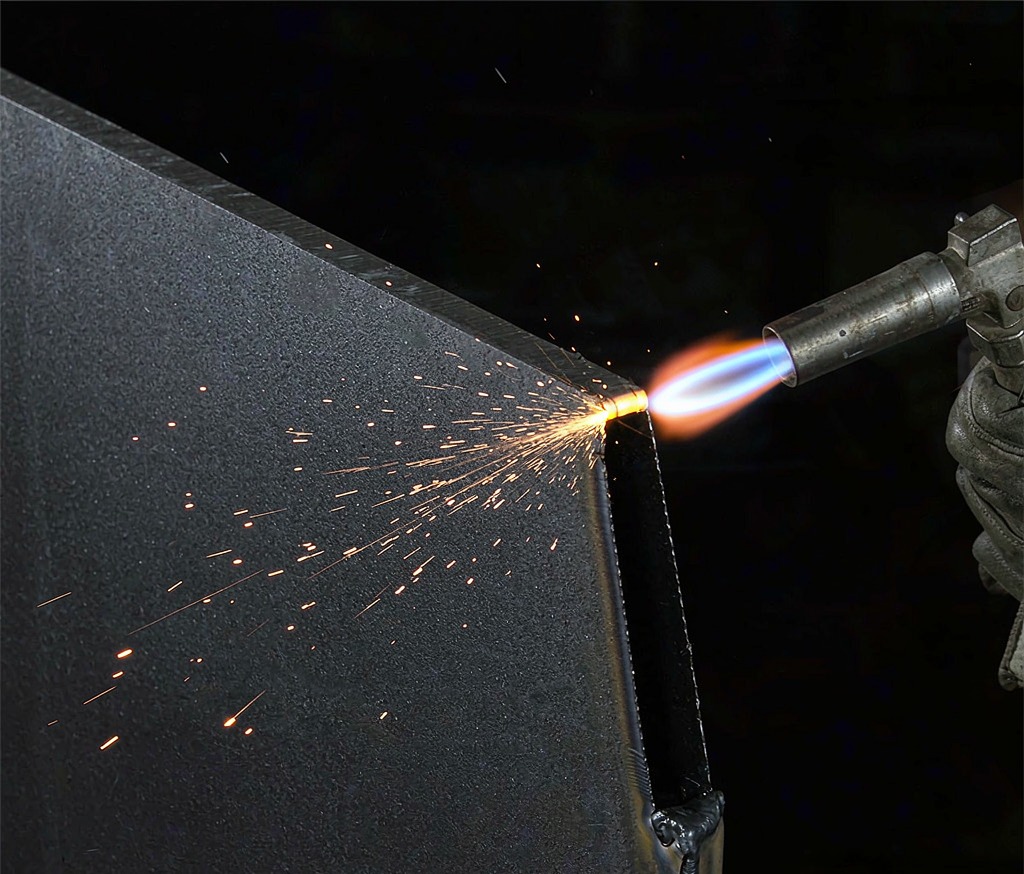
What Is Flame (Oxy-Fuel) Cutting?
Flame cutting preheats the steel to ignition temperature with a fuel-gas torch, then a high-pressure oxygen jet burns the metal in a controlled exothermic reaction, blowing the slag away. It works only on carbon and low-alloy steel (the iron must be oxidizable); stainless and aluminum require plasma or laser instead. The result is a deep, consistent kerf through very thick sections, and the equipment needs no electricity beyond a spark — which is why it is the go-to for remote field work.
Flame vs Plasma Cutting
Choosing between the two comes down to thickness, precision, and material. Flame cutting is best above roughly 25 mm (1 in), economical to 300 mm and beyond, with lower equipment cost but a wider heat-affected zone and rougher edge. Plasma cutting is faster and cleaner on thin-to-medium plate, holds tighter tolerances, works on stainless and aluminum, but loses efficiency past about 60–75 mm. For thin-gauge and high-precision work our laser cutting services are often the better fit, while our plasma cutting services bridge the middle range.
Thickness and Tolerance Capabilities
We routinely cut carbon steel from 6 mm up to 300 mm. Typical oxy-fuel tolerances are ±1.5 mm with kerf widths of 3–6 mm; edges may need grinding or machining for tight fits. For parts that are punched or bent afterward, we can pre-nest blanks to minimize scrap and shorten your overall lead time. Bevel cutting for weld preparation is available so the cut edge is ready for the next operation.
Best Applications for Flame Cutting
Flame cutting excels on heavy, less precision-critical work: heavy structural steel and bridge girders; pressure-vessel and boiler plates; shipbuilding and offshore sections; mining and construction equipment frames; and field repair where only gas and oxygen are available. After cutting, many blanks move to CNC bending or CNC punching for finished fabrications, and we coordinate those downstream steps under one roof.
Secondary Operations
Flame-cut parts are often paired with beveling for weld prep, hole drilling, and surface preparation. Our shearing line handles straight-edged blanks, and we can machine critical faces to print so the part arrives ready for assembly. This one-stop approach removes the hand-offs that usually add cost and delay to thick-plate projects.
Edge Quality and Post-Cut Preparation
Oxy-fuel edges carry dross and a wider heat-affected zone than plasma. For weld prep we bevel and grind to a clean land; for machined features we leave stock on the cut face. Planning the cut path and pierce points also reduces distortion on long plates, which matters when flatness is specified.
Choosing Thickness Limits in Practice
As a rule, choose flame cutting above 25 mm carbon steel, plasma between roughly 3 mm and 75 mm, and laser below about 40 mm. Beyond 75 mm, oxy-fuel is usually the only economical option, and we confirm tolerance expectations with you before cutting.
Flame Cutting vs. Laser for Your Project
If you are deciding between processes, start from thickness and finish. Laser cutting is superb below about 20 mm with a mirror edge and a tiny heat-affected zone, but it stalls on heavy plate and cannot touch thick carbon steel economically. Flame cutting is the opposite: slower and rougher on thin stock, but unbeatable above 25 mm. Many fabricators use both, routing thin parts to lasers and thick parts to flame tables. We can advise which gives you the best total cost including finishing, and we routinely handle both on the same part when a thick blank needs a laser-cut detail added later.
A practical rule is to compare not just the cut but the whole job. If the edge will be machined anyway, a cheap flame cut with stock left on is often smarter than a precision laser cut you then machine off. If the edge is the finished feature, plasma or laser wins. We look at your downstream operations before recommending a process so you are not paying for accuracy you immediately remove, and we can bevel and prep the edge for welding in the same setup.
Safety and operator skill deserve a mention because they affect both cost and quality. Oxy-fuel cutting throws intense heat and sparks, so proper PPE, fire watch, and ventilation are non-negotiable on any job site. In our shops the process is enclosed and CNC-controlled, which removes the variability of hand cutting and produces repeatable edges batch to batch. If you are weighing whether to outsource versus cut in-house, factor in not just machine time but also consumables, gas, handling, and the skilled labor required to hold tolerance on heavy plate.
Frequently Asked Questions
Can flame cutting be automated?
Yes. CNC oxy-fuel tables follow programmed paths for repeatable, multi-part nests with consistent quality.
Why does flame cutting leave a rough edge?
The chemical burn and slower speed create a wider kerf and dross that is easily ground or machined off.
Is flame cutting cheaper than plasma?
For thick carbon steel where edge finish is non-critical, flame cutting has the lowest operating cost per meter.
Request a Flame Cutting Quote
Send your DXF or STEP file with material grade and thickness. We will recommend flame vs plasma and return pricing with lead time.
Ready to Start Your Project?
Get a build-ready quote on your custom metal parts within 24 hours. Share your drawing and our engineers will respond with process, lead time, and pricing.

