
Grade 23 titanium, the Extra-Low Interstitial version of Ti-6Al-4V, is the implantable-grade choice when biocompatibility, fatigue strength, and fracture toughness cannot be compromised. It is the material behind hip stems, bone screws, and surgical instruments used in the human body. This guide focuses on the controls that Grade 23 titanium machining demands for medical buyers.
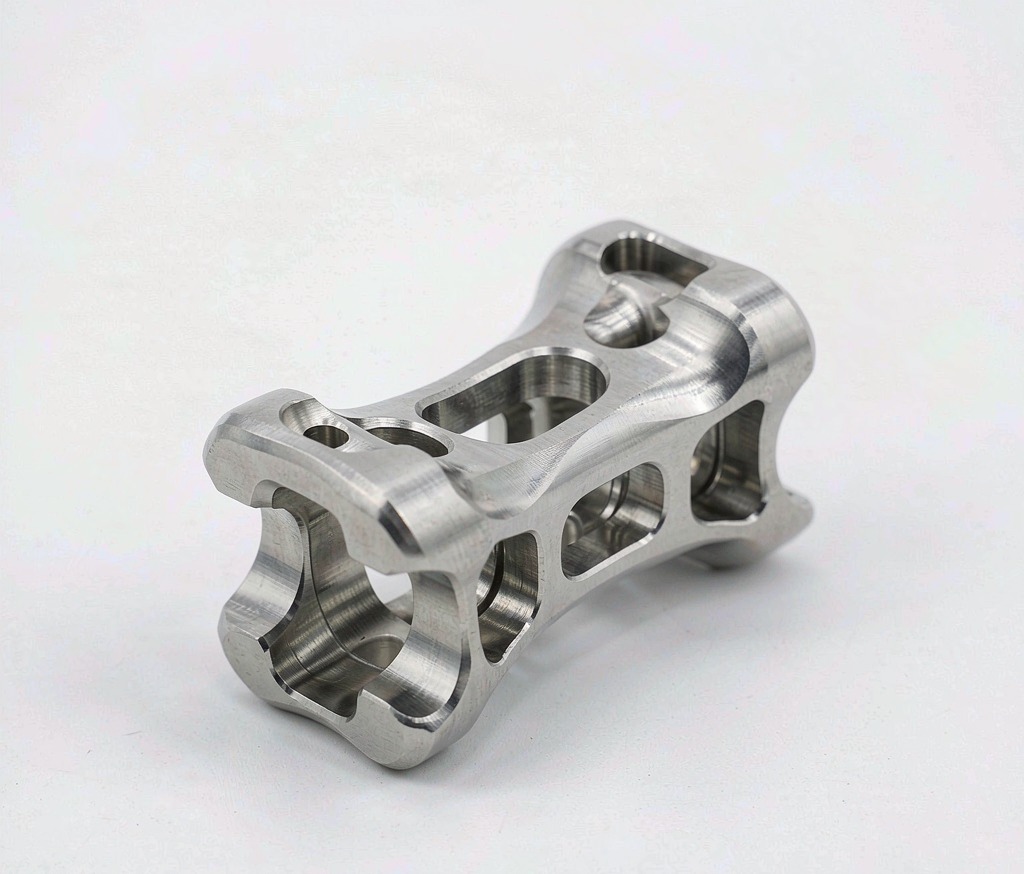
Grade 23 Titanium ELI Basics
By capping oxygen, iron, and interstitial elements, ELI grade gains ductility and toughness over standard Grade 5 while keeping similar strength. That margin matters for implant fatigue life. Machining follows the same titanium rules as Grade 5: rigid setups on CNC milling and CNC turning centers, sharp carbide, low heat, and no chlorine coolants that could embrittle the part.
Machining for Implants
Contoured implant geometry is best finished on 5-axis CNC machining centers that hold the complex form in one chucking and avoid re-fixturing marks. Surface integrity is critical: a burned or work-hardened layer can seed a fatigue crack, so pass parameters are validated, not guessed. Anodizing is used for identification and mild wear resistance, and passivation restores the protective oxide after machining.
Tolerances and Surface Finish
Implant features are held to tight agreed limits, often tighter than ISO 2768, with documented inspection. Surface finish affects both osseointegration and fatigue, so the spec is functional, not cosmetic. Finish grinding and polished passes are planned from the first operation.
Cleanroom and Certification
Medical titanium work is tracked from melt to finished part: melt lot, mill test report, and machined-part traceability. Suppliers serving this space also run medical-grade MIM and related processes under quality systems suited to implants. Our titanium machining services“>titanium machining services overview and medical device manufacturing“>medical device manufacturing guide explain the broader quality expectations.
Surface Integrity and Fatigue
For implantable parts, the subsurface matters as much as the dimension. Improper speeds or dull tools leave a work-hardened, tensile surface that can initiate cracks under cyclic load. Validated parameters, dressed tools, and periodic surface-characterization checks are what separate an implant-grade process from a hobbyist one.
FAQ
Grade 23 vs Grade 5: what is the real difference?
Chemistry limits. ELI has lower interstitials for better toughness and fatigue, which is why it is approved for implantable use where Grade 5 often is not.
Can Grade 23 be anodized for color coding?
Yes. Type II anodizing produces stable colors for instrument identification without affecting biocompatibility when done to spec.
What certification should I require?
Mill test report with melt lot, composition to ASTM F136, and full machined-part traceability. A shop doing titanium CNC machining“>titanium CNC machining for medical use will provide this as standard.
Choosing a Supplier
For implants, process control and documentation outweigh price. Choose a partner that treats traceability and surface integrity as design features, runs validated parameters, and welcomes audit. That discipline is what keeps a titanium part safe inside the human body.
Inspection and Acceptance
For implantable Grade 23, accept only with full melt-lot traceability, ASTM F136 composition, and documented surface-characterization where required. Audit the process, not just the part, because an implant-grade component is defined as much by its records as by its dimensions.
Common Pitfalls to Avoid
The dangerous mistakes are chlorine coolants, burned surfaces from dull tools, and lost traceability. Any one can disqualify a part for implant use. Insist on validated parameters and records, and treat a supplier who cannot show them as a non-starter regardless of price. In medical work, the cheapest quote is rarely the cheapest outcome.
Working With a Machining Partner
Provide the device class, the tolerance, the finish, and the certification package as a single requirement. Medical work is bought on discipline, so expect documentation in the price and welcome it. A partner that runs validated parameters, keeps the chain of custody intact, and opens its process to audit is the only kind worth placing an implantable program with, and that bar should not move for volume.
First Articles and Production Ramp
For a new implant part, the first-article is a full validation, not a courtesy check. Expect documented parameters, surface characterization, and a retained sample. Once validated, the route repeats under the same controls, and volume becomes a matter of capacity rather than re-qualification, which is how medical programs stay both fast and safe.
Total Cost of Ownership
Grade 23 is premium-priced, but for implantable use the cost of a failure is measured in patient harm and liability, not repair hours. Buying on documented quality and traceability is the only rational frame, and the unit price is a minor line in that calculus.
Quick Sourcing Checklist
Before you send the PO, confirm four things: the device class and cert package are stated, melt-lot traceability is required, surface characterization is specified where needed, and chlorine coolants are banned. With those set, a medical-grade shop returns implantable parts you can audit, document, and defend.
Final Note
If the part is not implantable, Grade 5 or Grade 9 may serve at lower cost; reserve ELI for where the standard requires it. Matching the exact titanium grade to the regulatory duty is the simplest way to control cost while meeting the medical bar that matters. A short regulatory review with the shop before release prevents the costly surprise of a part that cannot be documented for its intended use.
Ready to Start Your Project?
Get a build-ready quote on your custom metal parts within 24 hours. Share your drawing and our engineers will respond with process, lead time, and pricing.

