
12L14 is the fastest-machining bar steel in the standard carbon family. Its lead, sulfur, and phosphorus additions break chips and lubricate the cut, which is exactly why 12L14 steel machining dominates high-volume screw-machine and Swiss-turned production. This guide covers when 12L14 is the right call, how we run it, and the trade-offs you must know before specifying it.
What 12L14 Steel Is
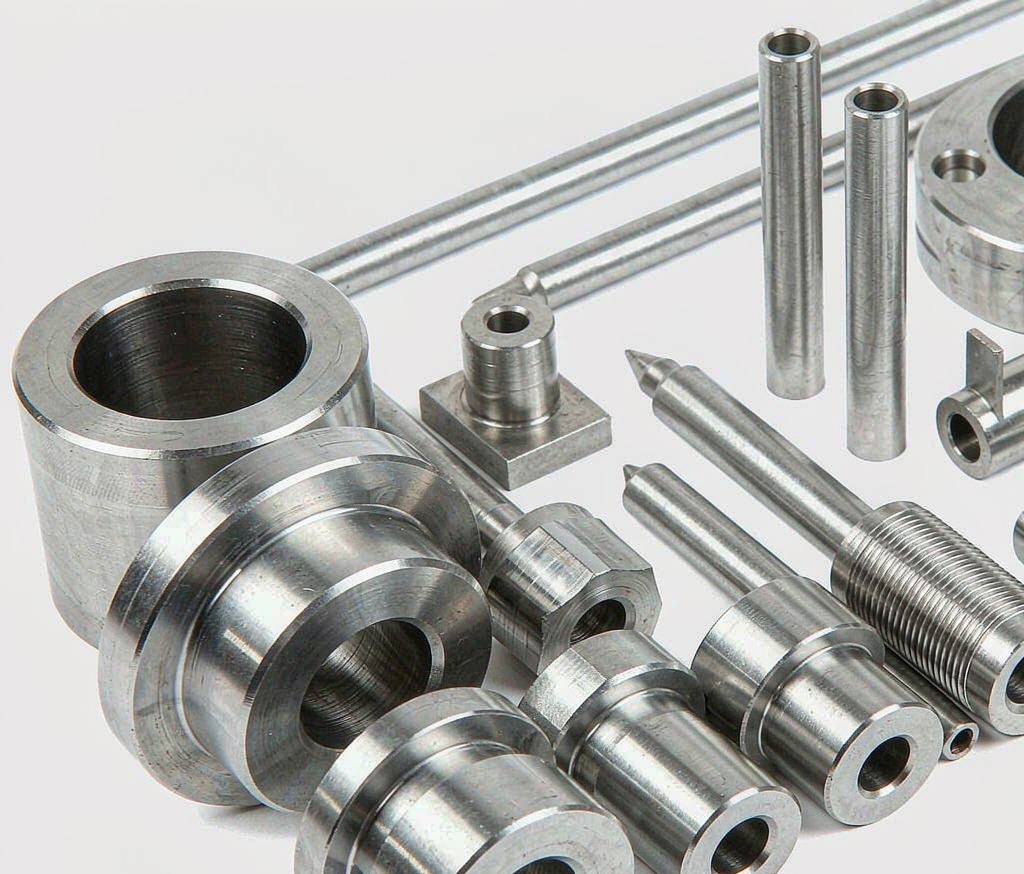
12L14 is a resulfurized, rephosphorized, leaded low-carbon steel built for free machining. Typical tensile strength lands around 540 MPa with a yield near 415 MPa. Its machinability rating reaches roughly 190% of baseline plain carbon steel, which translates directly into shorter cycle times and lower per-part cost on long runs. We run it on CNC turning and Swiss turning platforms for bushings, studs, couplings, fittings, and custom bar parts where volume is high and tolerance repeatability is everything.
Machining 12L14
The lead and sulfur let you push cutting speeds and feeds well beyond what 1018 or 1045 allow, with excellent chip control and smooth surface finish. Tool life stretches because cutting forces drop. For complex small parts, CNC milling adds cross-holes, flats, and features after the primary turn. Because chips break cleanly, unattended and bar-fed production runs reliably with little downtime. Our screw machine parts page details the high-volume workflow.
High-Volume Production Economics
On programs of 100,000 pieces and up, 12L14’s faster cycles often make it the lowest total-cost option even when raw stock costs slightly more than other low-carbon grades. The cycle-time advantage compounds across every spindle hour. After machining, deburring cleans edges, and the parts move to plating.
Finishes for 12L14
12L14 plates and coats well. The most common routes are zinc plating and black oxide for corrosion control and appearance on visible hardware. It is also a strong base for custom fasteners, covered in our custom metal fasteners guide.
Trade-offs You Must Know
12L14 is poor for welding; lead and sulfur invite cracked, brittle welds, so choose 1018 when the part will be welded. It also has limited corrosion resistance like any carbon steel and is not meant for through-hardening. Some markets restrict lead in potable-water, food, or medical contact, where lead-free 1215 is the substitute. Our steel machining services help you pick the grade that fits the spec.
Design Tips for 12L14 Parts
Design 12L14 parts for the screw machine: favor simple turned shapes, consistent diameters, and generous chip-breaking features so cycle times stay short. Avoid thin sections that flex at high feed, and call out the plating early so thread and bore sizes account for coating thickness. If the part must ever be welded, redesign in 1018 instead, because 12L14 welds poorly and can crack. Stating volume and finish up front lets the shop pick bar size and tooling that minimize scrap and keep piece price low.
Also remember that 12L14’s lead content can restrict it in potable-water, food-contact, or medical markets; if your end use falls in those categories, specify lead-free 1215 so the part clears compliance without a late redesign. A short call with your supplier about the application saves the most expensive rework of all: a rejected shipment.
FAQ
Is 12L14 weldable?
Generally no. Its chemistry is optimized for machining, not welding, so pick a low-residual steel for welded assemblies.
When should I use 1215 instead?
When lead is restricted by the end-use spec or market; 1215 is lead-free with nearly the same free-machining benefit.
Can 12L14 be heat treated?
It can be carburized for a wear case, but it is not a through-hardening grade for high-hardness parts.
How to Source 12L14 Turned Parts
Tell your supplier the volume, the finished plating, and any lead-restriction rules up front. With bar stock specified and tolerances called out, 12L14 delivers the lowest cost per piece on long production runs.
Ready to Start Your Project?
Get a build-ready quote on your custom metal parts within 24 hours. Share your drawing and our engineers will respond with process, lead time, and pricing.

