
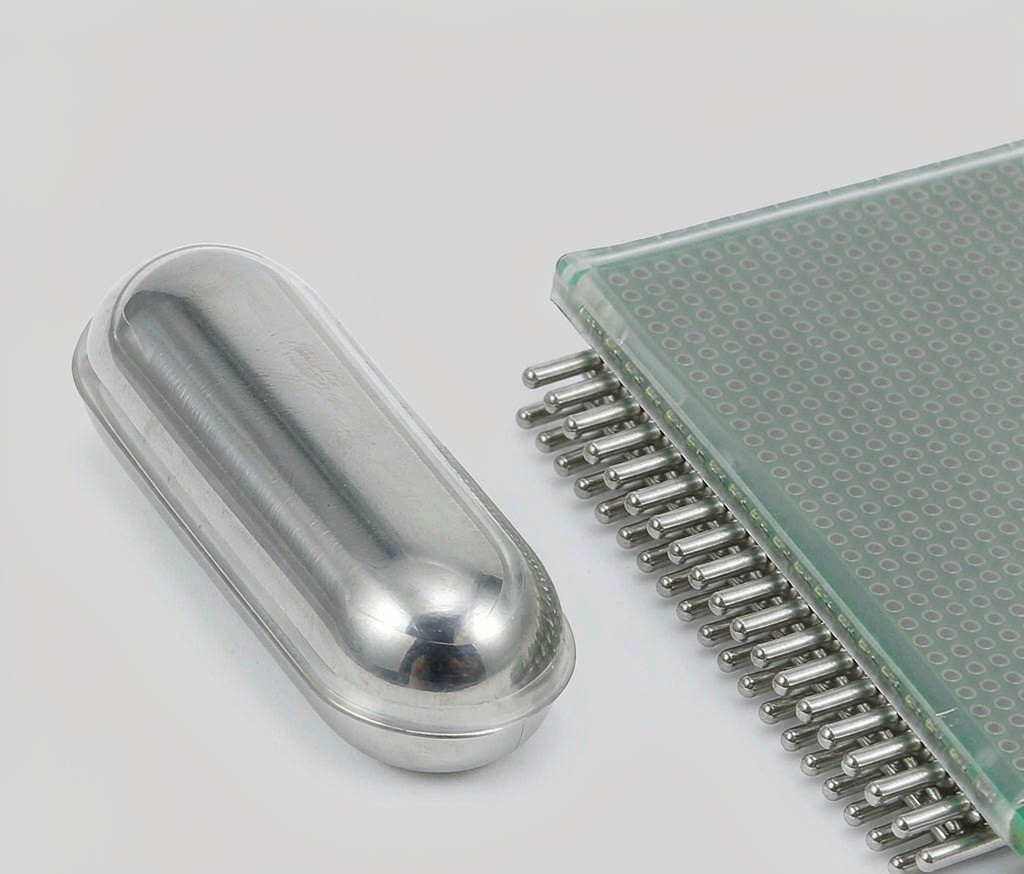
When a metal part must survive moisture, chemicals, or the human body without adding measurable thickness, parylene coating services are the answer. Parylene is a conformal polymer deposited as a vapor, forming a pinhole-free film just microns thick. It is the quiet workhorse behind reliable medical devices, sensors, and aerospace electronics, and it solves a problem that thicker coatings simply cannot: protection with almost zero dimensional change.
What Is Parylene Coating
Parylene (poly-para-xylylene) is applied by chemical vapor deposition: a dimer is vaporized, pyrolyzed, and then polymerized directly on the part surface at room temperature. The result is a truly conformal layer that follows every edge and crevice — unlike spray films that pool or miss recesses. It pairs well with our broader metal surface treatment options when a base corrosion layer is needed under the polymer.
How the Vapor Deposition Process Works
The part is racked in a vacuum chamber, the dimer sublimes and cracks, and the monomer condenses uniformly on all surfaces. Because it is a room-temperature process, there is no heat stress on delicate stainless steel machined components or thin leads — a key advantage over thermally cured coatings that can warp fine features or anneal a previous hardening treatment.
Key Performance Benefits
Parylene is dielectric, hydrophobic, chemically inert, and biocompatible (ISO 10993). It blocks moisture and corrosion on electroless nickel-plated and bare metal surfaces while adding almost no dimension. For comparison, anodizing and powder coating add far more thickness and cannot coat recessed geometry conformally, so they are poor choices for tight-tolerance electronics.
Typical Applications
Medical implants and surgical tools, PCBs and sensors, aerospace connectors, and micro-fluidic parts. Our medical device manufacturing program frequently specifies parylene for corrosion-critical components that must also stay electrically isolated in a wet environment such as a surgical handpiece.
Parylene vs Other Coatings
Versus black oxide or nickel plating, parylene is thinner and non-conductive; versus liquid coatings, it is far more uniform with no meniscus or sag. It is the choice when electrical isolation and micron-level tolerance both matter, and it survives autoclave and chemical sterilization better than most organics.
Specifying a Coating
Tell your supplier the film thickness (typically 0.1–25 µm), the parylene type (C for general, N for high frequency, D for harsh chemical), and any biocompatibility requirement. Our anodizing services team can advise where a thicker barrier coating is better instead, especially for purely structural corrosion rather than electronic protection.
Thickness and Tolerance Planning
Because parylene adds microns, you normally machine to the final dimension and let the coating sit outside the tolerance band as a bonus layer. For press-fit or sliding features, however, even a few microns can matter, so specify a masked zone or a thinner film on those surfaces and call it out on the drawing.
Masking is done with fixture tape or removable plugs before deposition, then stripped after. Our team coordinates this with the base passivation step so the part leaves with the correct corrosion layer under the polymer and no bare edges at the mask line.
Quality Verification
A proper parylene run includes a thickness check by cross-section or coating weight, plus a continuity test such as a dye or high-potential inspection to prove there are no pinholes. For medical parts, the supplier should hold ISO 13485 and provide a coating certificate with each lot so your own audit trail stays clean.
Because the film is so thin, do not rely on visual inspection alone. Require a measured thickness report at the start and end of a production lot, and confirm adhesion with a tape test on a witness coupon processed in the same chamber load as your parts.
Lead Time and Batch Size
A parylene run is a batch vacuum process, so very small quantities share a chamber load with other jobs and ship in days, while a large dedicated load needs scheduling but still turns quickly because deposition is fast. Tell your supplier the annual volume up front so they can quote a standing load rather than a one-off, which lowers the per-part price noticeably on recurring medical or electronics programs.
Handling and Rework
Parylene is tough but thin, so avoid sliding coated parts against each other in bulk, which can scar the film at edges. If a part fails a continuity check, the coating is stripped chemically and re-deposited rather than patched, because a patch would create a thickness step. Plan for that possibility on first articles so a single rejection does not stall the whole lot while you wait for a re-coat slot.
Comparing Parylene Types
Parylene C is the general standard with the best moisture barrier; Parylene N has the lowest dielectric constant for high-frequency electronics; Parylene D resists harsh chemicals and high temperature. Choosing the right type is a one-line spec that changes the deposition feedstock, so name it early and the coating house will match the chamber load to your performance need without a revision later.
FAQ
Is parylene biocompatible?
Yes — parylene C meets ISO 10993 and is widely used on implantable and surgical devices as a conformal dielectric layer.
How thick is the coating?
Typically 0.1–25 µm; thickness is controlled by deposition time and part load, so it is highly repeatable.
Does it change part dimensions?
Negligibly — the film is microns thin and conformal, so machined tolerances are preserved almost exactly.
Ready to Start Your Project?
Get a build-ready quote on your custom metal parts within 24 hours. Share your drawing and our engineers will respond with process, lead time, and pricing.

