
Hastelloy X machining sits at the demanding end of nickel superalloy work. A nickel-chromium-iron-molybdenum alloy, Hastelloy X is prized for high-temperature strength and oxidation resistance up to about 1200°C, which makes it indispensable for gas-turbine ducts, afterburner components, and industrial furnace fixtures. Those same properties make it work-harden aggressively under the cutter, so success comes down to rigidity, tooling, and process control. This guide covers how to cut it reliably and to print.
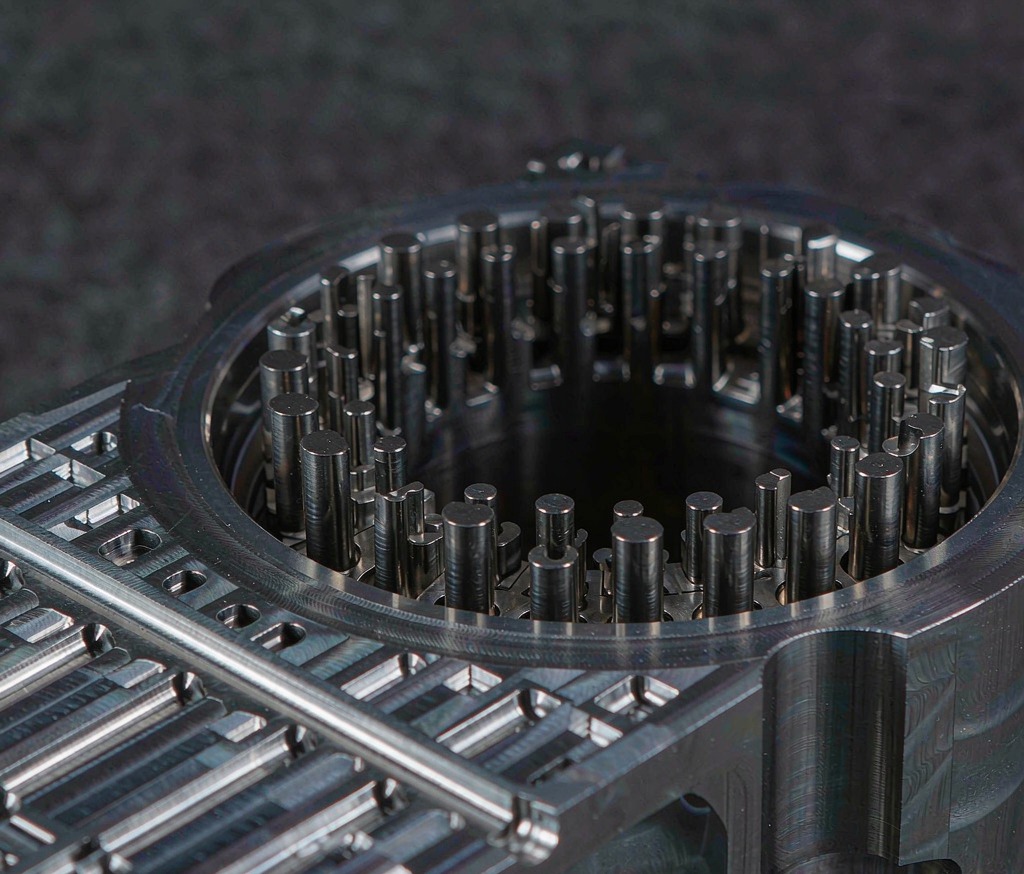
What Makes Hastelloy X Difficult to Machine
Like most nickel superalloys, Hastelloy X has low thermal conductivity and a strong tendency to strain-harden the instant a tool rubs instead of cuts. The result is heat buildup, built-up edge, and rapid tool wear if parameters are wrong. The alloy also springs back elastically, so thin features can deflect under load. The fix is a rigid, low-vibration setup and a tool path that always takes a fresh cut—never a light “clean-up” pass that merely work-hardens the skin. Our Hastelloy machining services overview explains the family-wide approach.
Controlling Work Hardening
The single most important rule is to avoid dwelling. Use sharp, positive-rake carbide or CBN inserts, keep feeds high enough that the tool bites rather than rubs, and maintain consistent depth of cut. Peck cycles on钻孔 and rigid flood or through-spindle coolant keep the cut zone cool. When hardening does occur, a follow-up stress relief can restore stability—our heat treatment process supports this. For design, favor larger corner radii and avoid fragile thin walls that amplify deflection.
Tooling and Cutting Parameters
Coated carbide (AlTiN or similar) at moderate speeds with aggressive feeds is the workhorse; ceramic or CBN enters play for roughing at higher temperatures. Rigid CNC milling and CNC turning centers with high torque and minimal overhang are essential to suppress chatter. Multi-axis 5-axis CNC machining reduces setups and repositioning error on complex turbine geometry, which is where Hastelloy X is most often found.
Tolerances and Surface Finish
Achieving micron-level tolerances on a gummy superalloy requires balancing cutting heat against dimensional drift. We verify with in-process measurement and finish critical surfaces to the specified Ra; features that are hard to reach mechanically can be completed by EDM machining without inducing mechanical stress. Material consulting via our material consulting team confirms the grade and temper before release.
Typical Applications
Hastelloy X is the default for gas-turbine combustion liners and tailpipe hardware, industrial furnace radiant tubes and fixtures, and chemical-process components exposed to both heat and corrosion. These are high-value, low-tolerance-budget parts where rework is expensive—exactly the profile where aerospace machining services and disciplined process control pay off. Related nickel work is covered in our Inconel machining guide.
Prototyping and supplier selection. Because Hastelloy X stock is expensive and rework is costly, the highest-leverage step is front-end engineering: a DFM review that eliminates thin walls, opens internal corners, and tunes tolerances to the alloy’s behavior. Our material consulting team returns process feedback before the first cut, protecting both schedule and budget on turbine and furnace-critical parts. When a component is still in development, low-volume prototypes let design and manufacturing data improve together rather than after a costly production miss, and our aerospace machining services support exactly that iterative path with full traceability on every lot.
Frequently Asked Questions
Why does Hastelloy X work-harden so fast?
Low thermal conductivity and high strain-hardening rate mean any rubbing action cold-works the surface; sharp tools and firm feeds prevent it.
Can Hastelloy X be milled on standard CNC?
Yes with rigid machines, carbide tooling, and controlled parameters; 5-axis helps on complex shapes.
What finishing is used?
Precision milling plus EDM for hard-to-reach features, with inspection to spec and optional heat treatment.
Is it weldable?
Yes, with proper procedure and matching filler; post-weld heat treatment may be needed for stability.
Ready to Start Your Project?
Get a build-ready quote on your custom metal parts within 24 hours. Share your drawing and our engineers will respond with process, lead time, and pricing.

