
Dental restorations succeed or fail on micron-level fit: a few micrometers of mismatch at an implant-abutment interface can cause leakage or failure. Dental metal parts, from titanium abutments to prosthetic frameworks, are milled to exacting standards. This guide covers the materials and machining that make a dental component clinically reliable.
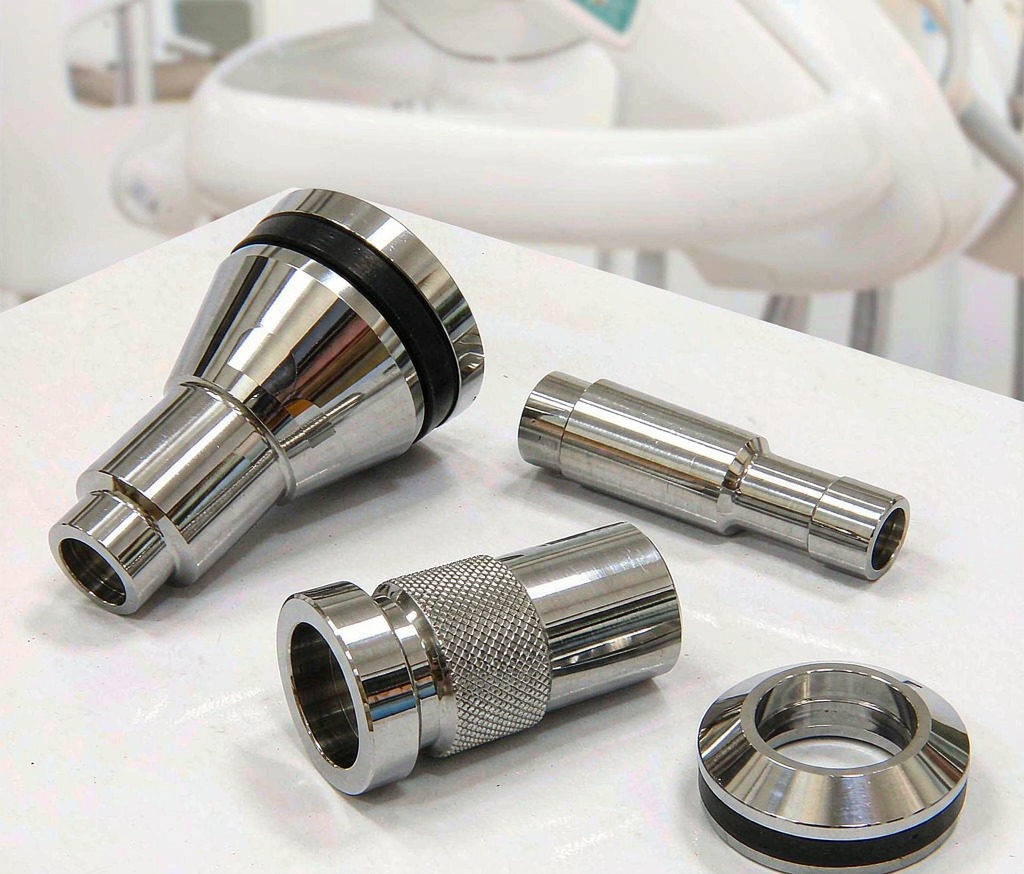
Overview of Dental Metal Parts
The category spans implant fixtures, healing and custom abutments, screw-retained frameworks, and surgical guide sleeves. Each interfaces with bone, soft tissue, or another component, so fit is everything. Our medical device manufacturing program brings medical-grade discipline to dental work.
Key Materials: Titanium and Cobalt-Chrome
Ti-6Al-4V ELI (ASTM F136) is the standard for implant bodies and abutments thanks to biocompatibility and strength; cobalt-chrome is used for milled frameworks. CP titanium suits temporary parts. Our titanium machining services team machines these alloys to dental tolerances.
Machining Patient-Specific Abutments
Custom abutments are cut from a patient scan on 5-axis and CNC milling centers to hold emergence profile and connection angle. Interface mismatch of even 10 um can cause failure, so single-setup 5-axis cutting protects datum transfer. The same precision drives our precision machined parts.
Threads, Interfaces, and Tolerances
Implant threads follow ISO dental standards; internal hex, octagon, and conical connections are cut to micron accuracy on CNC turning and Swiss turning. Screw holes and indexed features are positioned within tight bands so the assembly seats without adjustment. Our tolerance guide explains how tolerances are assigned by function.
Surface Treatment and Cleanliness
Transmucosal surfaces are polished smooth; osseointegration zones are blasted or etched; passivation removes free iron and anodizing can color-code platforms. Ultrasonic cleaning and clean packaging prevent contamination before sterilization. Both finishes are part of our surface treatment menu.
Quality and Regulatory Expectations
Dental OEMs expect ISO 13485, material traceability, and CMM verification on every critical interface. Cleanroom machining and digital travelers are baseline for patient-specific parts. Build these requirements into the PO from day one.
Sourcing Dental Components
Share the STL or STEP with the connection geometry and platform, and a capable shop returns DFM feedback and a quoted plan. Start with our medical device manufacturing to scope abutments, fixtures, or frameworks.
Frequently Asked Questions
What is the main dental implant material?
Ti-6Al-4V ELI (ASTM F136) titanium for fixtures and abutments; cobalt-chrome for milled frameworks.
How tight are dental tolerances?
Critical interfaces are held to single-digit microns; 10 um of mismatch at an abutment interface can cause clinical failure.
Can you machine patient-specific abutments?
Yes. 5-axis machining cuts abutments directly from patient scan data, preserving emergence profile and connection angle.
What quality system applies?
ISO 13485 with full material traceability, CMM inspection, and cleanroom packaging for patient-specific parts.
Fit That Protects the Patient
Dental components live or die on micron fit and clean processing. Send your connection geometry and we will return a traceable machining quote.
Ready to Start Your Project?
Get a build-ready quote on your custom metal parts within 24 hours. Share your drawing and our engineers will respond with process, lead time, and pricing.

