
2024 aluminum is the classic high-strength aerospace alloy, and 2024 aluminum machining is a specialty for structural brackets, spars, and motorsport components where strength-to-weight rules. It is less corrosion resistant than 6061 and cannot be welded easily, but nothing in its class matches its fatigue strength at low weight. In this guide we cover the tempers, the machining strategy that prevents tearing, and the finishing steps that protect the part in service. For the alloy map, start with our aluminum CNC machining services page.
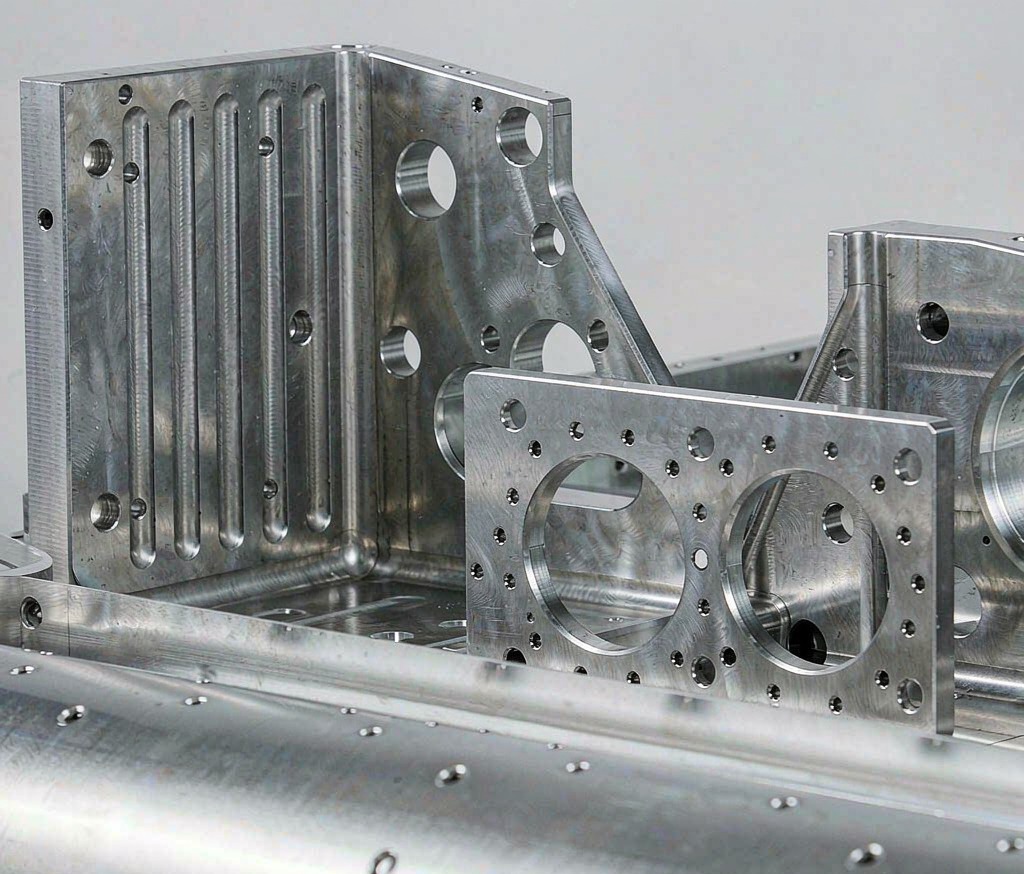
What Is 2024 Aluminum
2024 is a copper-bearing 2xxx-series alloy with roughly 4.4% copper and 1.5% magnesium, giving it excellent strength and fatigue resistance. It is the metal behind aircraft skins and structural fittings. The cost is lower corrosion resistance and poor weldability, so 2024 parts are usually mechanically joined and often clad or coated for protection. When the priority is stiffness and fatigue life per gram, 2024 is the benchmark.
Temper Options: T3, T4, T351
2024 ships in tempers like T3, T4, and T351, which trade strength for formability. T351 is stretched and stress-relieved, reducing warpage during machining—critical for thin aerospace sections. 5-axis CNC machining handles the compound contours common on airframe parts while minimizing setups. Choosing the right temper up front avoids distortion and scrap on large, thin features.
Machining 2024 Without Tearing
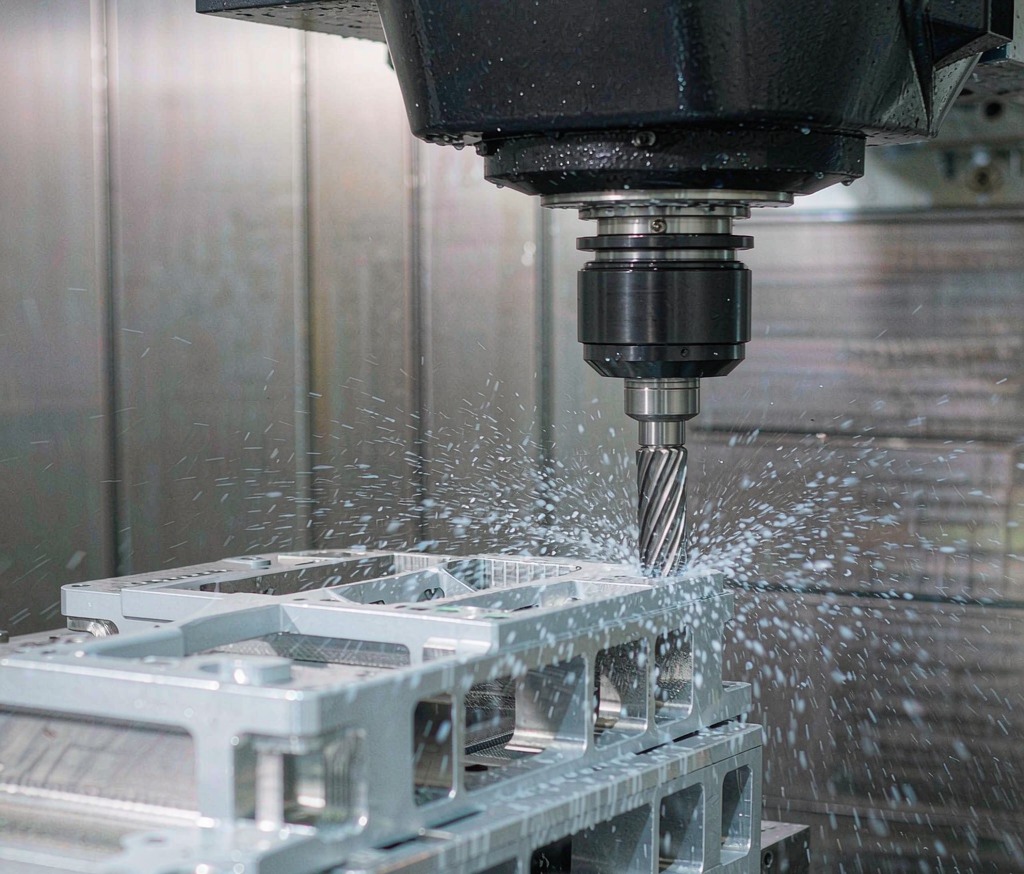
2024 machines well with sharp carbide and generous chip loads; the main risk is built-up edge on the cutting tool. CNC milling is the dominant process for brackets and skins, while CNC turning suits round stock and bushings. Keep tools fresh and use coolant to manage the gummy chip formation, and 2024 will deliver excellent surface quality at competitive cycle times.
Tolerances and Surface Finish
2024 holds tight tolerances readily and takes a clean machined finish. Surface grinding refines sealing and bearing faces when required. Because the alloy is prone to distortion if clamped aggressively, light, well-supported workholding is essential on thin walls.
Anodizing and Protection
2024 does not anodize as cleanly as 6061 and has weaker corrosion resistance, so protection matters. Anodizing provides a hard decorative layer, but many aerospace programs pair 2024 with cladding or primer for long-term durability. Our 7075 machining guide covers an even stronger alternative when you need maximum strength.
Aerospace and Motorsport Uses
2024 is the structural backbone of airframes—spars, ribs, brackets, and skins—and is increasingly used in motorsport for stiff, light components. Its fatigue strength makes it the default where parts cycle under load. Our aerospace machining services page details the controls we apply for flight-critical work.
2024 vs 6061 and 7075
6061 is easier to machine, weld, and corrode-resist but is weaker; 7075 is stronger but less tough than 2024. 2024 wins on fatigue and specific strength for structural airframe parts. Choose by the loading and environment: 2024 for fatigue-critical structure, 6061 for general parts, 7075 for peak strength.
Quality and Inspection
Aerospace-grade work demands traceability. We verify material certs, hold first-article inspection on contour and thickness, and confirm temper with hardness or conductivity checks. Thin-wall distortion is managed with light workholding and measured at final. For flight-critical parts we can supply inspection documentation that matches your quality system, so the part is accepted on the first incoming audit rather than after a rejection loop.
Lead Times and Volume
2024 is widely stocked in T351 plate and bar, so machining lead times are short; the constraint is finishing and any cladding or coating. Prototypes ship in days, and production pricing improves with batch size as fixturing and setup amortize. Sharing forecast volume helps us plan anodize or primer capacity and avoid a bottleneck at the protective-finish step.
Drawing Tips for 2024 Parts
Aerospace and motorsport buyers rightfully expect precision, so the drawing should carry full geometric dimensioning and tolerancing, not just coordinate callouts. Flag the thin-wall and contour features most sensitive to distortion, and tell us the acceptable camber or twist across the part. Because 2024 is weak in corrosion, note whether cladding, anodize, or primer is required and to what spec. If the part is a fatigue-critical structure, indicate the load path so we can orient features to avoid stress concentrations. Material certs and lot traceability should be requested up front if your quality system requires them. A complete 2024 drawing lets us machine to print the first time and supply the documentation your audit expects.
2024 vs Other Aerospace Alloys
Within the aerospace toolbox, 2024 competes with 7075 and 6061. 7075 is stronger but less resistant to corrosion and more prone to stress corrosion cracking, so 2024 is preferred for fatigue-critical airframe structure where repeated load matters most. 6061 is easier to machine and weld but too weak for primary structure. Designers therefore use 2024 for spars, ribs, and skins and reserve 7075 for highly loaded fittings. The practical takeaway: choose 2024 when fatigue life per gram is the metric, and protect it with cladding or coating because it is the least corrosion-resistant of the three. Our 7075 guide covers the stronger alternative when peak strength wins.
Sustainability and Reuse
Like all aluminum, 2024 is fully recyclable, and recycling it uses a fraction of the energy of primary production. Offcuts and chips from machining are collected and returned to the melt stream, which both lowers cost and supports the sustainability goals many aerospace and automotive programs now require. Specifying 2024 therefore aligns high performance with responsible material use, an increasingly important factor in supplier selection.
Frequently Asked Questions
Can 2024 aluminum be welded?
Welding 2024 is generally avoided; it is crack-sensitive and loses strength in the heat-affected zone. Mechanical fastening or adhesive bonding is preferred.
How corrosion resistant is 2024?
It is one of the least corrosion-resistant common alloys, so it relies on cladding, anodizing, or paint for protection in service.
Is 2024 stronger than 6061?
Yes, 2024 offers higher strength and much better fatigue resistance than 6061, at the cost of weldability and corrosion resistance.
2024 aluminum is the structural alloy of choice when strength and fatigue life matter more than weldability. Send us your aerospace or motorsport drawing and we will machine it to print with the right temper and protection.
Ready to Start Your Project?
Get a build-ready quote on your custom metal parts within 24 hours. Share your drawing and our engineers will respond with process, lead time, and pricing.

