
4-Axis CNC Machining Services: Rotational Accuracy, One Setup
4-axis CNC machining adds a rotary axis to the standard three, letting the machine spin the workpiece so it can cut features around its circumference without manual repositioning. For shafts, cam profiles, and parts with holes or pockets on multiple sides, 4-axis machining boosts accuracy and slashes setup time. This guide explains how it works, when it beats 3- or 5-axis, the materials it runs, and how to spec your job.

How 4-Axis CNC Machining Works
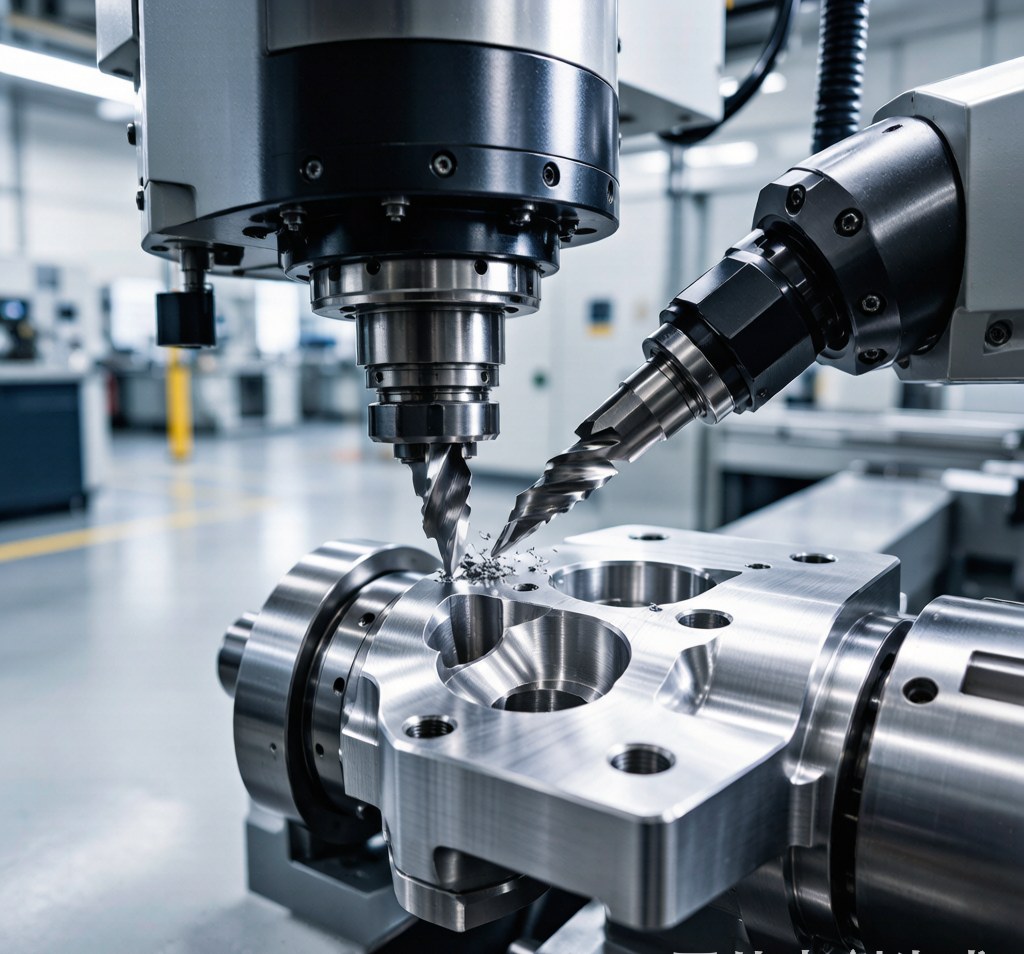
A 4-axis center has X, Y, Z travel plus an A-axis rotary table that indexes or continuously rotates the part. The cutting tool stays put in its plane while the part turns, bringing side and wrapped features into reach in one clamping. This eliminates the cumulative error of unclamping and re-fixturing that 3-axis machining would need for the same geometry. It is the natural step up before committing to 5-axis machining.
4-Axis vs. 3- and 5-Axis Machining
Compared with 3-axis, 4-axis handles cylindrical and indexed-side features in a single setup, improving repeatability. Compared with 5-axis, it is simpler and cheaper while still covering most wrapped geometries. Choose 4-axis when features wrap around a single rotational axis but don’t require compound-angle tool access.
Materials We Machine
- Aluminum — fast, clean 4-axis work for brackets and hubs.
- Steel and stainless — for shafts, cams, and structural parts.
- Brass and bronze — for valves and rotating components.
- Titanium and Inconel — with rigid rotary fixturing.
- Engineering plastics — for insulators and jigs.
Industries That Rely on 4-Axis Machining
Automotive (cam and pulley parts), robotics (rotary joints), fluid power (valve bodies), and medical devices all use 4-axis parts. Any component with features distributed around a central axis is a strong candidate.
How to Spec Your 4-Axis Job
- Define the rotational axis clearly on the drawing (which axis the part spins about).
- Call out wrapped features — holes, slots, and profiles at angles around the body.
- Set datums and tolerances relative to the rotary center.
- Choose material and finish for the application.
- State volume and timeline to select fixturing and batching.
FAQ
When do I need 4-axis instead of 3-axis?
When your part has holes or features on its sides or around its circumference that would otherwise need multiple setups.
Is 4-axis more expensive than 3-axis?
Slightly, but single-setup accuracy and saved labor usually offset the difference.
Can 4-axis replace 5-axis?
For single-axis wrapped geometry, yes—and at lower cost. Compound angles still need 5-axis.
Why Choose Huaxiao for 4-Axis CNC Machining
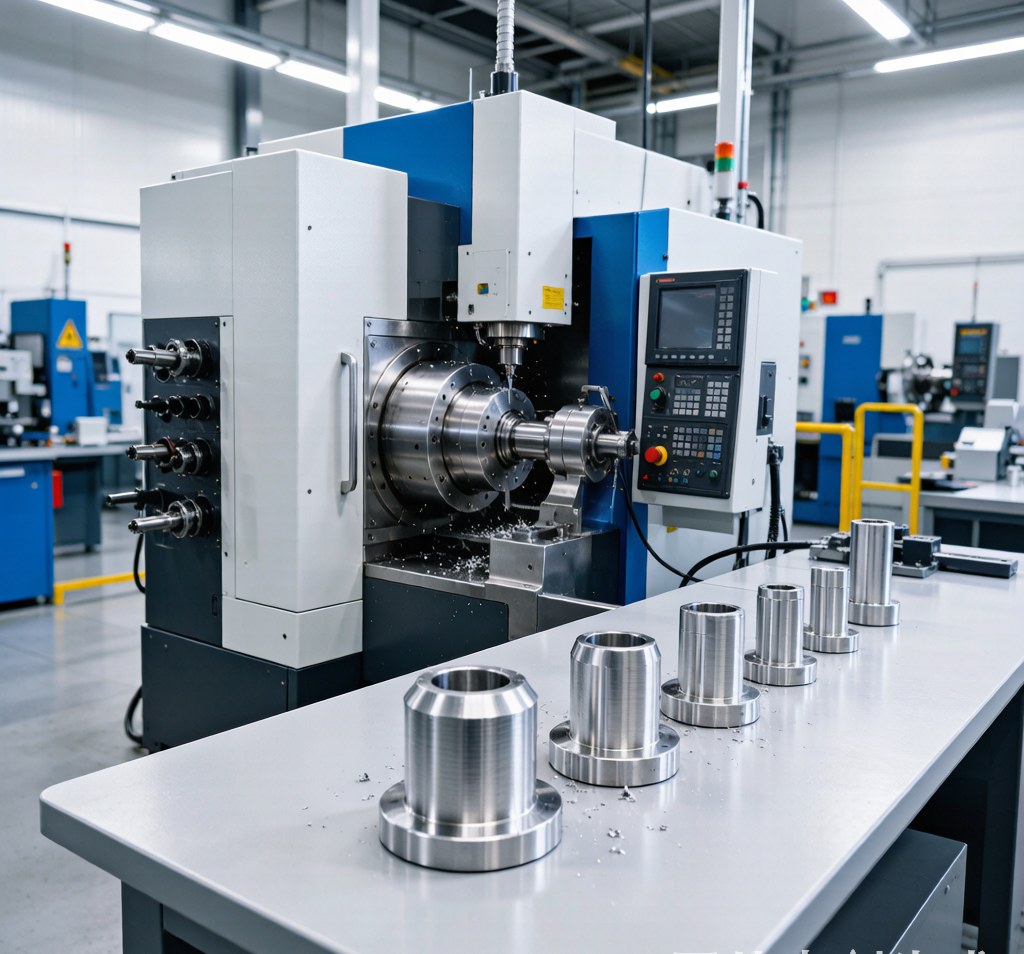
Our 4-axis CNC machining service delivers rotationally accurate parts in one setup, with DFM support and in-house inspection. We bridge the gap between simple 3-axis work and full 5-axis complexity. Send your model for a quote that fits the right axis count.

