
When a part lives in or near salt water, 5083 aluminum is often the first material engineers reach for. It is a non-heat-treatable marine grade with outstanding corrosion resistance and, crucially, it keeps its strength down to cryogenic temperatures. Our 5083 aluminum machining turns plate and bar into boat structures, tank components, and transport frames that stay sound where other alloys would corrode or crack.
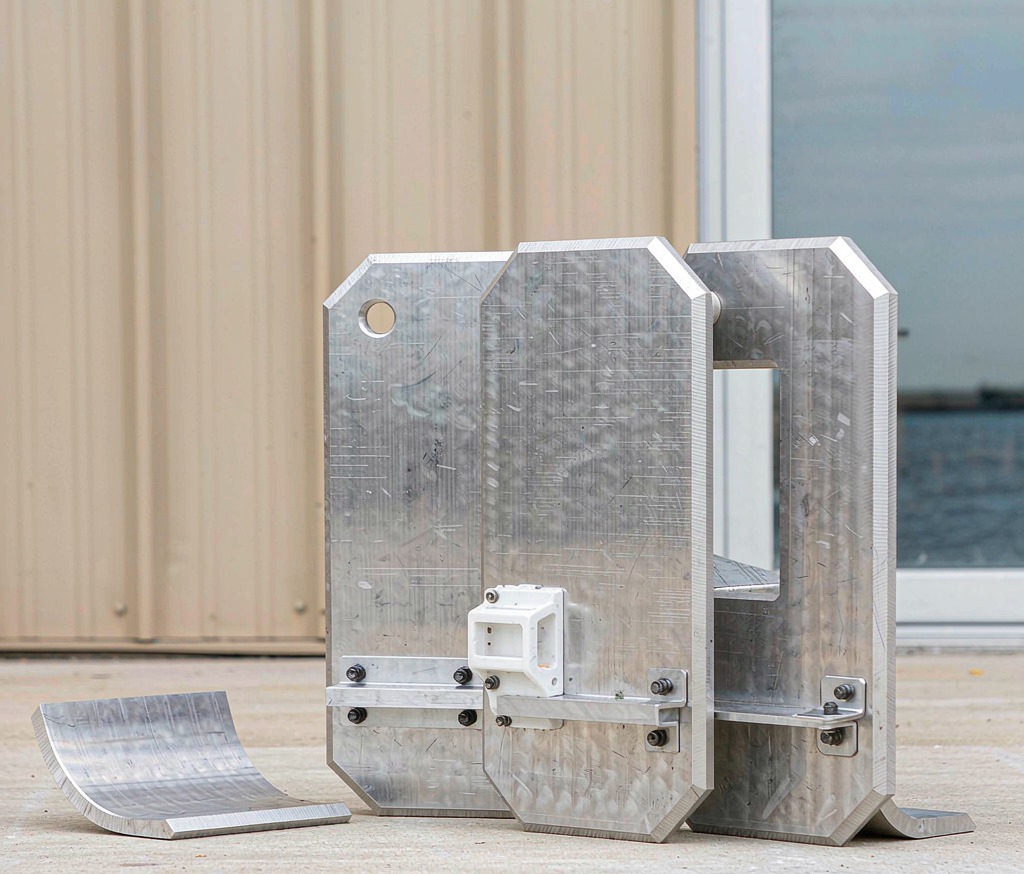
Why 5083 for Marine Work
5083 (Al-Mg-Mn) owes its reputation to high magnesium content, which gives excellent resistance to seawater and industrial atmospheres and avoids the sensitization problems of some heat-treatable grades. It is also one of the best aluminum alloys for welded structures because it does not lose much strength in the heat-affected zone. That is why it anchors most marine metal parts programs and why we machine it so often for hull, deck, and tank hardware.
Beyond boats, 5083 is specified for LNG tanks, cryogenic piping, and pressure vessels precisely because it stays tough when steel would go brittle. That dual capability, marine plus cryogenic, makes it a quiet favorite in transport and energy equipment where weight savings matter as much as durability.
Machining and Chip Control
5083 is gummy and tends to form built-up edge, so the recipe is sharp carbide tooling, generous rake angles, and high surface speeds with moderate feeds. Flood or mist coolant keeps the cut clean and the finish bright. We run it on CNC milling and CNC turning cells, and for complex 3D brackets we use 5-axis machining to reach features in one setup. The biggest watch-out is anisotropy: plate rolls with a grain direction, so flatness and dimensional stability depend on how the blank is oriented and stress-relieved.
Welding 5083
A major advantage is weldability. We join 5083 with matching 5xxx fillers using TIG welding for clean root passes and MIG for production speed, producing joints that stay strong and corrosion-resistant. Because the base alloy is non-heat-treatable, there is no quench-sensitive zone to manage, which simplifies fabrication of large welded assemblies compared with 6xxx series. Machined parts are often delivered as weld-ready blanks for your fabricators.
Anodizing and Corrosion Care
While 5083 anodizes less uniformly than 6061, a good sulfuric anodize plus seal still improves wear and appearance; for maximum durability we can apply anodizing and pair it with correct surface prep. Where a painted finish is specified, the stable oxide makes for reliable adhesion. Compared with 6061 machining, 5083 trades some anodize cosmetics for far better seawater performance.
Plate vs Extrusion
Most 5083 work starts from plate (for stiff, flat structural parts) but some sections are more economical as aluminum extrusion that we then machine to final features. We help you choose: plate for low-volume, high-stiffness, or curved parts; extrusion for long repeat sections. Either way, the result is lighter than steel with the corrosion behavior the marine environment demands, and our aluminum CNC machining team holds the tolerances your assembly needs.
Specifying Your Parts
Send the model with material cert requirement (we supply mill certs), tolerance, and any welding or finishing notes. If you are weighing 5083 against a stronger airframe grade, see our 7075 aluminum machining notes, but for salt-water service 5083 usually wins on life. We will machine, finish, and certify so the part is ready for the weld jig or final bolt-up.
From Plate to Finished 5083 Part
For production we nest parts from the plate to minimize scrap, machine to the approved first article, and where required deliver weld-ready or fully welded assemblies. Because 5083 keeps its properties through welding, large structures can be built up from machined sub-parts without losing strength in the joints. We document orientation and any stress-relief so flatness holds after cutting.
If your program mixes plate and extruded sections, we can source and machine both, then kit them for your line. Our experience across aluminum grades means the tolerances, finish, and certification you expect on other tempers carry over consistently to 5083 marine work, and companion machined aluminum parts follow the same controls.
Quality control for 5083 focuses on the properties that matter in service: flatness after cutting, edge condition, and freedom from stress-corrosion cracking. We verify plate orientation and any stress-relief against the drawing, and we can supply first-article inspection data so your weld team knows exactly what they are receiving. For parts that must stay flat inside a welded assembly, we cut with minimal heat input and can straighten or stress-relieve before final machining, keeping the panel stable through fabrication rather than springing after welding.
Frequently Asked Questions
Why choose 5083 over 6061?
5083 has much better corrosion resistance in seawater and keeps strength at cryogenic temperatures, while 6061 is easier to anodize and generally stronger in the heat-treated tempers.
Does 5083 weld easily?
Yes. As a non-heat-treatable 5xxx alloy it welds with matching fillers and loses little strength in the heat-affected zone, making it ideal for large marine structures.
Will 5083 anodize well?
It anodizes less uniformly than 6061 and can show mottling, but a proper process still gives good corrosion and wear protection. Painting is often preferred for cosmetics.
Is 5083 suitable for cryogenic service?
Absolutely. It retains toughness at very low temperatures, which is why it is widely used for LNG and other cryogenic tankage.
Ready to Start Your Project?
Get a build-ready quote on your custom metal parts within 24 hours. Share your drawing and our engineers will respond with process, lead time, and pricing.

