
The modern bike is a precision machine, and bicycle metal parts must be light, strong, and dimensionally exact. E-bikes raise the bar further with motor mounts, battery brackets, and sensor housings that carry real load. Whether you build road, MTB, or e-mobility products, this guide covers the processes and materials that deliver safe, consistent components. Our aluminum CNC machining services are the core capability for bike hardware.
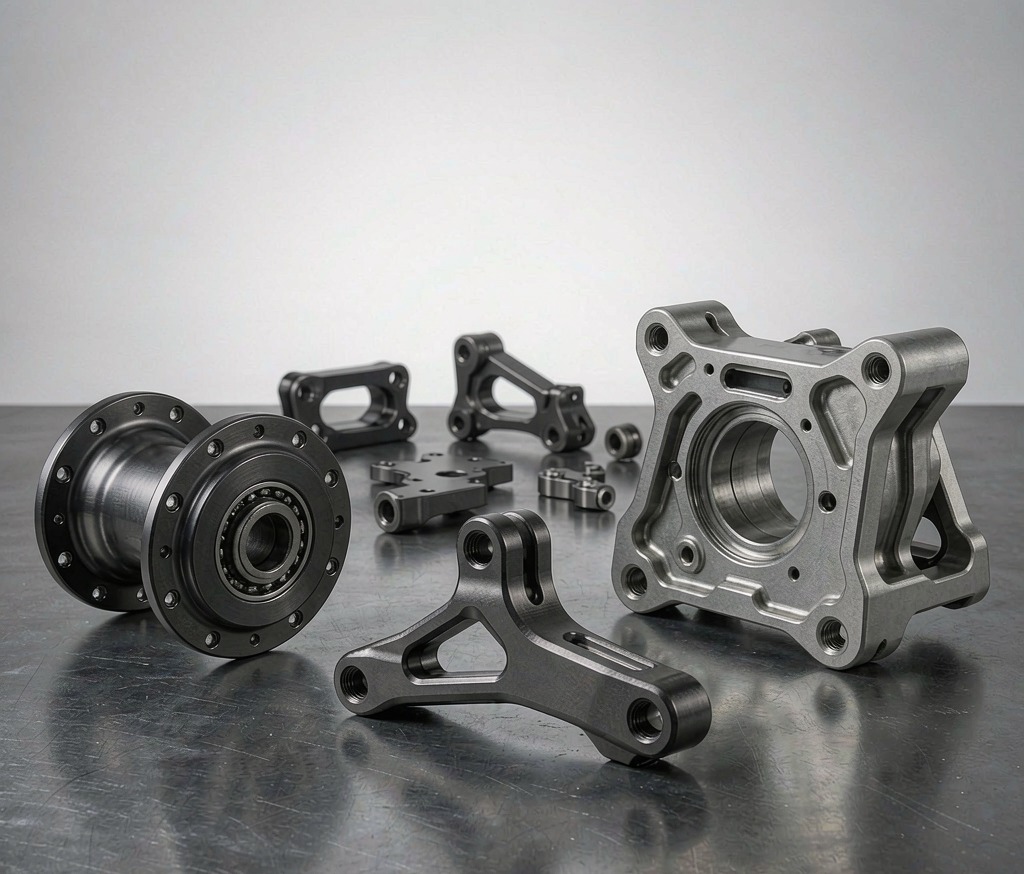
Why Precision Matters on Bikes
A derailleur hanger that is a fraction of a millimeter out throws off shifting; a hub face that is not flat ruins wheel alignment. Bike parts live at the intersection of tight tolerance and low weight, so CNC milling is the default for load-bearing and cosmetic components alike. 5-axis work cuts complex brackets and multi-face housings in a single setup, improving accuracy and cutting cost. Consistency across a production run matters as much as the first article, because riders expect every frame to behave the same on the road and in the stand.
Materials: Aluminum and Titanium
6061-T6 is the general bike alloy: light, machinable, and economical. 7075-T6 is stronger for high-load parts such as hubs and cranks. Titanium Grade 5 is the premium weight-sensitive choice for boutique builds. CNC turning makes axle-related parts, end caps, and spacers in these materials to controlled fits. Steel (chromoly) still appears for durable structural sections where weight is secondary to toughness and cost, and it welds more easily than the high-strength aluminums.
CNC Machining vs Sheet Metal
Precision components such as hangers, motor brackets, and lever bodies are CNC machined for accuracy and finish. Structural parts like battery boxes, fenders, and racks are better as sheet metal: CNC bending and laser cutting form them consistently and cheaply at volume. Aluminum extrusion supplies rails and profiles that are then cut and machined. Many programs mix both for the best strength-to-cost result, using machining only where tolerances truly demand it and sheet forming where it saves money.
E-Bike Specific Metal Parts
E-bikes add motor mounting brackets, drive-unit interface plates, battery brackets, sensor housings, and brake adapters. These interfaces must hold bearing seats, threads, and flatness under load and vibration. 5-axis CNC machining handles the angled and multi-face features common on motor and frame integration. Our CNC machining services page lists the full process range. A misaligned motor mount transmits vibration and wears the drive unit, so we control hole position and flatness to the drawing.
Finishing for Bike Parts
Anodizing is the signature bike finish: Type II for color, Type III hard anodize for wear. TIG welding joins structural sections with a clean, durable bead. Bead blasting and laser logo engraving complete the look. Our anodizing services cover the color and hardness options brands specify. A well-chosen finish protects the part on the road and defines the brand’s visual identity on the showroom floor, which matters as much for sales as for durability.
Prototyping and Volume Production
Bike programs benefit from fast prototyping because CNC needs no hard tooling. We machine evaluation parts from bar stock in days, confirm fit on your frame or drive unit, then scale to production with the same fixturing and inspection. For e-bike structural parts we can also support small fabricated sheet-metal batches in parallel. Our CNC machining services page covers how prototype and production share one quality plan so the first article matches the thousandth shipped part.
Drawing Tips for Bike Components
Flag the load-bearing and alignment-critical features first: bearing seats, thread standards (ISO/metric/English), and mounting-hole position. Note the anodize type and color, and any logo or marking. For e-bike parts, indicate the mating drive unit or battery model so we can match the interface exactly. A complete drawing keeps prototypes on schedule and production consistent. Sharing forecast volume lets us choose machining versus fabricated sheet metal early and quote the right process.
Common Bicycle Parts We Machine
Beyond hangers and hubs, we make stem caps, seat clamps, brake mounts, dropout adapters, and torque-sensor housings for e-bikes. Each needs its own tolerance strategy: a clamp must hold torque without cracking, a dropout must locate the wheel repeatably, and a sensor housing must shield without adding weight. 5-axis CNC machining handles the irregular brackets in one setup, while CNC turning covers the round spacers and end caps. Telling us the function of each feature lets us spend tolerance where it matters and relax it where it does not, saving cost without risking fit on the finished build.
Fit Verification and Quality
Before shipping, critical bike parts are checked for bore, flatness, and hole position against the drawing, and anodized parts are verified for color and coating thickness. For e-bike structural brackets we also confirm thread engagement and bearing-seat runout. Our anodizing services page explains the finish checks we perform. A mismatched hanger or motor mount is caught at incoming inspection, not on the customer’s frame, which protects both your build schedule and your brand reputation with riders who notice sloppy hardware the moment they pick the bike up.
Frequently Asked Questions
What material is best for bike parts?
6061 aluminum for general parts, 7075 for high-strength components, and titanium for premium lightweight builds. Choose by load and budget.
Can you make e-bike motor mounts?
Yes. We machine motor brackets, interface plates, and battery brackets to the drive-unit drawing, holding hole position, flatness, and thread standards.
Which anodizing should I specify?
Type II anodize for decorative color, Type III hard anodize for wear and corrosion resistance on functional surfaces.
Bicycle and e-bike metal parts succeed on fit, finish, and consistency. Send us your 3D drawing and we will optimize the process and deliver prototypes fast.
Ready to Start Your Project?
Get a build-ready quote on your custom metal parts within 24 hours. Share your drawing and our engineers will respond with process, lead time, and pricing.

