
Brass is one of the most machinable metals in production today, which makes it a favourite for components that need smooth threads, tight seals and an attractive finish straight off the machine. Our brass machining services cover CNC turning, CNC milling, drilling and boring for everything from RF connectors and valve bodies to decorative hardware and musical-instrument fittings. If you need consistent, repeatable brass parts in prototype or production volume, this guide explains how we hold tolerances, protect surface quality and finish the parts so they are ready to ship.
Why Engineers Choose Brass for Precision Components
Brass machines at high cutting speeds with very low tool wear, so it is economical for long runs and complex geometries alike. It also has natural corrosion resistance and antimicrobial properties, which is why it appears in plumbing, marine and medical-adjacent hardware. Compared with steel, brass produces short, manageable chips and rarely work-hardens under the cutter, so our CNC turning cells hold excellent surface finish without frequent tool changes. When a project needs both function and appearance, brass is hard to beat.
CNC Turning and Milling of Brass
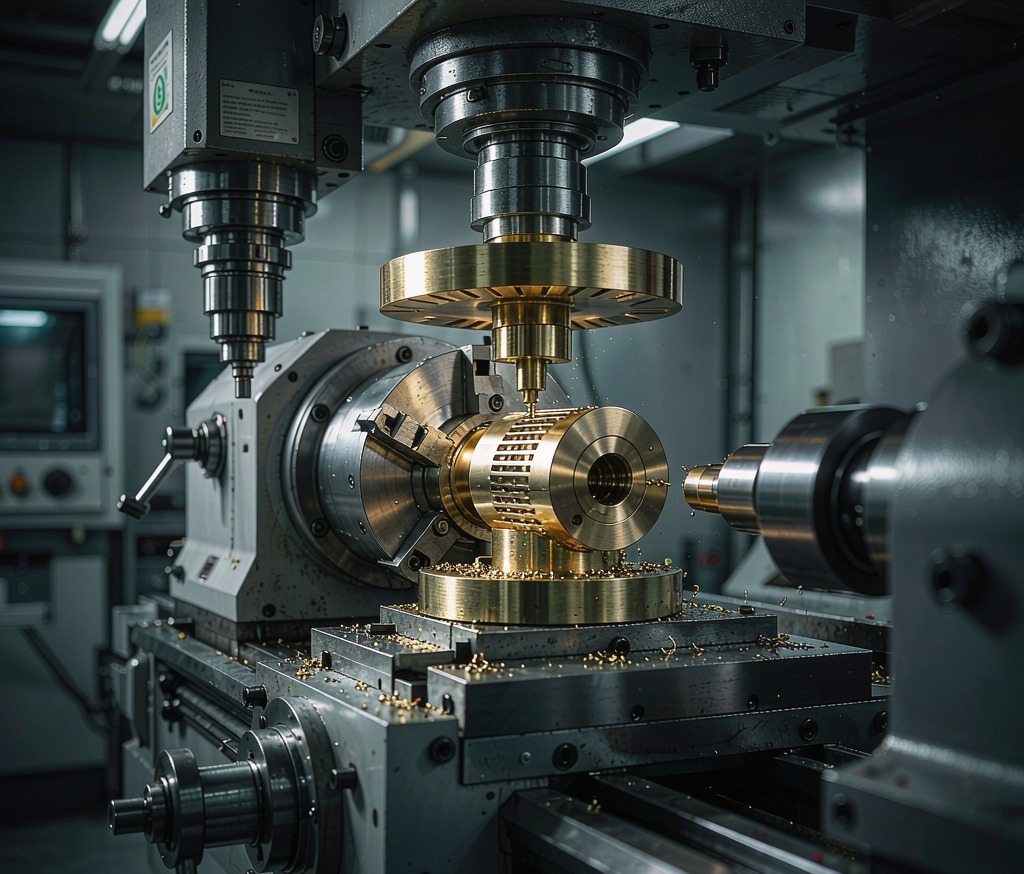
Most brass parts start on a lathe. Our CNC turning and Swiss-type turning platforms produce pins, nuts, sleeves and fittings with concentricity measured in microns. For prismatic features such as flats, slots and port faces we move to CNC milling, where 3-, 4- and 5-axis workholding keeps setups to a minimum. You can see how we plan multi-operation work in our overview of general CNC machining services, and for brass-specific process notes read our dedicated brass CNC machining guide.
Hole-Making, Boring and Threading
Precision bores and internal threads are where brass really shines. We use CNC boring to open reamed holes to tight ID tolerances, and live tooling on the lathe lets us tap and mill in a single chucking. Because brass does not grab the tool, we can hold 6H/2B thread classes reliably even on thin-walled connectors. For copper-heavy variants and shared fixtures, our copper CNC machining processes run on the same cells.
Surface Finishing and Passivation
Brass rarely needs plating to look good, but it does oxidise over time. We offer lacquering, nickel flashing and clear protective coatings, plus passivation for any brass-adjacent alloys and anodizing when a brass part is combined with aluminium in an assembly. Proper finishing protects both the shine and the electrical contact surfaces that buyers care about.
Tolerance, Inspection and Quality Control
Every batch ships with first-article inspection and, where needed, a full CMM report. Typical commercial tolerances on brass are ±0.02 mm, and we regularly hold ±0.01 mm on turned diameters. Our OEM services team can also manage PPAP documentation for automotive and appliance programmes.
Industries We Serve
Brass machined parts ship to electronics, plumbing, lighting, automotive and musical-instrument customers. If your drawing calls for lead-free (RoHS) brass such as C27450 or C69300, we source and machine it to spec.
Design Tips That Lower Brass Part Cost
You can shave cost without sacrificing function by following a few rules. Keep wall thickness above 0.4 mm so the part does not collapse under the cutoff tool, and avoid deep internal splines that need special broaches. Where a feature is not load-bearing, open the tolerance to ±0.05 mm — tight tolerances cost money in inspection and scrap. Standardising on a common thread class also lets us reuse tooling across your programme. Our CNC machining services team reviews drawings for exactly these opportunities before we quote, so you get a manufacturable part rather than a theoretical one.
Another lever is batching. Brass runs fastest when we can line up several part numbers on the same bar stock and same fixture family. If you expect recurring volume, tell us the annual quantity up front; we will engineer the setup once and amortise it across the year. For decorative parts, specify the finish early — clear lacquer is cheaper than plating and often looks just as good behind a bezel.
From Prototype to Production
Most brass programmes start with 5-20 prototypes to validate form, fit and thread engagement. We turn these on the same cells used for production, so the process does not change when you scale. Once the first article is approved, we lock the program, set tool offsets and run repeatable batches with in-process gauging. If the part feeds an assembly line, our OEM services include scheduled releases and kanban so your line never waits. Lead time for a new brass programme is typically two to three weeks from drawing approval to first shipment.
Brass vs Bronze: Which to Choose
Brass and bronze are both copper alloys but suit different jobs. Brass is cheaper, freer-cutting and looks gold; bronze is harder, more wear-resistant and corrosion-proof in seawater. If the part is a fitting or decorative trim, brass is right. If it is a bearing, gear or marine hardware, bronze — see our brass CNC machining and bronze coverage — usually wins. We stock both and will steer you by function, not habit, so you do not over-pay for properties you do not need.
Frequently Asked Questions
What brass alloys do you machine?
We regularly run C3604, C36000 (free-cutting), C3771 (forging brass), C27450/C69300 lead-free grades and naval brass. Tell us the standard and we will confirm machinability and finish.
Can you hold threads on thin-walled brass fittings?
Yes. Swiss turning and single-chuck live tooling keep wall thickness consistent, so we hold 6H/2B threads on walls as thin as 0.4 mm.
Do you offer lead-free brass for potable-water parts?
Absolutely. We stock RoHS-compliant lead-free brass and provide material certificates on request.
What is the typical lead time?
Prototypes in 3-5 days; production batches quoted case by case, with most runs shipping inside two weeks.
Ready to Start Your Project?
Get a build-ready quote on your custom metal parts within 24 hours. Share your drawing and our engineers will respond with process, lead time, and pricing.

