
Bronze casting remains one of the most practical ways to produce wear-resistant, low-friction, corrosion-proof components in volumes from a single prototype to full production runs. If your design calls for bushings, bearings, valve bodies, marine hardware, or decorative architectural fittings, a bronze casting service gives you a material that outperforms steel in sliding contact and shrugs off seawater, process chemicals, and outdoor exposure. This guide explains the alloys, the three casting routes we run, and how to choose the right one for your part so you avoid overpaying for tolerance you do not need.
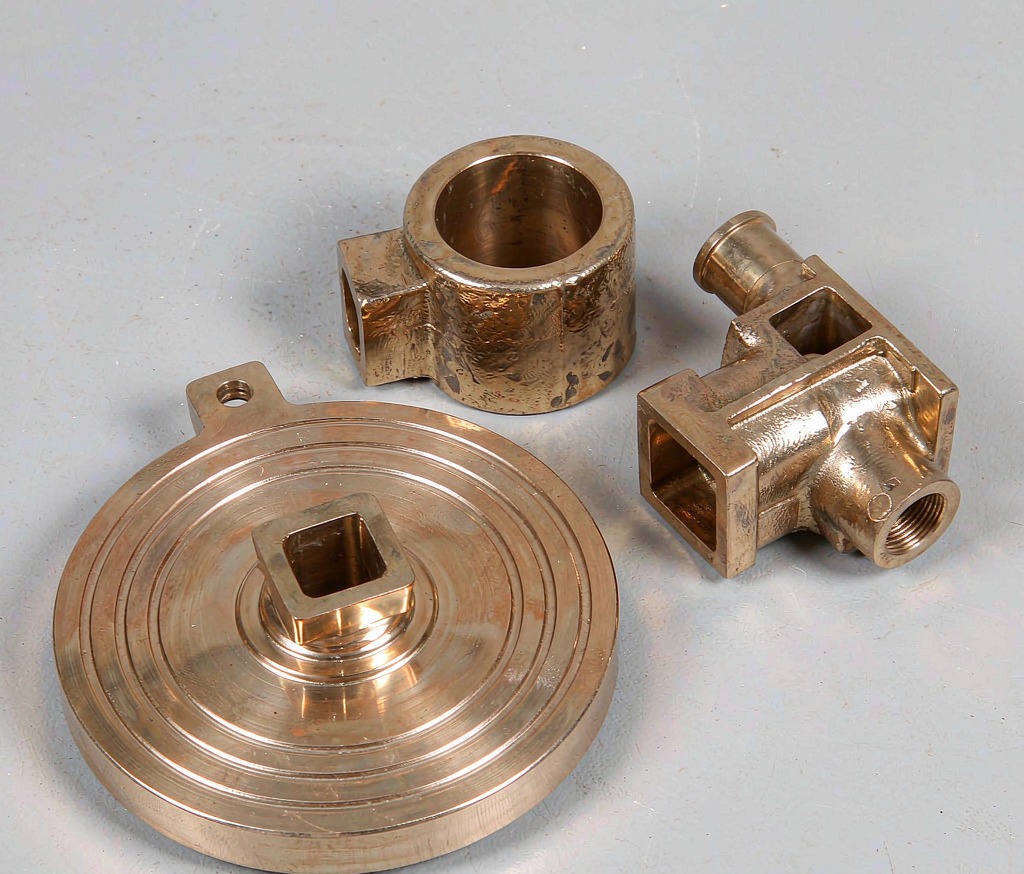
What Is Bronze Casting?
Bronze is a family of copper-based alloys — primarily copper with tin, aluminum, silicon, or manganese — engineered for strength, machinability, and self-lubricating wear behavior. Unlike wrought stock, casting lets you lock complex geometry, internal cavities, and near-net shape into a single pour, which slashes the machining needed afterward. When paired with our sand casting and investment casting lines, bronze becomes a flexible, cost-predictable production route for both functional and ornamental parts.
Bronze Alloys We Cast
Alloy selection drives performance, so we stock and pour the grades buyers actually specify. Tin bronzes such as C90500 and C93200 are the classic bearing and bushing alloys with excellent anti-galling and embeddability. Aluminum bronzes like C95400 and C95500 bring high strength, good corrosion resistance, and wear performance for gears, seats, and marine stems. Silicon bronze (C65500) is ductile and weldable, favored for architectural and ornamental work. Manganese bronze (C86300) is a strong, stiff choice for heavy-duty nuts, screws, and propeller hubs, while phosphor bronze offers springy fatigue resistance for electrical contacts. Not sure which grade fits your load, lubrication, and environment? Our engineers will recommend an alloy and process that meets ASTM, DIN, BS, or ISO requirements. You can read more about process selection in our investment casting guide.
Sand vs Centrifugal vs Investment Casting
Each bronze process trades surface finish, tolerance, and cost differently. Sand casting is the most economical for large or simple shapes and low-to-medium volumes, and it scales easily to big components. Centrifugal casting spins the mold so molten bronze packs densely against the wall — ideal for bushings, liners, and rings with uniform grain and no porosity. Investment (lost-wax) casting delivers the finest detail and tightest tolerances for valve parts, impellers, and decorative work. For a broader comparison across all our non-ferrous routes, see our sand casting services and investment casting services pages.
Typical Bronze Cast Components
Bronze castings show up wherever a part must slide, seal, or survive corrosion. Common examples include bushings, bearings, and wear plates for rotating equipment; valve bodies, seats, and bonnets for fluid control; marine hardware such as propellers, rudders, seacocks, and fittings; worm wheels, gears, and spline nuts; and architectural or ornamental fittings. Because bronze is naturally anti-seizing, it is the default choice for bearing surfaces that run against steel shafts, and its color and patina make it a favorite for heritage and design-led projects.
Machining and Finishing After Casting
Most bronze castings are delivered machined to print. We combine casting with in-house CNC turning and milling, then apply deburring, passivation where needed, and protective coatings. Where a feature must be finished after hardening or where extreme precision is required, complementary processes such as coordinate grinding keep bores and seats within microns. If you also need high-volume aluminum or zinc parts, our die casting line covers those separately, and our casting team can advise when a switch to die casting would lower unit cost at volume.
Bronze vs. Steel for Bearing Surfaces
For sliding and rotating contacts, bronze is frequently superior to steel because its graphite-rich structure is self-lubricating and resists galling. Steel shafts running in bronze bushings wear the bushing, not the shaft — a cheap, replaceable sacrifice part. That is why bronze remains standard in pumps, turbines, and heavy equipment even where steel would otherwise be specified.
How to Specify a Bronze Casting Order
To quote accurately we need the drawing, alloy, quantity, and any certification. Indicate finish-machining requirements and critical surfaces, and tell us the service environment (marine, food, high temperature) so we select the right grade. Prototypes are welcome before production commitment.
Common Bronze Casting Defects and How We Prevent Them
The defects that hurt bronze castings are porosity, cold shut, and shrinkage. We prevent them with controlled pouring temperature, properly vented molds, and riser design that feeds shrinkage away from the part. For centrifugal work the spinning action naturally densifies the wall, and for investment casting we tune shell thickness and pour rate. The result is a sound casting that machines cleanly and meets pressure-test requirements for valve and pump service.
Frequently Asked Questions
Which bronze is best for bearings?
Tin bronzes such as C93200 (SAE 660) are the standard bearing grades thanks to their embeddability and low friction.
Can you cast large bronze parts?
Yes. Sand and centrifugal processes handle components from a few grams up to several hundred kilograms.
Do you provide material certification?
Every order ships with chemical and mechanical test reports on request, including spectrometer analysis and dimensional inspection.
Get a Bronze Casting Quote
Send us your drawing, alloy preference, and quantity. We will return a build-ready quote with process, lead time, and pricing — and we can supply samples before you commit to production.
Ready to Start Your Project?
Get a build-ready quote on your custom metal parts within 24 hours. Share your drawing and our engineers will respond with process, lead time, and pricing.

