
CNC machined components deliver the accuracy, repeatability, and material integrity that cast or printed parts cannot always match. When a feature must seat to microns or survive load, machining from solid stock is the safe answer. Huaxiao Parts runs three, four, and five-axis centers plus turning to build your parts from bar, billet, or forged blank, with inspection built into every step. This article explains the processes, materials, and design choices that keep machined parts both precise and affordable.
What Are CNC Machined Components?
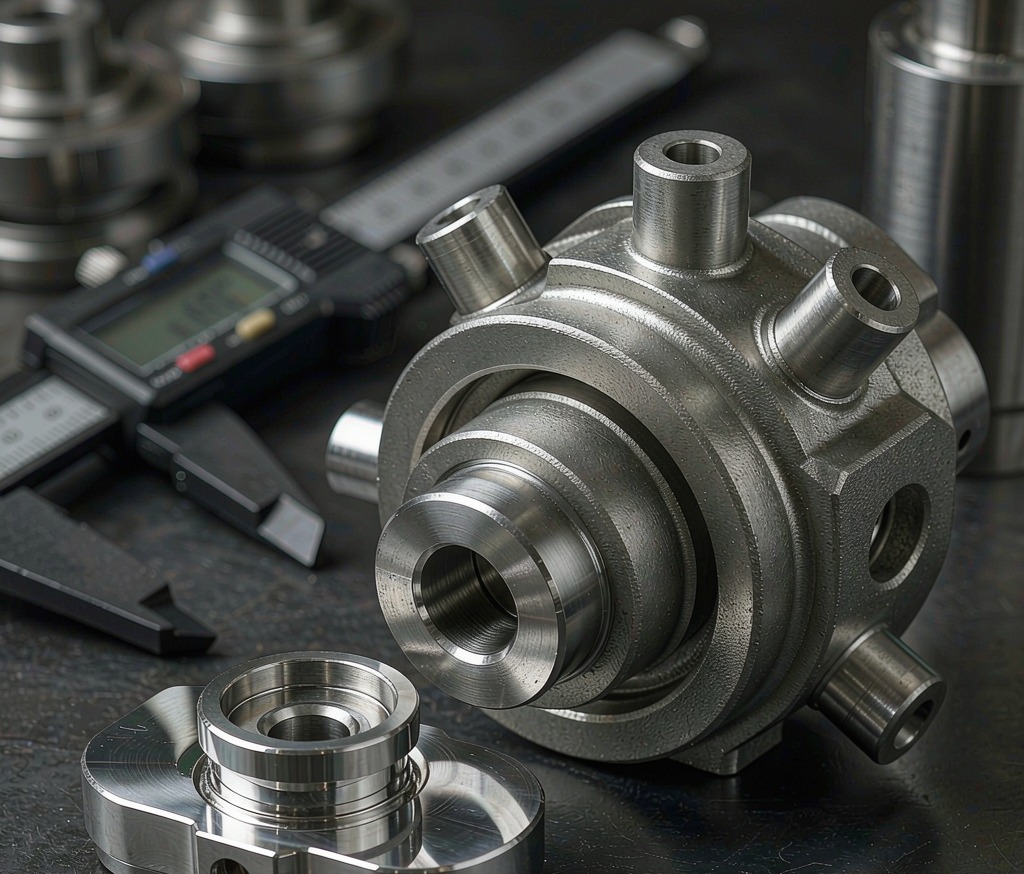
They are parts shaped by computer-controlled cutting tools from solid stock, where material is removed to reach near-net geometry with excellent mechanical properties. Because the grain structure stays continuous and surfaces can reach Ra 0.4, machined parts suit bearings, seals, and structural joints that castings would struggle with. The cost driver is machine time, so designs that minimize deep pockets and thin walls machine faster and cheaper. Machining is the right call when tolerances, finish, or material certification outrank pure unit cost.
Machining Processes Explained
3-axis machining shapes prismatic parts from the top face, while 4-axis machining and 5-axis machining add rotary and tilted access for complex contours in fewer setups. CNC turning makes round parts fast and round, CNC milling handles pockets and profiles, and Swiss turning delivers micro-tolerance shafts for medical and watch-grade work. Fewer setups mean fewer chances to lose accuracy, which is why we pick the axis count by geometry rather than habit. The result is a part that matches the model the first time.
Material Options
Aluminum, steel, stainless, titanium, brass, and engineering plastics all machine well, each with its own tool life and coolant needs. Our precision machined parts reference helps balance cost and performance so you are not specifying titanium where aluminum would do. Hard alloys need rigid setups and sharp tooling, but reward you with parts that hold edge and dimension under load. Material choice is where many projects overspend, so we review it early.
Tolerances and Inspection
Standard tolerance is ±0.02 mm, tighter on request, with CMM reports on critical features so you can verify rather than trust. The tolerances guide explains how tight a spec must be, because every extra micron costs cycle time and scrap. We probe parts in the machine to catch drift before a bad batch finishes, which protects both schedule and material. Inspection is not the last step; it is woven through the run.
Design Tips
Avoid deep thin walls, specify standard radii, and call out only the datums that truly matter so we are not pricing unused precision. Our engineers return DFM notes before cutting, often saving more than the raw stock cost by simplifying a feature. Standard hole sizes and off-the-shelf thread sizes also cut tooling and time. Good design for machining is the cheapest quality insurance you can buy.
Prototype to Production Transition
A part that machines perfectly as a one-off can still be painful at volume, so we design the prototype with the production path in mind. Fixturing, datum scheme, and even stock size are chosen so the same setup scales from ten pieces to ten thousand without re-qualification. Our precision machining team reviews the model for features that inflate cycle time, and we suggest standard radii or threads that cut tool changes. This forward view means the quote you accept for samples is the same process that builds your production, avoiding nasty surprises when the order grows.
Do not over-specify tolerances, because every extra micron you do not truly need adds cycle time, scrap, and cost across the whole run. Our quotes flag features that could be relaxed safely, and the tolerances guide helps you decide where precision pays and where it is wasted. The best machined part is the one that is exactly as accurate as the function demands and no more, which keeps price competitive while still meeting performance. Tight where it counts, open where it does not, is the rule we apply to every program.
Frequently Asked Questions
Which axis count do I need?
3-axis suits most brackets and plates; 5-axis earns its cost on contoured or multi-face parts that would otherwise need several setups.
Can you machine exotic alloys?
Yes, including titanium and Inconel, with appropriate tooling, rigid fixturing, and a coolant strategy tuned to the material.
Do you certify aerospace work?
We support aerospace machining with full material traceability and first-article inspection documentation.
Should I machine or 3D print my part?
For functional metal parts under load, machining wins on strength, surface, and material choice, while printing suits prototypes and impossible geometries. Our comparison guide breaks down the crossover, but the rule is simple: if it must bear load or seal tightly, machine it; if it is a look-and-fit mock-up, print it. We can even print your prototype and machine your production from the same model.
Can you hold threads and bores to class?
We machine tapped holes to standard thread classes and gauge every critical bore, with CMM reports on request so you can verify fit before assembly begins.
What file do you need to quote?
A STEP or IGES model plus a PDF of critical dimensions is ideal; we can also work from a 2D DWG. The more clearly the function is noted, the better we can suggest cost-saving changes.
Ready to Start Your Project?
Get a build-ready quote on your custom metal parts within 24 hours. Share your drawing and our engineers will respond with process, lead time, and pricing.

