
CNC Turning Services: Precision Round & Cylindrical Parts at Scale
CNC turning is the workhorse of precision round-part manufacturing. By spinning a workpiece against a stationary, computer-controlled cutting tool, a CNC lathe shapes shafts, bushings, studs, spacers and fittings to tolerances most shops cannot match by hand. At Huaxiao we run CNC turning as part of a vertically integrated CNC turning service that takes your drawings from prototype to high-volume production without changing vendors.

This guide walks through how CNC turning works, where it beats other processes, the materials we run, and how to specify a part so you get a clean first-article and a fair quote.
How CNC Turning Works
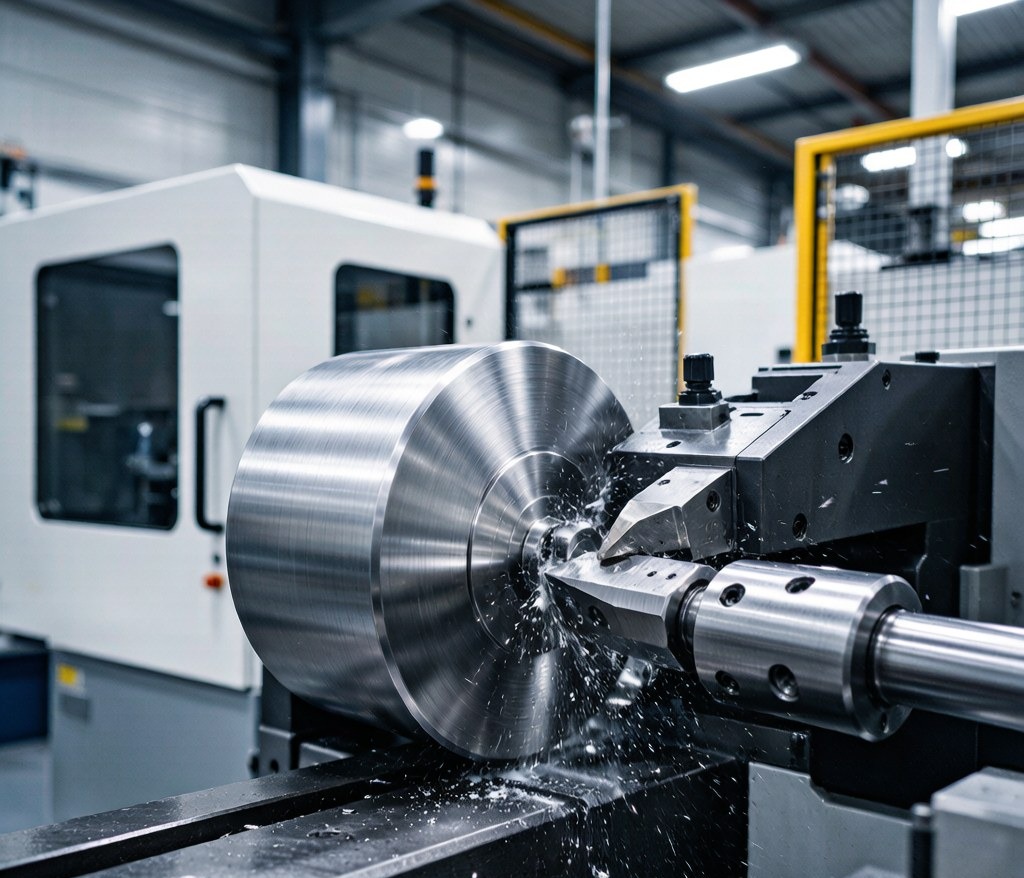
A bar or blank is clamped in a chuck and rotated at high speed. A servo-driven tool post feeds the insert into the spinning stock along X and Z axes, removing material to form the desired diameter, thread, groove or taper. Modern Swiss-type and multi-axis turning centers add live tooling, so drilling, milling and even off-center features are cut in the same setup — fewer handling steps, tighter concentricity.
CNC Turning vs CNC Milling
The simplest rule: turning rotates the part, milling rotates the tool. Turning excels at anything axisymmetric — rods, pins, sleeves, nozzles. Milling owns complex 3D profiles, flats and pockets. Many production parts combine both, which is why we often pair turning with our CNC milling capability for hybrid components.
Materials We Turn
- Aluminum (6061, 7075, 2024) — lightweight, excellent finish, fast cycle times.
- Stainless steel (303, 304, 316, 17-4PH) — corrosion resistance for medical and food contact.
- Brass & copper — superb machinability for connectors and fittings.
- Titanium & Inconel — aerospace and harsh-environment alloys, low speeds, rigid setups.
- Mild & alloy steel — shafts, hubs and structural pins.
Tolerances & Typical Specs
Standard turning holds ±0.01 mm on diameter for production runs, with ±0.005 mm achievable on dedicated jobs. We hold IT6–IT7 fits, cut metric and imperial threads (including UNJ and NPT), and surface-finish to Ra 0.4 µm when the application demands it.
Industries & Applications
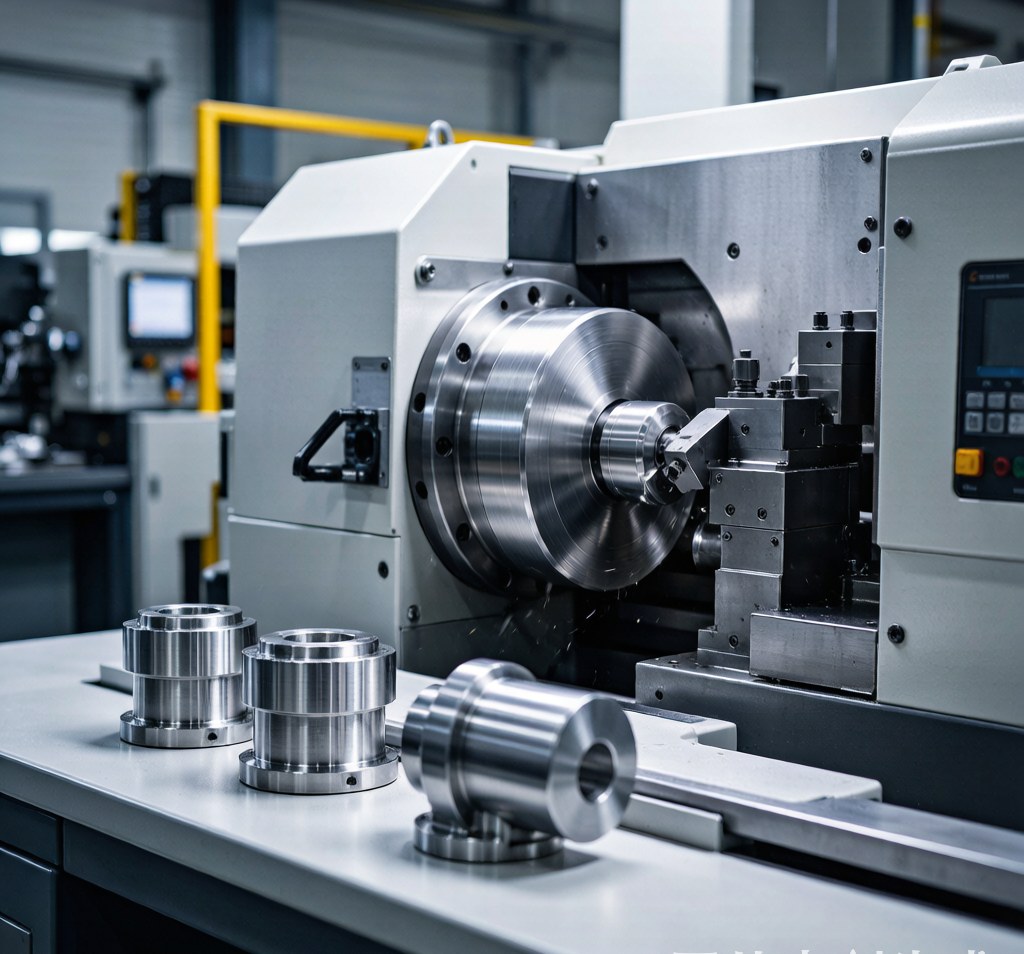
Turned components sit inside almost everything mechanical: hydraulic fittings, sensor housings, medical instrument shafts, drive shafts, valve stems, bearing seats and connector pins. If it is round and must be repeatable, turning is the answer.
How to Spec a Turning Job for a Fast Quote
- Send a STEP or DWG with critical dimensions called out.
- State the material and any certification (mill cert, RoHS, REACH).
- List the annual volume — it changes the optimal process (bar-fed lathe vs Swiss vs multi-spindle).
- Flag secondary operations (deburr, passivate, anodize) so we quote complete parts.
Frequently Asked Questions
Q: What is the smallest diameter you can turn?
A: We reliably turn features down to ~0.5 mm on Swiss-type lathes, with thin-wall sections supported by steady rests.
Q: Can you hold a press-fit tolerance across 10,000 parts?
A: Yes. SPC and in-process gauging keep CPK ≥ 1.33 on production turning runs.
Q: Do you offer combined turned + milled parts?
A: Frequently. Live tooling and our 5-axis machining cell handle complex hybrids in one flow.
Why Choose Huaxiao for CNC Turning
Fifteen-plus years of precision manufacturing, ISO 9001:2015 controls, full material certification and dimensional inspection on every order. Rapid prototyping in days, seamless scale to volume, and engineers who tune speeds, feeds and tool paths to your exact cost-performance target.

