
Choosing between CNC turning and milling is one of the first and most consequential decisions in any custom metal part program. The right answer depends on your part’s geometry, the tolerances you need, and how many pieces you plan to run. Get it wrong and you pay for unnecessary setups, longer cycle times, or a shop that has to subcontract half the work. This guide breaks down CNC turning vs milling in practical terms so you can brief your supplier with confidence.
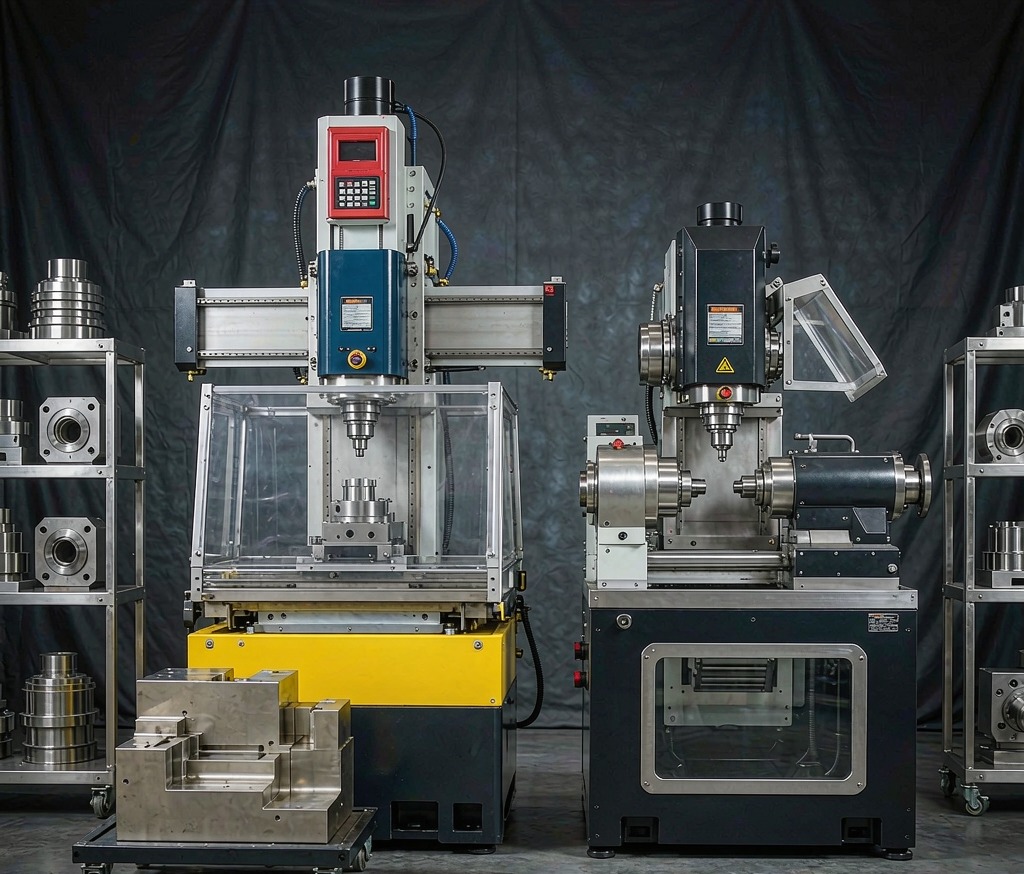
What CNC Turning Actually Does
In turning, the workpiece rotates against a stationary single-point cutting tool. The rotation is what defines the process: anything symmetrical about an axis—shafts, bushings, sleeves, pins, threaded fasteners, and fittings—is turned. Our CNC turning centers hold tight diameters and excellent surface finish on round features because the tool never has to trace a contoured 3D path. Turning is also typically the faster and cheaper route for high volumes of cylindrical parts, since the cut is continuous and chips clear efficiently.
What CNC Milling Actually Does
Milling reverses the relationship: the cutting tool spins while the workpiece stays put on a moving table. A multi-flute end mill can trace pockets, slots, angled faces, and freeform 3D surfaces that a lathe simply cannot produce. When your part is a bracket, housing, plate, or anything with holes off the centerline, CNC milling is the process you need. Modern machining centers add live tooling so they can also drill and tap in the same setup without a second machine.
Geometry Is the Deciding Factor
The simplest rule: round and concentric parts go on a lathe; prismatic and contoured parts go on a mill. A hydraulic spool is turned. A mounting bracket with cross-holes is milled. Many production parts are hybrids—a turned body with milled flats or cross-drilled holes—which is exactly why shops invest in Swiss-type turning and mill-turn centers that combine both motions in one machine.
Tolerance and Surface Finish
Both processes hit tight numbers, but in different directions. Turning excels at roundness, concentricity, and diametral tolerance; milling excels at flatness, positional accuracy between features, and complex 3D profiles. For a detailed look at achievable numbers by process and material, see our CNC machining tolerances guide, which maps typical limits for turned and milled features.
Cost and Cycle Time
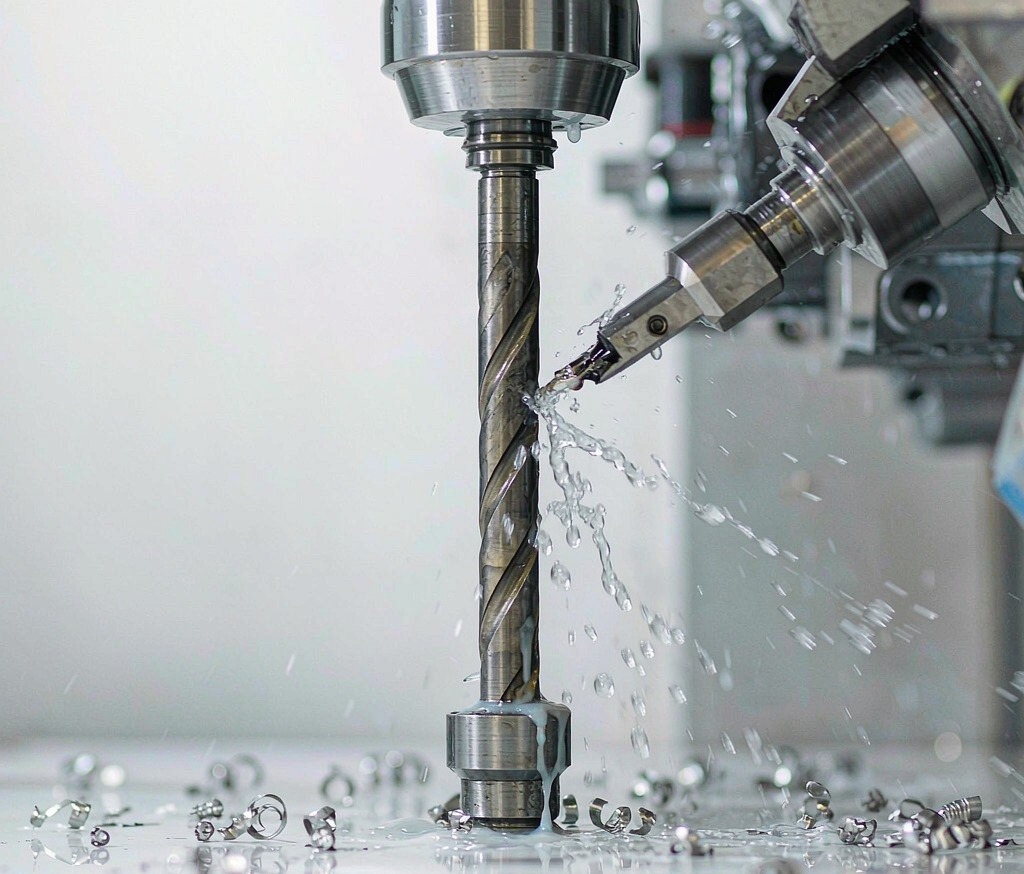
For a given round part, turning usually wins on speed and cost because material removal is continuous. Milling a simple round shape is possible but wastes time and tool life. Conversely, milling a bracket is far cheaper than trying to turn it. Volume matters too: the CNC machining cost guide shows how reducing setup count and raising part count drives unit price down across both processes.
When You Need Both: Mill-Turn
Many parts combine turned and milled features. Instead of running them on two machines with two setups—doubling handling and tolerance stack-up—a mill-turn center completes the whole part in one chucking. Our mill-turn machining services are ideal for shafts with flats, hex bodies, and cross-holes. For multi-axis contouring on complex bodies, 5-axis CNC machining removes even more setups and protects dimensional accuracy.
Material and Scale Considerations
Both processes handle aluminum, steel, stainless, brass, and titanium without special tooling changes. Turning long, slender parts risks chatter and deflection, so we use steady rests and rigid tooling; milling thin walls risks vibration, so we sequence passes carefully. Production scale also shifts the economics: high-mix work favors flexible 3-axis machining, while complex low-volume work justifies 5-axis investment.
Frequently Asked Questions
Can a mill make a round part?
Yes. A mill can interpolate a circle, but it is slower and less rigid than a lathe for true cylindrical work. Use milling for round features only when the part is already fixtured on the mill for other operations.
Is turning or milling cheaper?
Neither is universally cheaper. Turning wins for cylindrical parts at volume; milling wins for flat and contoured parts. The real cost driver is setup count and cycle time per geometry.
What if my part needs both processes?
Choose a shop with mill-turn or multi-axis capability so the part is made in one setup. That protects tolerance and cuts lead time versus separate turning and milling operations.
Work With a Shop That Runs Both
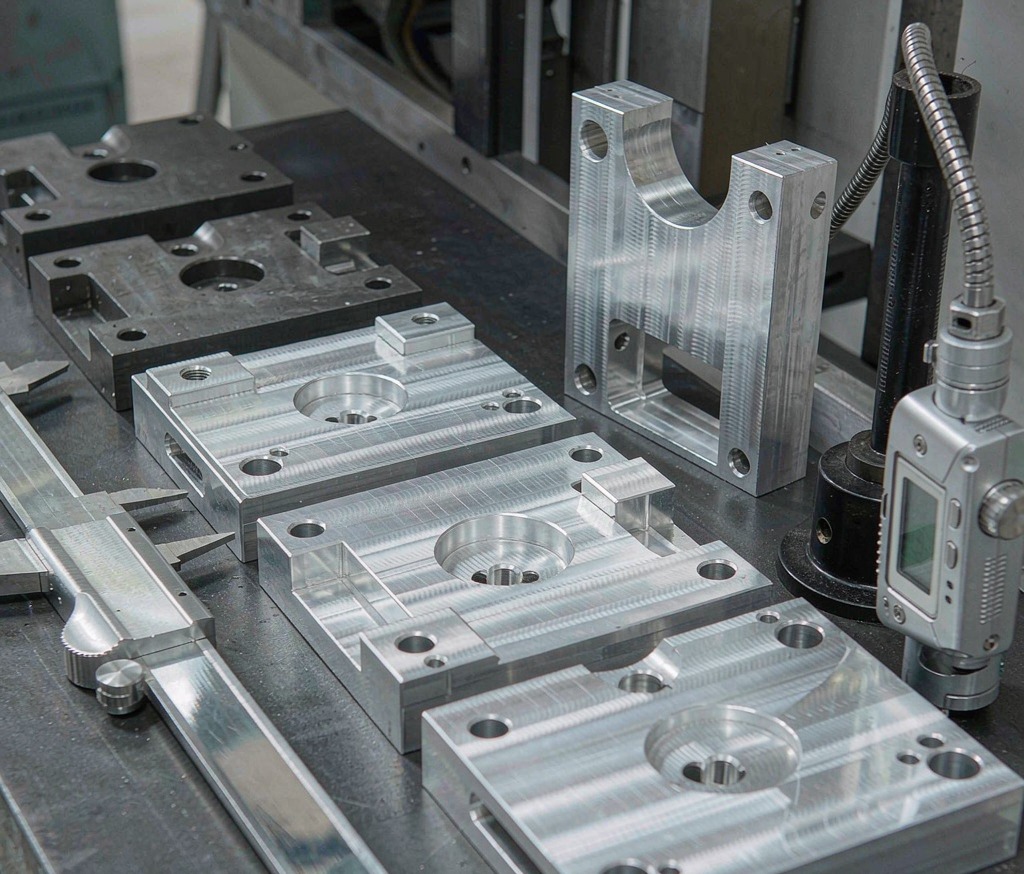
The best outcome is a supplier that owns turning, milling, and mill-turn under one roof and recommends the process based on your drawing—not on what machine happens to be free. Send us your CAD file and we will quote the optimal route, lead time, and price for your program.
Ready to Start Your Project?
Get a build-ready quote on your custom metal parts within 24 hours. Share your drawing and our engineers will respond with process, lead time, and pricing.

