
Cobalt chrome—more formally cobalt-chromium (Co-Cr)—is the alloy you reach for when a part has to survive inside the human body or at the edge of the atmosphere without corroding, galling, or wearing out. From knee implants to turbine seal rings, these materials pair high strength with outstanding corrosion resistance and natural biocompatibility. They are also among the hardest metals to cut cleanly. Our cobalt chrome machining services combine sharp tooling, rigid 5-axis platforms, and a proven coolant strategy to deliver quote-ready parts on spec and on time, backed by full material traceability and first-article inspection.
Why Machine Cobalt Chrome
Co-Cr alloys work-harden aggressively and dump intense heat into the cutting edge. That makes them unforgiving for a general machine shop but ideal for applications where failure is not an option. Compared with Titanium CNC Machining Services, cobalt chrome delivers higher wear resistance and better creep strength at temperature, which is why it dominates load-bearing implant stems and hot-section engine hardware. When you need a component that stays dimensionally stable for decades, machining from solid bar or a forged blank is the safest route, and it avoids the porosity risk that can haunt castings in safety-critical service.
Common Grades: F75 and F1537
Two grades show up most often in procurement. ASTM F75 is the cast-and-remachined cobalt-chrome-molybdenum alloy used for implantables; ASTM F1537 is the wrought version favored for higher fatigue life and tighter chemistry control. Both cut best with coated carbide or ceramic tools at moderate surface speeds and firm feeds, so the chip load stays high and you do not work-harden the surface you are trying to remove. Our engineers select the grade and the stock form—bar, plate, or near-net forging—during DFM review so you are not paying to remove excess material. Getting the blank right is often the difference between a part that is affordable and one that is not.
Tooling and Heat Management
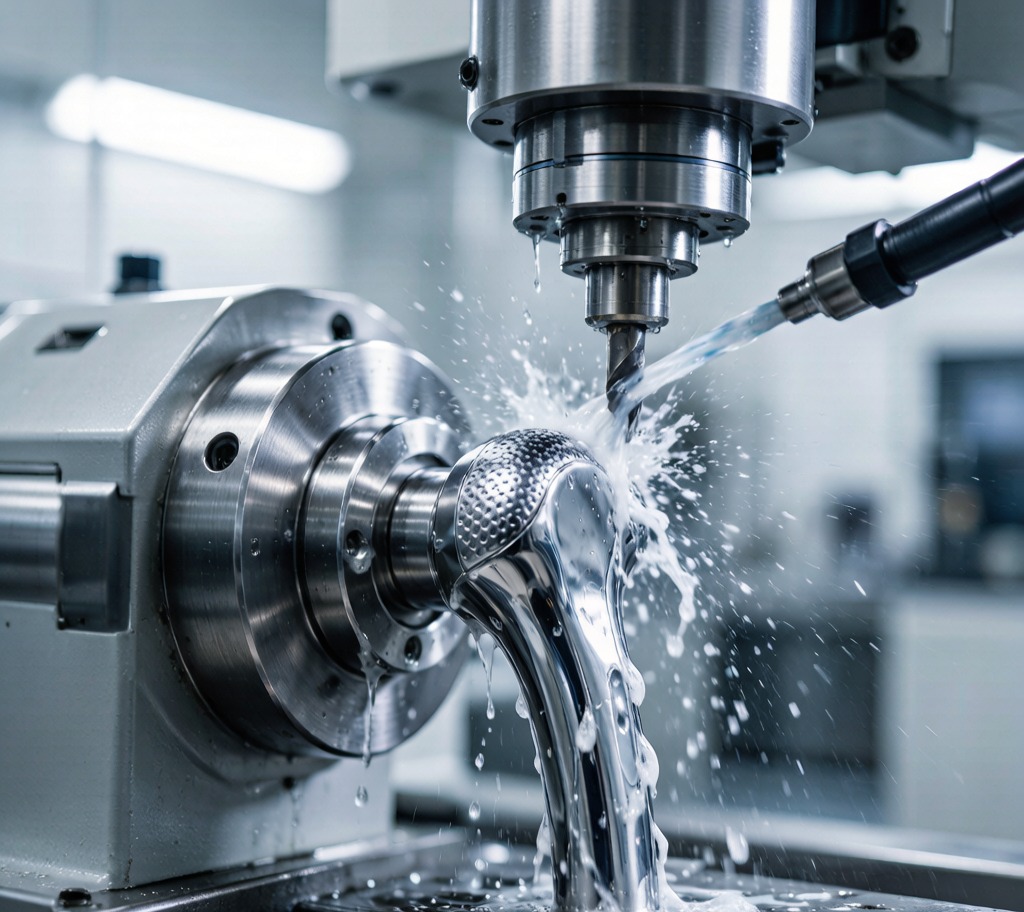
The single biggest cost driver in cobalt chrome machining is heat. We run flooded coolant or high-pressure through-tool delivery, keep tool engagement consistent, and use 5-axis CNC machining to present fresh cutting geometry and hold tolerances on complex implant curvature. For thin features and deep cavities, EDM machining removes material without mechanical stress, protecting delicate walls from deflection. Sharp tools and short, repeatable tool paths are non-negotiable—a dull edge simply smears the hardened layer and ruins the finish. We track tool life by the part and change before wear shows up in the cut.
Tolerances and Surface Finish
Medical and aerospace prints routinely call for ±0.01–0.025 mm and finishes below Ra 0.4 µm on mating surfaces. We hold those with CNC milling and CNC turning, then verify every critical dimension on a CMM. Tight tolerances on cobalt chrome demand rigid setups and thermal stability, so we schedule the critical cuts in a controlled environment and release a first-article report before any volume run. Where a feature is truly difficult, we machine it last, after the part has relaxed from earlier roughing.
Medical and Aerospace Applications
In orthopedics, cobalt chrome becomes femoral heads, knee trays, and dental frameworks. In aerospace, it appears as seal rings, bushings, and hot-section parts that must shrug off oxidation. Much of our work connects to medical device manufacturing programs where traceability and clean finishing are contract requirements. After machining we offer passivation for corrosion insurance and polishing to a mirror or satin finish that meets both biocompatibility and optical specs, then package the part in a controlled, documented flow.
Design Tips to Machine It Cheaper
Three choices drive most of the cost. First, favor radii the cutter can reach without long, whippy tools. Second, keep wall thickness above roughly 0.5 mm so thin features do not chatter. Third, let us near-net shape the blank where volumes justify it. Small changes on your drawing can cut hours from the cycle and scrap from the bin, so send the print early and let manufacturing engineering earn its keep.
Quality, Inspection, and Traceability
For regulated work we keep heat-number certificates, process routers, and CMM reports with the lot, and we can map every critical dimension to your validation file. That paper trail is part of the product, not an afterthought. If your program needs it, tell us at quote time so we scope the inspection plan up front rather than bolting it on later.
Cost and Lead Time
Cobalt chrome is never the cheap option, but most of the spend is predictable once the process is set. The drivers are stock form, wall thickness, and how much finishing the spec demands; a near-net forging and a relaxed polish can cut the cycle sharply. Prototype lead times are typically one to three weeks depending on blank availability, and production follows on the same validated setup so the hundredth part matches the first. We quote the machining, the finish, and the inspection together, with no surprise add-on for the paperwork a regulated program requires. If the budget is tight, send the print early—small changes in geometry often save more than the finish ever costs, and they keep the part on the table instead of on the scrap heap.
Frequently Asked Questions
Is cobalt chrome harder to machine than titanium?
Yes. Cobalt chrome work-hardens faster and cuts at higher forces, so it needs sharper tools, more coolant, and very stable fixturing. Once the process is set, lead times are comparable to titanium work.
Which finish is best for an implant?
Most implants call for electropolish or mechanical polish to Ra 0.2–0.4 µm plus passivation. We match the finish to your device master file and validation records.
Can you machine from a forged blank?
Absolutely. Forging or near-net shaping reduces stock removal and improves grain flow, which helps fatigue life. We will advise on the best blank during quoting.
Do you provide material certification?
Always. We supply mill certs and, where required, full lot traceability with CMM reports and a first-article inspection.
Ready to Start Your Project?
Get a build-ready quote on your custom metal parts within 24 hours. Share your drawing and our engineers will respond with process, lead time, and pricing.

