
Custom bronze parts earn their place wherever a component must resist wear, slide against steel, or survive in corrosive or marine environments. From bushings and bearings to gears and wear plates, bronze’s self-lubricating and fatigue-resistant character keeps heavy machinery running. This guide covers the alloys, when to cast versus machine, and how we hold tight tolerances on finished bronze. See our bronze machining services for the capability overview.
Bronze vs Brass: Know the Difference
Both are copper alloys, but bronze is primarily copper plus tin (often with aluminum, silicon, or lead), while brass is copper plus zinc. Bronze is the wear and corrosion specialist: it runs against steel without galling and shrugs off seawater. That is why bearings, bushings, and marine fittings are bronze, not brass. CNC turning produces bronze rings, sleeves, and thrust washers with controlled bores and bearing fits, while brass is reserved for fittings and decorative hardware where strength under load is less critical and cost drives the choice.
Bronze Alloys We Work With
Tin bronze is the classic bearing material, with excellent wear and fatigue resistance. Aluminum bronze is stronger and tougher for heavy-load and impact conditions. Leaded bronze machines easily and slides well, while silicon bronze welds and resists corrosion. CNC milling cuts these alloys to accurate flats, slots, and oil grooves for sliding applications. Graphite-plugged bronze adds solid lubrication for positions that are hard to grease, a specialty for slow, heavy slides where liquid oil would drain away or attract grit.
Casting vs Machining Bronze
Complex or large bronze parts start as castings. Sand casting suits larger, lower-volume shapes, while investment casting gives finer detail and thinner walls. Machining then removes the allowance and cuts the features that matter: bores, grooves, and sealing faces. For simpler rotational parts, direct bar stock machining is faster and cheaper than casting. The decision is driven by geometry and quantity, not by the alloy alone, and we will recommend the lower-cost route that still meets the print.
Typical Custom Bronze Parts
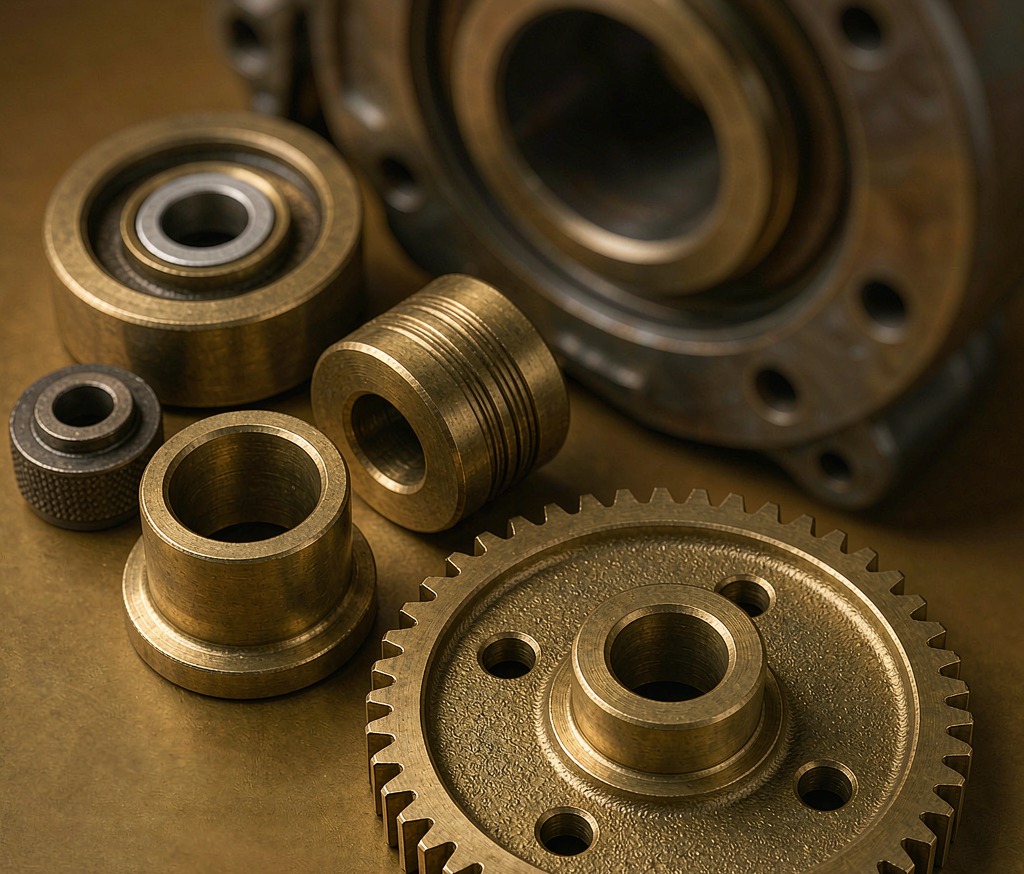
Flanged bushings, sleeve bearings, thrust washers, wear plates, guide blocks, and bronze gears are everyday work. Our custom metal bushings page details the bore, groove, and graphite-plug options we machine. Self-lubricating graphite-plugged bronze is a specialty for hard-to-maintain positions. For rotating elements, our custom metal bearings guide explains fit and material choices. Pump components and marine hardware are also common bronze work where corrosion resistance keeps the part in service far longer than steel.
Finishes and Quality Assurance
Bronze often ships as-machined, but it can be polished, plated, or patinated for appearance and protection. Surface grinding refines sealing and bearing faces. We verify material grade, hardness, and dimensions, and can supply inspection records matched to your OEM spec. For marine and hydraulic parts we confirm corrosion-resistance requirements before shipment. Material traceability from melt to finished part protects against grade mix-ups that would otherwise surface only after a field failure.
Prototyping and Volume Production
Bronze programs scale from a single sample to high-volume cast runs without changing the alloy. We validate the drawing on a machined prototype, then move to sand or investment castings for production with the same inspection criteria. Lead time depends on complexity and whether tooling is needed, but small batches ship in a few weeks. Our bronze machining services page explains how we keep batch-to-batch consistency for OEM programs that cannot tolerate variation between supplied components.
Drawing Tips for Bronze Components
State the bronze grade, the load and speed, and the lubrication condition so we can pick the right alloy. Flag oil grooves, graphite plugs, and bearing-fit tolerances explicitly, and note whether the part is a wear surface or a structural member. A complete drawing lets us cast or machine the part correctly the first time and supply the documentation your audit expects. Include the mating shaft material so we can avoid galvanic or galling issues that would shorten service life in the field.
Where Bronze Beats Other Metals
Bronze is not the cheapest metal to buy, but it is often the cheapest over the life of the machine. Because it resists wear and runs against steel without seizing, a bronze bushing or bearing can outlast a steel part in the same sliding position by years, cutting unplanned downtime in pumps, valves, and gearboxes. CNC milling of bronze also lets us add oil grooves, relief pockets, and locating features that an off-the-shelf bearing cannot provide, tailoring the part to your exact duty rather than adapting your design to a catalog size. When a component must slide, carry load, and resist corrosion at once, bronze is the pragmatic long-term choice.
How We Quote and Deliver Bronze Parts
Send the drawing, quantity, and grade, and we return a quote that states the process route, lead time, and any tooling needed for casting. For machined-from-bar parts there is no tooling, so first samples can ship in days; for cast parts we confirm pattern or die cost up front so there are no surprises at volume. Our custom metal bearings guide covers the fit and tolerance details we quote against. We keep one quality plan from prototype to production so the part you approve is the part you receive in every batch, with the traceability your audit expects from a wear-critical component.
Frequently Asked Questions
Which bronze is best for bearings?
Tin bronze is the standard for wear and sliding; aluminum bronze is chosen for heavier loads, and leaded bronze where machinability and sliding are both needed.
Can bronze be cast and then machined?
Yes. Most complex bronze parts are sand or investment cast, then CNC machined to final bore, groove, and tolerance.
Is bronze good for marine use?
Yes. Tin and aluminum bronzes resist seawater corrosion and are widely used for marine bushings, pump parts, and fittings.
Custom bronze parts are a long-service-life choice for wear and corrosion duty. Send us your drawing or sample and we will select the alloy and process that fits the job.
Ready to Start Your Project?
Get a build-ready quote on your custom metal parts within 24 hours. Share your drawing and our engineers will respond with process, lead time, and pricing.

