
Custom metal knobs are the small parts that define how a product feels in the hand: instrument dials, valve handles, clamping thumbscrews, and decorative caps. They look simple, but a good knob balances grip, thread accuracy, and finish. Huaxiao turns and mills knobs from aluminum, brass, and stainless with knurling, threading, and polishing handled in one flow. This guide covers how to spec a custom metal knob that fits, feels right, and ships on time, plus the quality checks that keep a ten-thousand-piece run consistent.
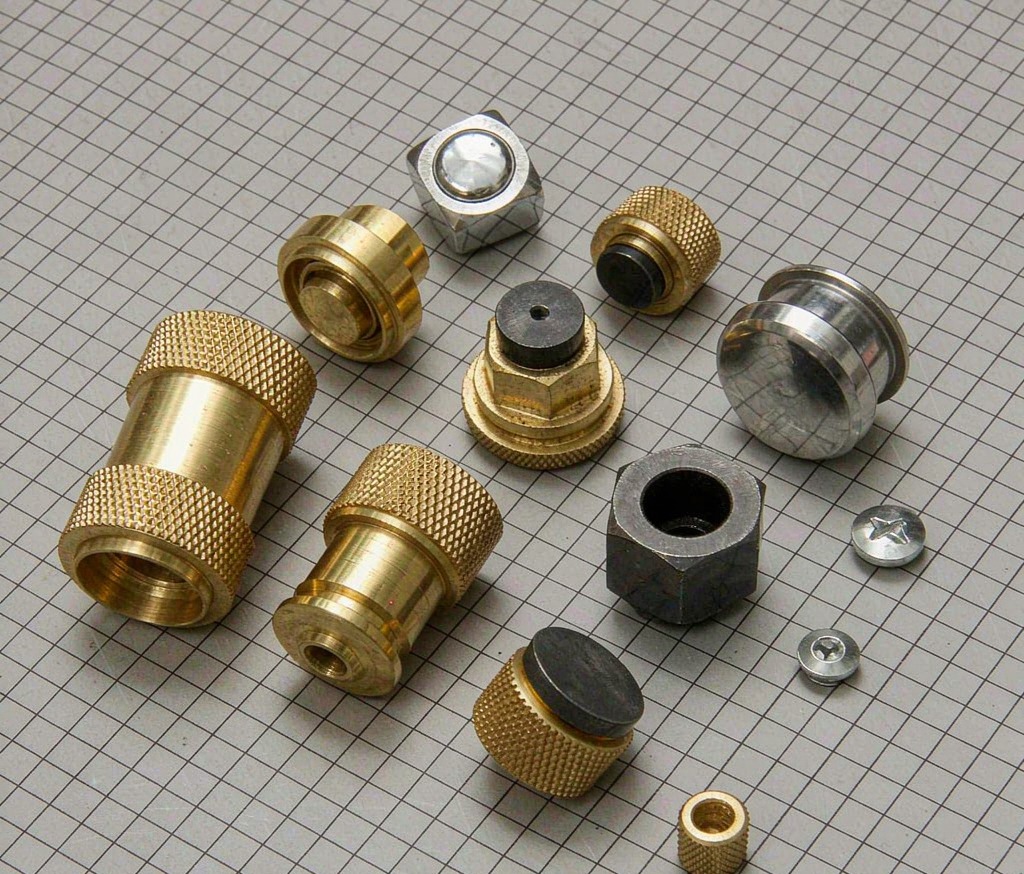
What Custom Metal Knobs Are Used For
Knobs appear on audio gear, lab instruments, valves, jigs, and furniture hardware. They may be purely decorative or load-bearing clamping elements. Function decides material: a polished brass knob for a console versus a knurled steel knob for a vise handle.
Our custom metal brackets guide shows the same made-to-print thinking applied to structural parts.
Feel is a real specification: the same diameter knob can feel premium or cheap based on knurl pitch and edge break. We sample knurl patterns so the customer confirms the grip before we commit the tooling, because that tactile detail is hard to convey on a drawing.
CNC Turning vs Milling for Knobs
Round knobs with shafts and threads are born on the lathe: CNC turning forms the body, knurl, and thread in one setup. Knobs with flats, lobes, or off-axis features need CNC milling or a mill-turn center. We pick the process by geometry, not habit.
Where the knob seats into a bore, we bore or ream the mating face for a press or thread fit.
Mill-turn centers earn their keep on complex knobs: the part is turned, then the live tooling cuts the flats and slots without a second chucking, which protects concentricity between the grip and the feature.
A common mistake is over-specifying the knob: a decorative part rarely needs a rolled thread or a ground bore, while a clamping knob cannot skip them. We right-size the process to the function so you pay for the precision you actually use and not for tolerances the application ignores.
Knurling, Threading, and Finishes
Knurling gives grip; straight, diamond, or annular patterns are cut with form tools on the lathe. Threads are rolled or cut to class 6g/6H as needed. Finishes range from raw machined to polished mirror or anodized color.
For micro-lot or slender knobs we use Swiss turning for excellent concentricity on long thin shafts.
Rolled threads are stronger than cut threads because the grain follows the root, so for clamping knobs we roll when the diameter allows. That small choice raises the knob service life under repeated torque.
Materials: Aluminum, Brass, Stainless
Aluminum knobs are light and can be anodized in any color; brass feels premium and machines beautifully; stainless resists corrosion for outdoor or food use. Material also sets the knob weight, which affects perceived quality.
See our precision machined parts article for how material choice drives tolerance and finish.
Weight is often overlooked: a heavy brass knob on a light panel feels stable and deliberate, while a light aluminum knob suits portable gear. We steer material by where and how the product is handled, not just by cost.
For mixed-material assemblies a knob in one metal next to a panel in another can galvanically corrode, so we flag the pair and suggest a resistant choice or an isolating finish. That small design note avoids the green creep that ruins an otherwise perfect console years after launch.
Tolerances and Batch Consistency
A knob that threads on crooked ruins the product. We hold thread and bore to print and check first articles so a run of ten thousand feels identical in the hand. Deburring removes sharp edges that would catch skin or gloves.
Consistency across the batch matters more than the first sample, so we control setup and tool wear.
We gauge a fixed percentage of every lot and keep the first-article report on file, so a reorder a year later matches the original. That traceability is what procurement teams actually buy when they choose a specialty knob shop.
Ordering Custom Knobs
Send a drawing with thread callout, knurl type, material, and finish, and we return a quote with lead time. Prototype knobs can ship in days; production lots follow after first-article approval.
Pair knob sourcing with related turned hardware to consolidate suppliers and color matching.
If you only have a sample and no drawing, we can reverse-engineer the thread and knurl, model it, and send a confirmation before cutting steel. That reverse-engineering path saves weeks when a legacy product is being refreshed.
Frequently Asked Questions
What materials can knobs be made from?
Aluminum, brass, stainless, and mild steel; aluminum and brass are most common for feel and finish.
Can you knurl and thread in one setup?
Yes, CNC lathes cut the body, knurl, and thread in a single chucking for concentricity.
What knurl patterns are available?
Straight, diamond, and annular knurling in several pitches for grip and appearance.
How fast can I get prototypes?
Often within days from stock material; production follows first-article sign-off.
Do you anodize aluminum knobs?
Yes, including color anodize to match brand hardware.
Can knobs be made with off-axis features?
Yes, using mill-turn or separate milling for flats, lobes, or slots.
Ready to Start Your Project?
Get a build-ready quote on your custom metal parts within 24 hours. Share your drawing and our engineers will respond with process, lead time, and pricing.

