
A stud is a headless fastener—threaded on one or both ends—that anchors flanges, manifolds, and assemblies where a bolt would be awkward. Because custom metal studs are made to print in everything from inconel to mild steel, the buyer’s job is to specify material, threading, and finish clearly. This guide keeps that brief short and correct, and shows where the money actually goes in a stud run.
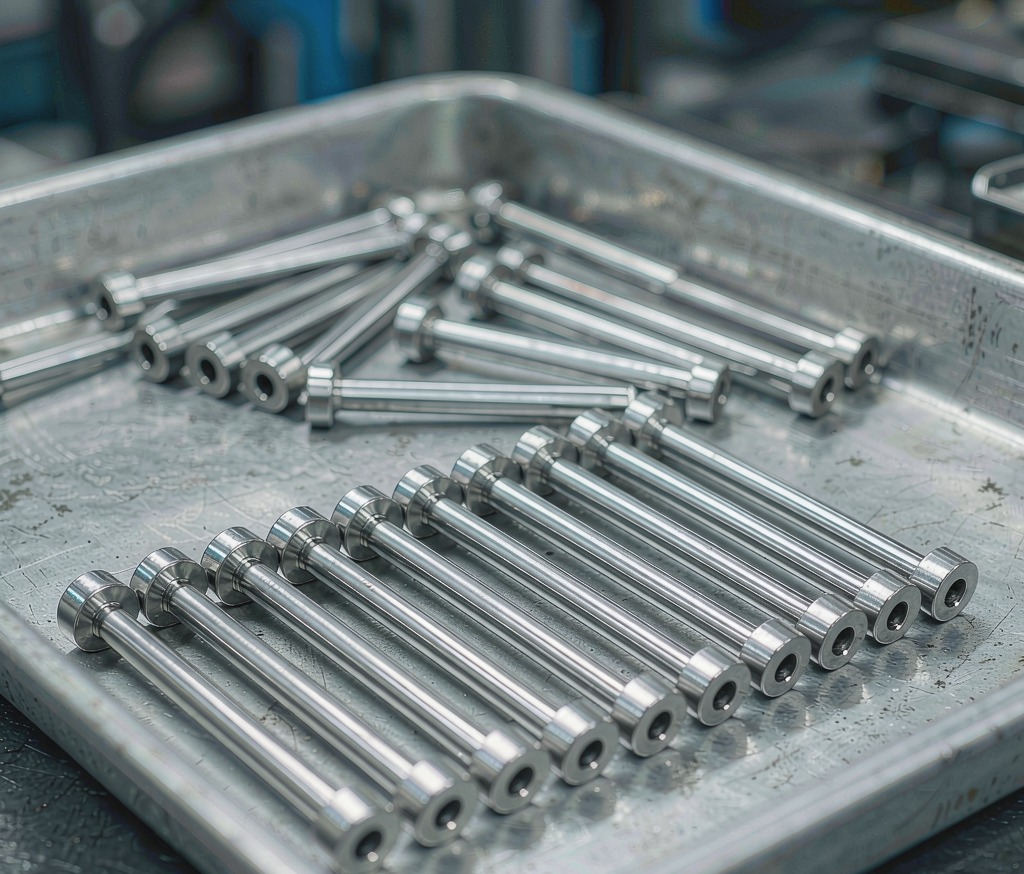
What a Stud Is
Think of a stud as a precision shaft with threads. One end screws into a tapped hole; the other takes a nut. They are everywhere in flanged joints and machined manifolds because they give a clean, repeatable clamp without a bolt head fouling nearby parts or trapping process fluid in a blind pocket.
Materials Buyers Specify
Carbon steel and 304/316 stainless cover most work; specialty fastener alloys like duplex or inconel handle corrosive or hot duties. Bolt programs share the same heading and threading cells, so a stud is a small detour from a bolt run and the per-piece cost stays close to a bolt’s.
Turning and Threading
We CNC turn the blank, then roll or cut the threads to class 2A/2B or finer. Milling handles hex or reduced-shank features. Rolled threads are stronger and preferred for fatigue duty. Screw shops use the same thread-roll tooling across the family, so a stud and a screw from the same alloy share identical thread geometry and gauging.
Plating and Finish
Studs get zinc plating or passivation for corrosion resistance, then deburring and a stress-relief anneal when cold-formed. Always note which end is the installation end so plating thickness does not affect the fit, because a thick plate on the threaded end is the classic cause of a nut that will not start.
Design Tips to Save Cost
Specify the shortest thread that carries the load; long threads add roll time and plating area for nothing. If the stud sees fatigue, roll the thread rather than cut it, and keep the fillet radius at the shoulder generous so stress concentrates nowhere. Bolt programs can often reuse the same headed blank, so ask before you pay for a custom diameter.
Quality Control and Inspection
We gauge every thread, verify the heat by cert, and check plating thickness so the nut fits after finish. For safety parts we add a tensile proof and a magnetic-particle check on the fillet, where fatigue cracks start. First-article approval goes out before the run so a wrong thread class is caught on one piece, not on ten thousand.
Lead Time and How to Request a Quote
Send the diameter, both thread lengths, the class, the material, and the finish. Low volumes turn from bar in days; high volumes move to cold heading for cost. We quote with the crossover point called out, so you know exactly when heading pays for its tooling. A quick call on the environment prevents a plating change later.
Specifying Studs That Will Not Gall or Seize
The two failures that waste a stud run are galling on stainless and a nut that will not start after plating. Both are designed out on the drawing. For stainless, specify a wax lube or a light passivation plus controlled install torque so the threads do not cold-weld; galling is a surface problem, and a little lubrication beats a redesign. For plated studs, mark which end is the installation end so plate thickness never builds up on the threaded section and locks the nut—a thick plate on the wrong end is the classic cause of a seized fastener. Bolt programs share the same heading and threading cells, so a stud is a small detour from a bolt run and the per-piece cost stays close. Roll the thread rather than cut it wherever fatigue matters, and keep the fillet radius at the shoulder generous so stress concentrates nowhere. Spec the shortest thread that carries the load; long threads add roll time and plating area for nothing. When the diameter, both thread lengths, the class, the material, and the finish are all on the inquiry, the quote comes back the same day and the first articles are right, which is the whole point of a made-to-print fastener shop that gauges every thread and verifies the heat by cert before the run starts.
For safety-critical studs we add a tensile proof and a magnetic-particle check on the fillet, where fatigue cracks start, and first-article approval goes out before production so a wrong thread class is caught on one piece, not ten thousand. Tell us the environment up front and we will prevent a plating change later rather than after a batch is finished. When the thread is rolled and the fillet is generous, a stud outlasts the assembly it holds, which is the result a good spec is aiming for.
Frequently Asked Questions
Double-ended or single-ended?
Both; tell us the thread length each side and whether one end is a stud point.
What thread classes can you hold?
2A/2B standard, 3A/3B on request with gauging.
Can you do left-hand threads?
Yes—just mark it on the drawing; it is a tooling choice, not a redesign.
How do you prevent galling on stainless?
Wax lube or a light passivation plus controlled torque during install.
Do you supply certs?
Mill certs and thread gauges ship on request.
Ready to Start Your Project?
Get a build-ready quote on your custom metal parts within 24 hours. Share your drawing and our engineers will respond with process, lead time, and pricing.

