
Electroless Nickel Plating Services: Uniform, Corrosion-Resistant Coatings
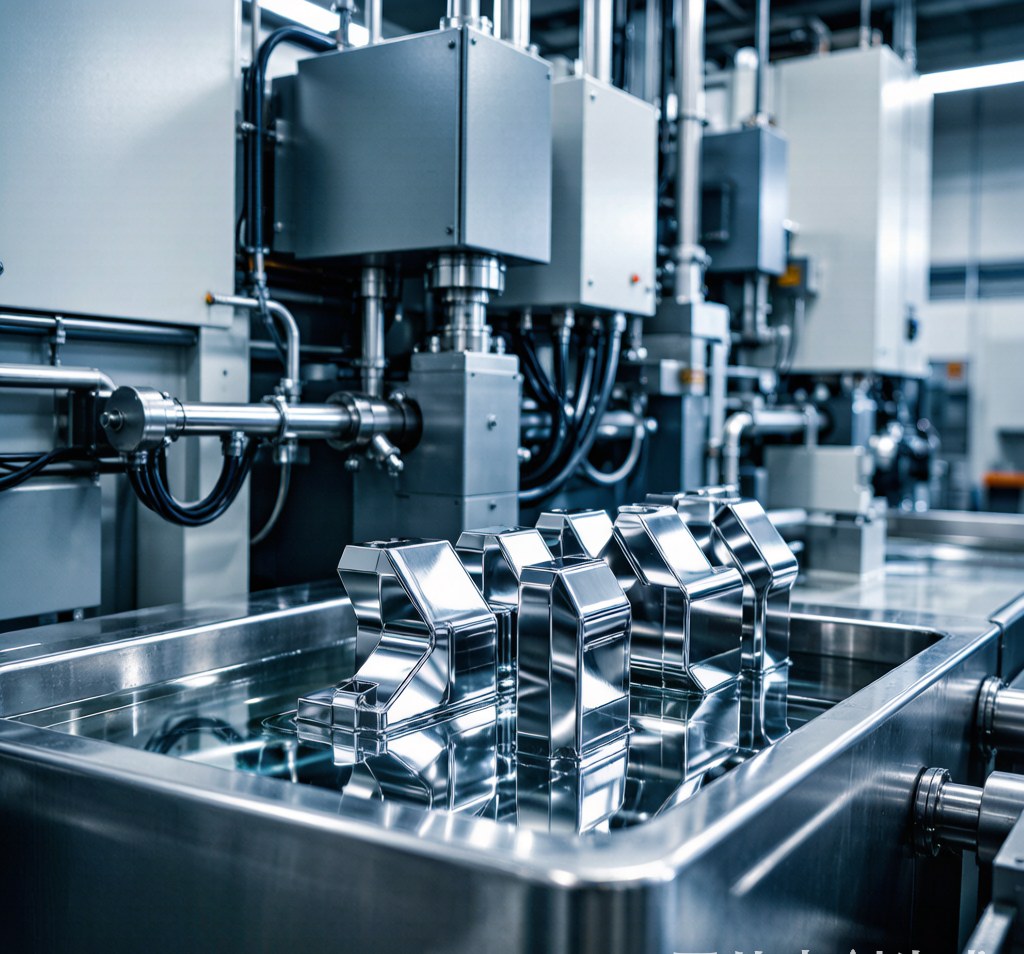
Electroless nickel plating deposits a nickel-phosphorus alloy onto metal parts through autocatalytic chemistry—no electrical current, no racks, no anodes. Because the coating forms from the bath itself, it lands with near-perfect uniformity on every surface: inside blind holes, across threads, on complex internal geometries where electroplating would leave thin spots. For components where thickness variation and rack marks are unacceptable, EN is the default choice. This guide explains how it works, when to choose it, the alloy options, and how to specify your job.

How Electroless Nickel Plating Works
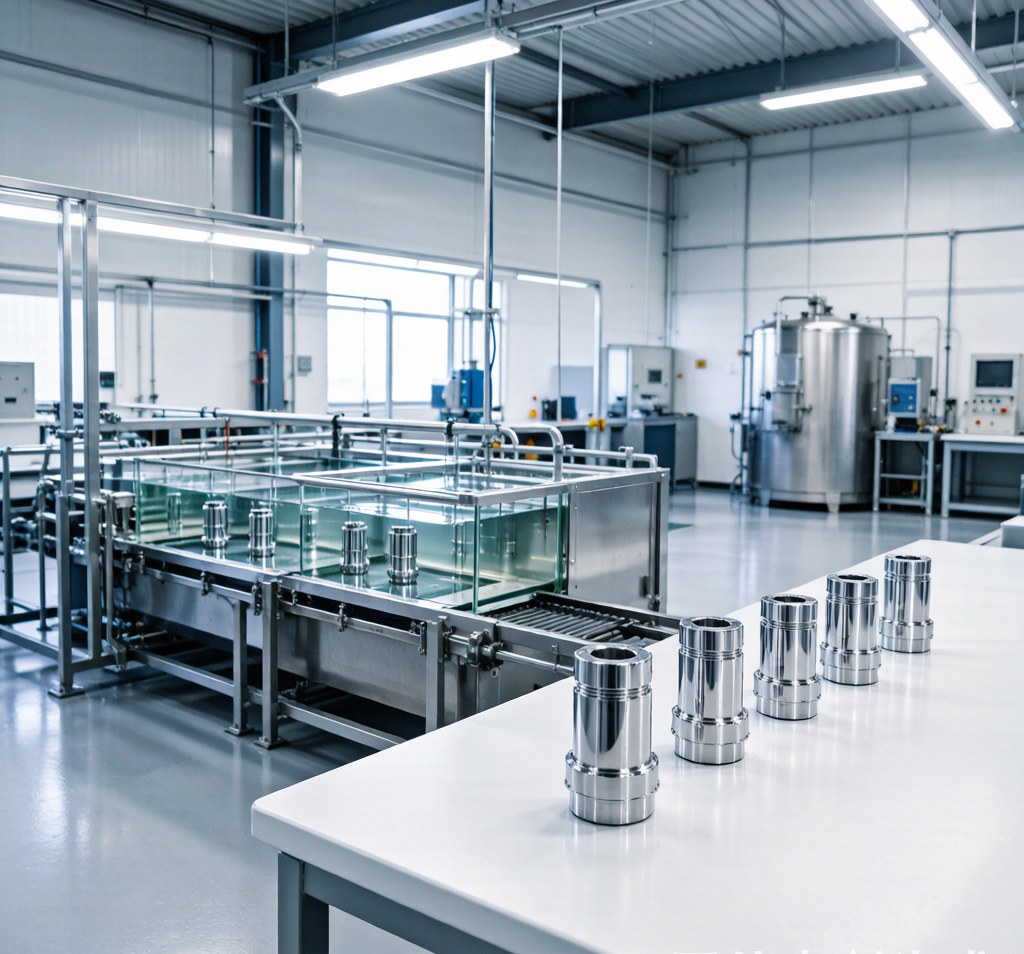
In an EN bath, a reducing agent (usually sodium hypophosphite) drives nickel ions out of solution onto the part surface. The deposited nickel itself keeps the reaction going—hence “autocatalytic.” There is no need to hang the part on a rack bar carrying current, so the entire surface, including recesses, builds up at the same rate. We typically run EN after precision machining such as CNC milling or CNC turning, and we can follow it with a light passivation step where extra corrosion resistance is required.
Electroless vs. Electro Nickel Plating
Electro nickel plating is faster and cheaper for simple, symmetrical parts, but coating thickness tracks local current density—edges build up, recesses stay thin. Electroless nickel trades speed for uniformity: a 25 µm layer on the outside of a fitting is also 25 µm inside its bore. If your part has internal features, threads, or tight tolerances, EN wins. Compare it directly with our electro nickel plating when geometry is straightforward.
Alloy Choices: Phosphorus Content
- Low phosphorus (1–3% P)—hardest and most wear-resistant; slightly less corrosion protection.
- Mid phosphorus (4–7% P)—the workhorse balance of corrosion resistance and hardness, ideal for general engineering.
- High phosphorus (10–13% P)—maximum corrosion resistance and non-magnetic; preferred for chemical and semiconductor service.
Materials We Plate
- Carbon and alloy steels—the most common substrate.
- Stainless steel and copper alloys—for corrosion and conductivity service.
- Aluminum—with a zincate pre-treatment; pairs well with zinc plating logic for adhesion.
- Engineered plastics—after catalytic seeding, for lightweight EMI-shielded parts.
Industries That Rely on Electroless Nickel
Oil & gas valves, automotive fuel systems, electronics enclosures, mold cavities, and food-processing hardware all depend on EN for even protection in hostile environments. The uniform deposit is what makes long service life predictable.
How to Spec Your Electroless Nickel Job
- State phosphorus grade (low / mid / high) for the wear-corrosion balance you need.
- Define thickness—commonly 5–50 µm; note any minimum on internal features.
- Specify post-bake if hydrogen embrittlement relief is required for high-strength steel.
- Set the salt-spray target (e.g. 96–500 h per ASTM B117) for qualification.
- Share hardness expectation (as-plated vs. heat-treated to ~1000 HV).
- Flag critical dimensions so we hold them within the coating allowance.
FAQ
How thick can electroless nickel be?
We routinely deposit up to 50 µm uniformly; thicker is possible with process control.
Is it solderable?
As-plated mid-P EN solders well; high-P may need a flash for best wetting.
Does it change dimensions?
Yes—by half the coating thickness per surface. We account for this in the print.
Why Choose Huaxiao for Electroless Nickel Plating
Our electroless nickel plating service combines controlled baths, thickness mapping, and integrated machining and inspection so your coated parts meet spec the first time. Send your drawing for a quote that covers substrate prep through final coating.

