
Expanded metal is one of the most underrated structural materials: a single sheet is slit and stretched into a rigid, one-piece mesh with no joins to fail. Our expanded metal manufacturing turns coils and plates of steel, aluminum, and stainless into walkway grating, machine guards, façade screens, and filtration frames. Because the mesh is integral to the sheet, it stays flat, strong, and slip-resistant without secondary assemblies.
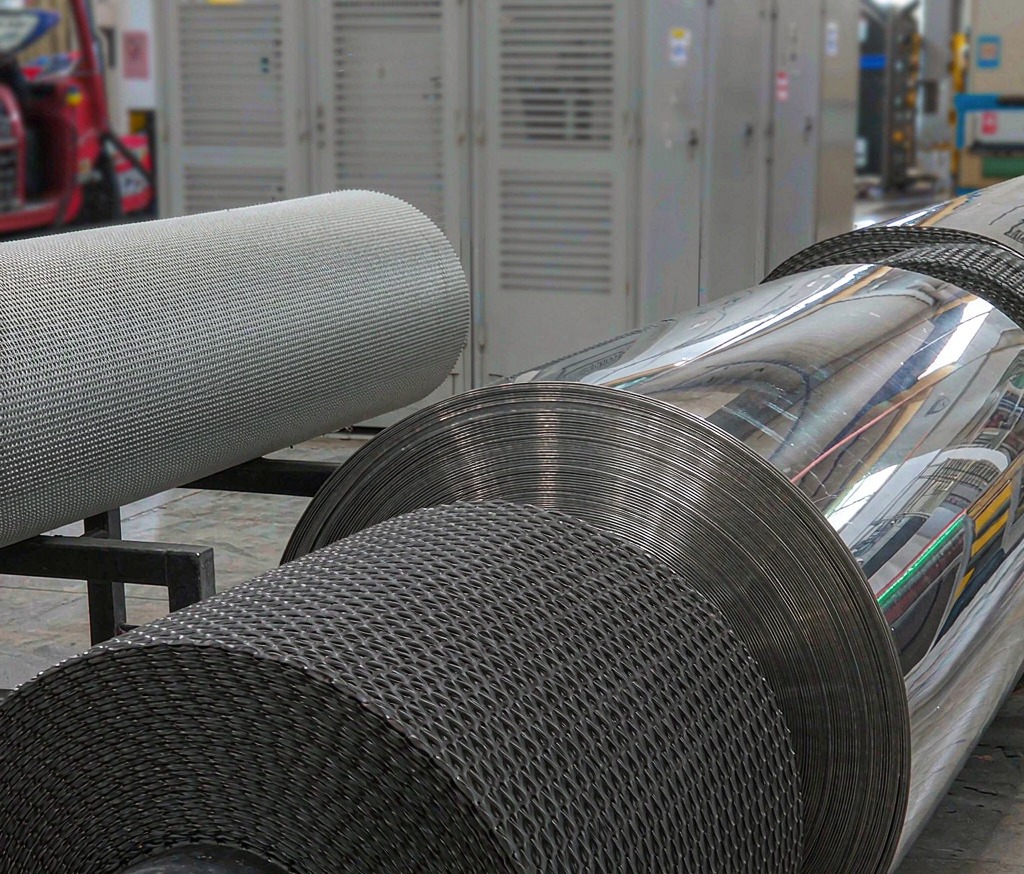
What Expanded Metal Is
The process is simple and elegant. A press slits the sheet at regular intervals and then stretches it, opening the slits into a diamond or hexagon pattern. No material is removed, so nearly 100% of the parent metal becomes the product, and there are no welds or woven wires to loosen. That one-piece nature is why expanded metal is favored over perforated metal where stiffness and safety matter more than a perfectly round hole.
Because nothing is punched out, expanded metal is also economical and sustainable: scrap is minimal and the open area still lets light, air, and fluid pass. The strands bridge the gaps, so even a thin sheet gains surprising rigidity once expanded, which is why it works as walking surface and guard panel alike.
Standard vs Flattened
Standard expanded metal keeps its full three-dimensional profile, with raised strands that improve grip and stiffness. Flattened expanded metal is cold-rolled after expansion to lie flat, giving a smoother surface for architectural and decorative use. The choice affects both look and function: a raised mesh bites underfoot on a catwalk, while a flattened mesh reads as a refined screen on a building façade.
Materials and Gauges
Mild steel is the workhorse for walkways and guards; aluminum cuts weight for transit and façade work; stainless (304/316) serves food, pharmaceutical, and marine duty. We stock a range of gauges and strand widths, and we can edge-bond or frame panels so they drop into your structure. Material also sets the downstream finish, from painting to galvanizing for outdoor steel.
Typical Applications
The list is long: industrial safety walkways and platform treads, machine guarding, HVAC insulation retainers, speaker grilles, retail shelving, and architectural cladding. In each case the open area lets light, air, or fluid pass while the metal carries load. For high-volume framed parts we combine sheet metal fabrication with expanded mesh to build complete guard panels and enclosures.
Cutting and Finishing
Expanded sheets are cut to size with plasma cutting or shearing for straight edges, and with CNC punching when we need precision notches and fixings. After cutting we deburr the edges and apply the finish: powder coat for color and corrosion resistance via powder coating, or galvanize for heavy exterior service. Flatness and edge safety are checked so panels install without snagging gloves or clothing.
Specifying Your Order
Tell us the mesh style (diamond size and strand width), material and gauge, sheet or panel dimensions, and finish. If you need round holes instead of a stretched pattern, our perforated metal services are the right complement. With the spec in hand we can supply anything from a single prototype panel to a truckload of framed walkway sections, all made from the same master coil for consistent appearance.
From Sample Panel to Full Order
For production, we qualify a sample panel first, confirm the mesh, flatness, and finish, then run the balance of the order against that approved sample. Because expanded metal is slit and stretched in one operation, batch-to-batch variation is minimal, but we still log the coil and settings so a reorder months later matches the original. That consistency is what lets architects and engineers specify our mesh across a whole project.
If your part needs to integrate with other structure, we can weld frames, add edge trim, or nest cut pieces to reduce scrap. Combined with our metal shearing services and plasma cutting services, a single source can deliver finished, ready-to-install expanded metal rather than raw sheets you must process yourself.
Lead times are short for standard meshes held in stock and longer for bespoke strand sizes or special alloys. For ongoing needs we can pre-build a buffer of cut-and-finished panels so call-offs ship the same week. Because the process wastes almost no material, even custom openings are cost-effective, and we will advise whether a standard pattern meets your spec before quoting a special one.
Frequently Asked Questions
Is expanded metal strong enough for walkways?
Yes. Standard raised expanded metal is widely used as anti-slip walkway and platform tread, especially in steel. Load rating depends on strand width, gauge, and support span.
Standard or flattened for a building facade?
Flattened expanded metal is usually preferred for façades because it lies flat and reads as a refined screen, though raised mesh can be used for a more industrial look.
Can expanded metal be galvanized?
Steel expanded mesh is commonly hot-dip galvanized or powder coated for outdoor use. Aluminum and stainless versions often need no coating at all.
How is expanded metal different from woven wire mesh?
Expanded metal is one continuous piece of slit-and-stretched sheet with no welds or weaves, so it is stiffer and will not unravel if cut, unlike woven mesh.
Ready to Start Your Project?
Get a build-ready quote on your custom metal parts within 24 hours. Share your drawing and our engineers will respond with process, lead time, and pricing.

