
When a component must not fail, engineers specify forged steel parts. Forging aligns the grain flow with the load path, yielding strength and fatigue life that castings cannot match, which is why crankshafts, flanges, and lifting gear are forged rather than poured. Huaxiao Parts offers open-die, closed-die, and ring rolling to cover prototypes through mass production, with machining to finish the forged shape. This article explains the methods and why forging earns its place in safety-critical designs.
What Are Forged Steel Parts?
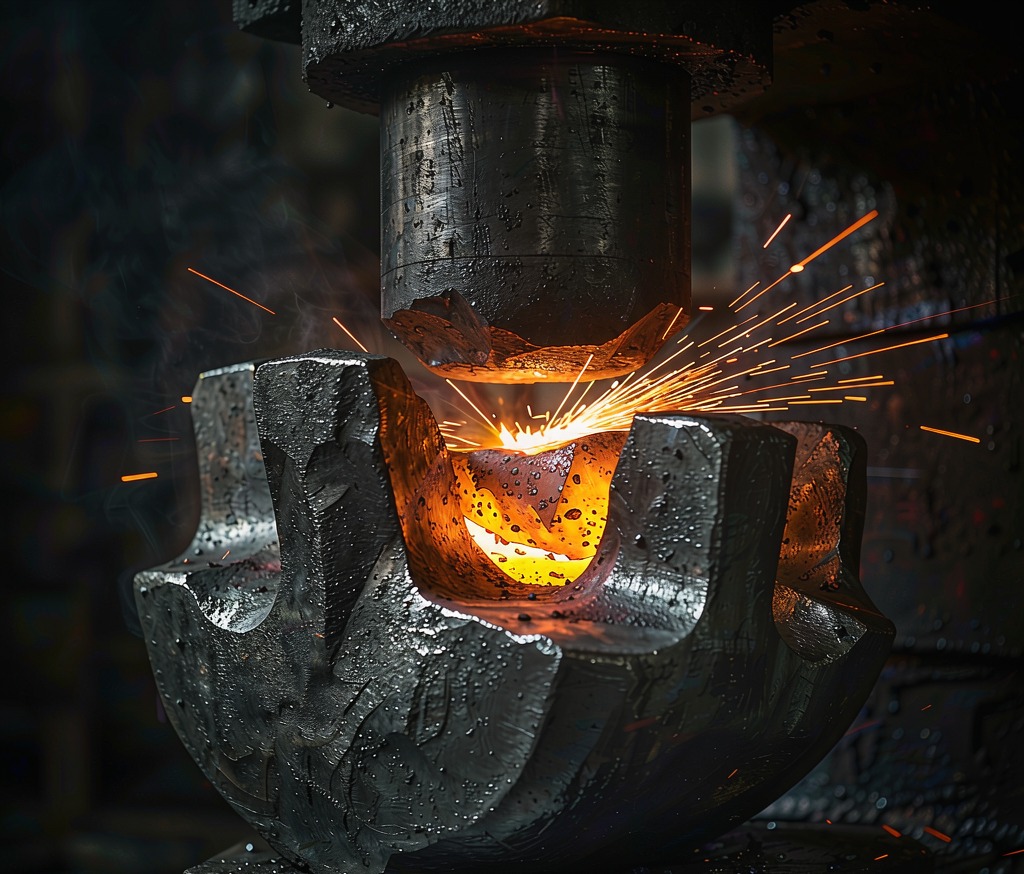
Forging shapes heated steel under compressive force rather than melting it, so the continuous grain structure resists cracking and impact far better than welded or cast equivalents. The metal flows around corners instead of solidifying with shrink holes, which removes the porosity that weakens castings under pressure. That is why forged parts appear wherever failure is expensive: drivetrain, oilfield, and lifting hardware all lean on forged integrity. The cost is tooling and tonnage, but for the right part the reliability return is decisive.
Open-Die vs Closed-Die Forging
open-die forging suits large, simple, low-volume shapes where a die would be uneconomic, while closed-die forging locks in near-net geometry for repeatable production at scale. We also provide ring rolling for seamless rings and hot forging for general components, then forging machining brings forgings to final dimension and flatness. Closed-die work spreads die cost across the run, so the per-part price drops sharply as volume rises. The process choice is driven by shape, quantity, and the tolerance you can live with.
Why Forging Beats Casting for Strength
No porosity, no shrink, and directional grain mean higher yield and fatigue limits than a casting of the same alloy. Our forging vs casting article quantifies the trade-offs against hot forging and precision casting so you can choose with numbers, not habit. In cyclic-load applications the fatigue margin often decides service life, and forging simply has more of it. When the part is safety-critical, that margin is worth the process premium.
Common Steel Grades
1018, 1045, 4140, and 4340 cover most needs, with alloy grades adding hardenability for drivetrain and tooling use. We can normalize, quench, and temper to hit a target hardness, and our heat-treat partners document the cycle for traceability. Grade selection balances machinability, strength, and cost, which is why we review the duty cycle before recommending. The right steel, properly forged and treated, outlasts a fancier alloy used wrongly.
Applications
Cranks, flanges, lifting hardware, and oilfield components all depend on forged integrity because a single failure is unacceptable. Forged rings seat bearings and withstand pressure that would split a welded seam, and forged heads resist the impact of repeated loading. If your part carries people, pressure, or load, forging deserves a hard look against casting.
Heat Treatment for Forged Parts
Forging sets the grain, but heat treatment sets the hardness and strength the part actually uses in service. We normalize to relieve forging stress, then quench and temper to a target hardness, and our heat-treat partners document the cycle for traceability on critical jobs. Some grades respond to controlled cooling that trades a little ductility for much higher wear resistance, which is exactly what gears and pins need. Matching the treatment to the duty cycle, rather than a generic harden, is how a forged part earns its reliability premium over the life of the equipment.
Lead time on forgings is driven mostly by die making, so involving us at the design stage rather than after drawing release shortens your path to parts. We can suggest pre-forms and parting lines that simplify the die and improve fill, and we coordinate post-forge machining so the finished component needs minimal stock removal. Early collaboration also lets us reserve press capacity, which protects your schedule during busy seasons when open-die tonnage is tight and delivery windows stretch.
Frequently Asked Questions
What is the weight range?
From a few grams on closed-die headers to several tonnes on open-die blocks, depending on press capacity and die size.
Can forgings be machined after?
Yes, we deliver rough or finish-machined forgings to your drawing, holding critical faces and bores to tolerance.
How do you control grain flow?
Die design and reduction ratio are planned so flow lines follow the part contour under load, which is what gives forging its strength.
Can forgings be welded after machining?
Yes, with the right pre-heat and filler, though we prefer to machine after any welding so the joint is not disturbed by cutting forces. Low-alloy steels weld readily; high-carbon grades need controlled cooling to avoid hardening cracks, which our procedure qualifies up front. We plan the sequence so the forging keeps its grain advantage at the join and the finished part meets both strength and dimensional needs.
Is testing available on forged parts?
We offer ultrasonic and magnetic-particle inspection for critical forgings to confirm there are no internal flaws before machining, with reports supplied alongside the parts.
What is the smallest forging you make?
Closed-die work starts around a few grams for precision components, while very small open-die pieces are usually better served by machining or stamping.
Ready to Start Your Project?
Get a build-ready quote on your custom metal parts within 24 hours. Share your drawing and our engineers will respond with process, lead time, and pricing.

