
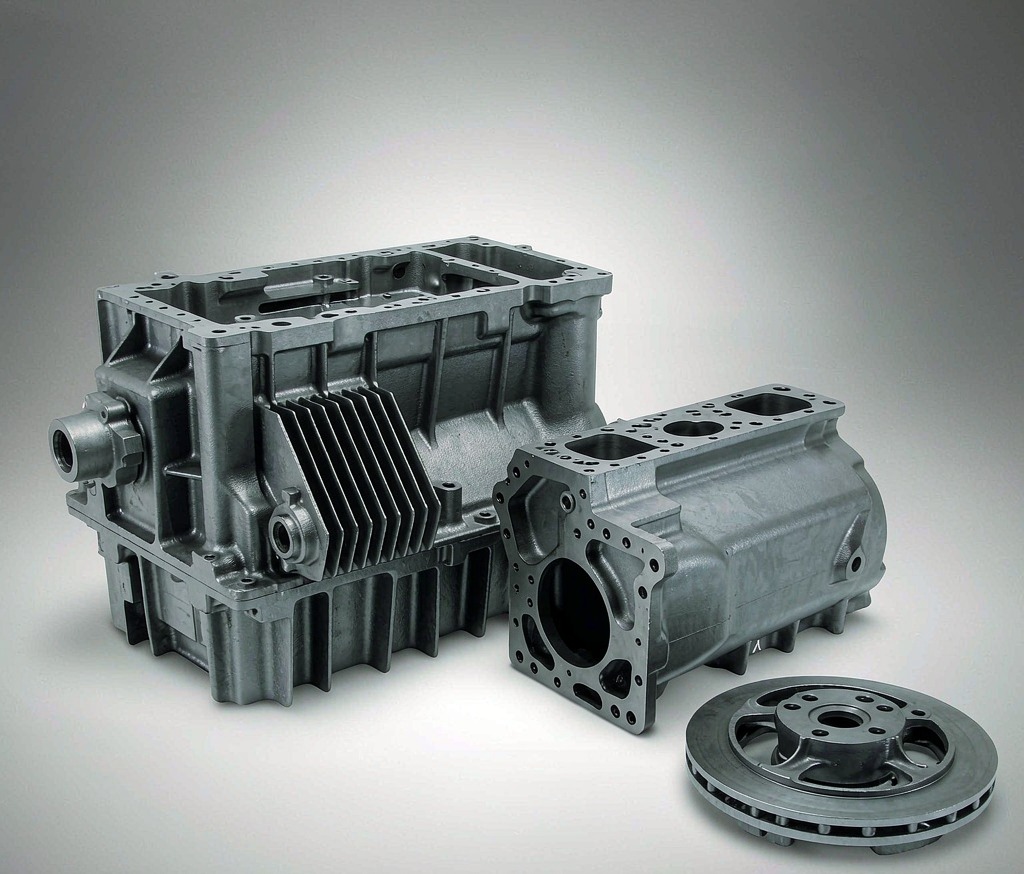
Gray iron is the workhorse of cast metals — the material behind engine blocks, machine-tool bases, brake rotors, and countless industrial housings. Its flake-graphite microstructure gives it unmatched vibration damping, easy machinability, and very low cost per kilogram. If stiffness, stability, and budget matter more than tensile strength, a gray iron casting service is almost always the right call, and it is frequently the most economical route to a rigid, dimensionally stable component.
Why Choose Gray Iron?
Gray cast iron earns its place through a rare combination of properties. The interconnected graphite flakes act like millions of tiny shock absorbers, so a gray iron sand casting damps vibration far better than steel or aluminum. That is why precision machine bases and lathe beds are made from it: the material keeps chatter and resonance away from cutting tools. Gray iron is also naturally self-lubricating at worn surfaces and machines with minimal tool wear, which keeps downstream costs low across long production runs.
Gray Iron Class Grades
We pour standard ASTM A48 / EN-GJL classes, each tuned to a different duty. Class 20 (GG20) is a low-strength grade with maximum damping for covers and non-critical housings. Class 30 (GG25) is the all-rounder for engine blocks, pump bodies, and bases. Class 40 (GG30) provides higher strength for gears, brake rotors, and loaded brackets. Grade selection is a balance of stiffness, hardness, and machinability — we help you pick the cheapest class that still meets your FEA and service load so you never over-specify and waste money.
Common Gray Iron Cast Parts
Gray iron appears wherever mass, stability, and cost dominate the design. Typical parts include engine blocks, cylinder heads, and oil pans; machine-tool bases, columns, and lathe beds; pump housings, valve bodies, and manifolds; brake rotors, drums, and clutch housings; and construction and agricultural equipment frames. For steel-intensive components where higher strength or impact resistance is required, our steel casting line covers those requirements, and our team will tell you plainly when steel is warranted.
Casting Process and Damping Advantage
Gray iron is overwhelmingly produced by green-sand molding: a pattern forms the cavity, molten iron is poured, cooled, shaken out, and cleaned. Controlled cooling rates and gating design prevent hard spots and subsurface porosity that wreck later machining. Because the graphite flakes absorb vibration, a gray iron base stabilizes a precision machine far better than a welded fabrication. See how this compares with our gravity casting services for non-ferrous parts, where the damping and machinability profile is different.
Machining Considerations
Gray iron machines beautifully, but hard spots from poor cooling can chip tools. We verify microstructure by spectroscopy and metallography before release, and we finish critical faces on CNC mills and boring bars to hold flatness and bore tolerance. Our steel casting services article covers related post-cast machining for comparison, and our foundry team shares gating and risering optimizations up front so defects are designed out rather than found after machining.
Gray Iron vs. Ductile Iron
Buyers often ask whether gray or ductile (nodular) iron is the better choice. Gray iron wins on damping, machinability, and cost, and it is the right pick for stationary, stiffness-critical parts. Ductile iron adds spherical graphite for tensile strength and impact resistance, which matters for loaded dynamic components. If your part sees shock loads or needs to flex, our steel casting or ductile-iron routes may be better; for bases, housings, and rotors, gray iron is usually unbeatable. We also run complementary die casting for high-volume thin-wall aluminum and zinc parts.
What Drives the Cost of a Gray Iron Casting
Cost is driven by pattern type, part size, complexity, and required machining. A reusable pattern and near-net shape keep per-part cost down, while tight flatness or bore tolerances add finish-machining hours. We optimize gating and risering up front so you pay for less material removal, and we are transparent about volume breakpoints where tooling investment pays back.
Design Tips to Improve Castability
Simple changes cut cost and scrap on gray iron. Uniform wall thickness avoids hot spots and warping; generous fillets reduce stress concentrations at corners; and placing critical machined faces toward the parting line improves accuracy. We review drawings for these rules during quoting so the casting is easy to make well the first time, which is cheaper than fixing problems after the fact.
Lead time is usually the question every buyer asks first. For existing patterns, gray iron castings typically ship in four to six weeks; for new tooling, eight to twelve weeks is realistic once pattern and gating are proven. We compress that by reusing standard pattern equipment where the geometry allows and by pre-quoting the machining so nothing waits in queue after casting. If you need a handful of prototypes, we can often machine a single cavity or print a pattern to validate fit before committing to production tooling.
Frequently Asked Questions
Can gray iron be welded?
It can be welded with the right preheat and nickel-based filler, but welding is generally avoided on highly stressed sections because the material has limited ductility.
Is gray iron brittle?
It has low ductility and low impact resistance, which is why it is used for stationary, stiffness-critical parts rather than dynamic load paths.
What tolerance can I expect?
As-cast tolerances are typically ±0.5–1.5 mm; finish-machining brings features to ±0.05 mm or better on critical faces.
Start Your Gray Iron Project
Share your drawing and service conditions. We will propose the right class, pattern strategy, and machining plan, then quote lead time and price with no surprises.
Ready to Start Your Project?
Get a build-ready quote on your custom metal parts within 24 hours. Share your drawing and our engineers will respond with process, lead time, and pricing.

