
Every CNC machining quote eventually comes down to two numbers: when do the parts arrive, and how many must I buy. Lead time feels like a mystery, but it is actually the sum of identifiable stages, each with its own duration. Learn to see those stages and you can plan programs, negotiate intelligently, and cut weeks off delivery without paying expedite fees.
The Anatomy of a CNC Lead Time
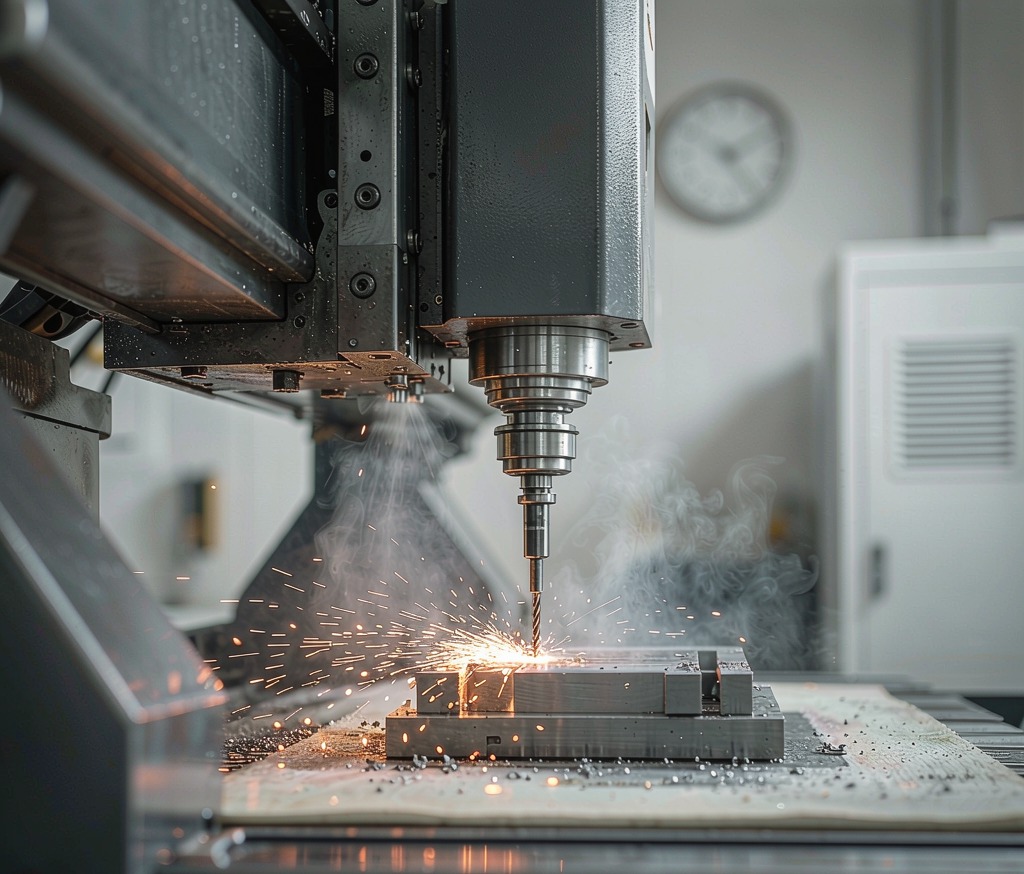
A quoted lead time is built from six stages: quoting and DFM review (1-2 days), material procurement (1-7 days), programming and setup (0.5-2 days), machining (1-10+ days), finishing (3-7 days), and inspection and packing (0.5-1 day), plus freight. On CNC milling and CNC turning, machining itself is often a minority of the clock. Our CNC machining cost guide pairs with this breakdown.
The Finishing Bottleneck Buyers Forget
Finishing adds nearly a week because anodizing, plating, and coating run on their own queues, subcontracted outside machine time. A part can be fully machined yet wait days for a tank. Specifying anodizing or plating early lets the shop book the slot in parallel. This is the single most common surprise in a delivery date.
Material Availability Surprises
6061 plate is same-day in any industrial market; a specific titanium bar size or certified alloy can add a week before a chip is cut. Confirming standard stock upfront removes that risk. Our low-volume manufacturing programs often pre-stock common materials to compress this stage.
RFQ Completeness as the Top Lever
The fastest way to shorten lead time is to send complete, clean data at RFQ: a STEP file, a drawing with tolerances, material, finish, quantity, and target date. Every clarification loop costs days. A complete package lets a shop quote, program, and schedule without questions. Our CNC machining quote guide lists exactly what to include.
A Realistic Example Timeline
Consider 500 anodized 6061 brackets with CMM documentation. Quoting and DFM review take a day or two. Material is same-day because 6061 is stock. Programming and setup run about a day. Machining 500 pieces might take one to two weeks depending on complexity. Anodizing adds three to seven days on a subcontractor queue. Inspection and packing take a day, and sea freight to the US runs three to five weeks. The total lands around six to eight weeks, yet machining itself is under two weeks, with finishing and freight dominating. A simple prototype in the same material, no finish, shipped by air, can instead be seven to twelve days door to door. Seeing the breakdown is what lets you compress the controllable stages and set honest expectations on the rest.
Expediting Without Paying Rush Fees
Rush fees exist because expediting compresses the uncontrollable stages, not the machine time. You can often get similar speed by attacking those stages yourself. Release the order with complete data so programming starts immediately, pre-approve a standard stock material to skip procurement, and book the anodize or plating slot in parallel rather than after machining. For multi-part assemblies, ask the shop to ship the critical long-lead item first so your downstream work continues. Air freight instead of sea is the other lever, at a predictable premium. None of these requires the shop to drop everything, yet together they can pull weeks out of a schedule. The shops that help you do this are the ones worth repeat business.
Scheduling and Freight Timing
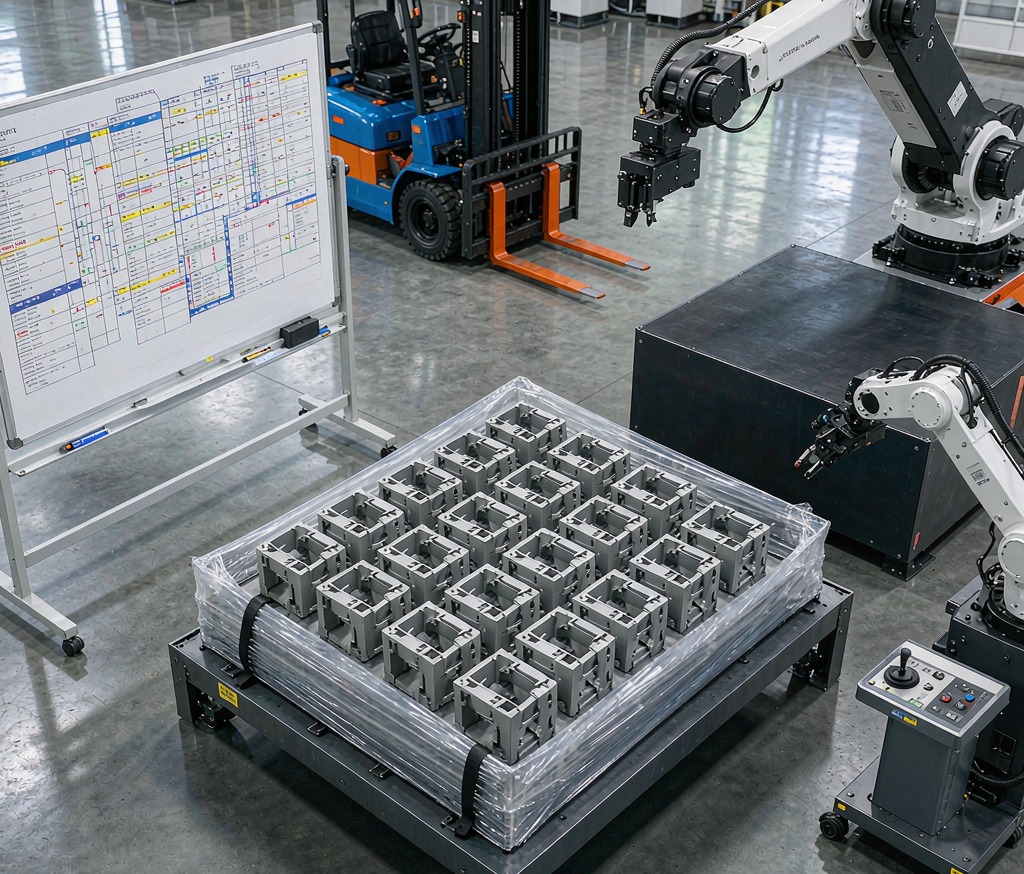
Machine capacity matters: five-axis and precision surface grinding work competes for limited machines. Shipping mode is separate from production time, air versus sea can mean days versus weeks. Confirm whether a quoted date means completion, shipment, or arrival, and let assembly and packing be scheduled, not rushed.
Frequently Asked Questions
What is the typical CNC machining lead time?
A simple prototype might be 7-12 days door to door; a 500-piece anodized production run with CMM docs is typically 6-8 weeks, of which machining is often under two weeks.
Why is finishing so slow?
Anodize, plating, heat treat, and coating are subcontracted processes with their own queues, so they add days beyond machine time.
How do I shorten lead time without rush fees?
Send a complete RFQ, use stock materials, simplify setups, separate urgent from non-urgent quantities, and confirm finishing and freight at quoting.
Does quantity change lead time linearly?
No. Machining scales with quantity, but setup, programming, and finishing minimums are largely fixed, so unit time drops as volume rises.
Key Takeaways
CNC lead time is the sum of visible and hidden stages, and most of the delay lives outside the machine. Finishing queues and material availability routinely dominate the clock, so naming your finish and using stock materials up front removes the biggest surprises. The single highest-leverage action is a complete RFQ, because every clarification loop is paid in days, not hours. Beyond that, book subcontracted processes in parallel, ship critical long-lead items first, and choose freight deliberately. Rush fees mostly compress stages you cannot control, so the smart play is to attack the controllable ones yourself. A realistic schedule, stated clearly, beats an optimistic promise that slips.
Give Us a Target Date
Share your drawing and required arrival date and we will return a realistic schedule with the finishing and freight stages made visible. Our CNC machining quote guide shows the ideal RFQ package.
Ready to Start Your Project?
Get a build-ready quote on your custom metal parts within 24 hours. Share your drawing and our engineers will respond with process, lead time, and pricing.

