
Every fabricated metal part starts as something bigger being cut down to size. But “cutting” is not one process—it is a family of very different techniques, each with its own sweet spot for material, thickness, tolerance, and cost. Choosing the right metal cutting service is one of the highest-leverage decisions in a fabrication project, because it sets the edge quality, dimensional accuracy, and scrap rate for everything downstream.
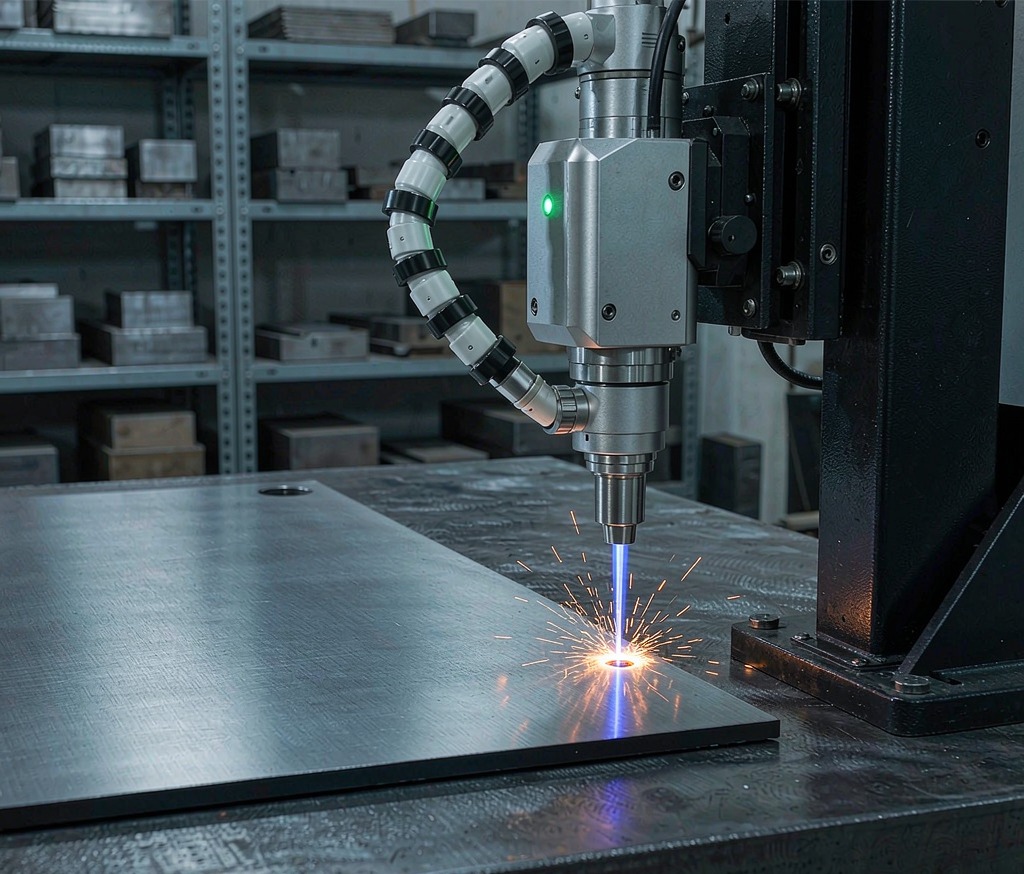
Overview of Metal Cutting Processes
Metal cutting splits into thermal, abrasive, and mechanical methods. Thermal processes like laser and plasma melt or blow away metal. Abrasive methods like waterjet erode it with a high-pressure slurry. Mechanical methods such as shearing and punching use force. None is universally best; the right choice depends on what you are cutting and why. A single fabricated part often uses more than one method—laser for the outline, punch for repeat features, plasma for a thick mounting tab—so the supplier’s ability to route each feature to the best process matters as much as any single machine on the floor.
Fiber and CO2 Laser Cutting
Laser cutting is the default for thin to medium sheet because it is fast, precise, and leaves a clean edge. A Fiber Laser Cutting system excels on reflective metals like stainless, aluminum, and copper, while a Co2 Laser Cutting source remains effective on thicker carbon steel and non-metals. Both give narrow kerf and tight tolerances, which is why lasers dominate enclosure panels, brackets, and decorative work.
For tubes and profiles, Tube Laser Cutting carries the same precision into round and rectangular stock, cutting holes and miters that would otherwise need secondary operations. When a beveled edge is needed for welding, Bevel Laser Cutting prepares the joint in a single pass.
Plasma Cutting
Plasma Cutting uses a constricted arc to melt through metal and is the workhorse for thicker plate where laser speed or cost becomes unfavorable. It is less precise than a laser on thin sheet but unbeatable on heavy structural steel. Expect a wider kerf and a rougher edge that may need grinding before finishing—an acceptable trade when the part is large and tolerances are generous. Modern CNC plasma tables with height control have narrowed the gap with laser on mid-thickness steel, so for many structural and heavy-fabrication jobs plasma is the most economical choice by a clear margin.
Waterjet and Mechanical Cutting
Waterjet cutting adds no heat, so there is no heat-affected zone and no distortion—valuable for tight-tolerance parts in heat-sensitive alloys. It cuts almost any material but is slower and pricier per inch than laser or plasma for thin sheet.
Mechanical methods remain common. Shearing slices straight lines in sheet quickly and cheaply, and CNC punching not only cuts but forms louvers, tabs, and embosses in one hit. For many enclosures and panels, punching plus a few laser cutouts is the most economical route.
Choosing by Material and Thickness
As a rule of thumb: thin reflective sheet favors fiber laser; thick carbon plate favors plasma; heat-sensitive or very hard materials favor waterjet; straight-line high volume favors shear or punch. The decision is rarely absolute—it is about where your part sits on the thickness, tolerance, and budget curve.
Cutting is only step one. Our Sheet Metal Fabrication and Steel Fabrication Services guides show how cutting feeds into bending and welding, and the Laser Cutting Services overview explains edge quality in more depth. For tubular work, see our Tube Laser Cutting article.
Tolerances, Edge Quality, and Cost
Laser cutting typically holds the tightest tolerances and cleanest edges, reducing deburring and finishing. Plasma is cheaper per foot on thick plate but needs more cleanup. Waterjet avoids distortion but costs more time. Punching wins on repetitive features. Ask for cut-edge classification (e.g., ISO 9013) in the quote so you compare like for like.
Edge quality also drives downstream cost. A dross-free laser edge may need only a light Deburring pass before coating, while a rough plasma edge can require grinding across every cut. On a high-volume part, that difference compounds into real labor. Specify the edge class you actually need rather than the best available—over-specifying edge quality on a hidden structural part simply adds cost you will never see.
Frequently Asked Questions
Which cutting method is cheapest?
For straight lines in volume, shearing or punching. For complex thin-sheet profiles, fiber laser. For thick plate, plasma.
Does laser cutting work on aluminum and copper?
Yes, with a fiber laser. CO2 lasers struggle with reflective metals, which is why fiber is now standard for fabrication shops.
What is a heat-affected zone and why care?
It is the band of metal altered by cutting heat. Plasma and some laser cuts create one; waterjet does not. It matters for welding and hardened parts.
Can one shop do all methods?
The best fabrication partners run laser, plasma, punch, and shear in-house so they pick the process per feature rather than forcing everything through one machine.
How tight are laser cut tolerances?
Typically ±0.1 mm to ±0.2 mm on thin sheet, depending on material and part size. Tighter calls for secondary machining.
When should I specify waterjet?
When heat distortion is unacceptable, the material is very hard or thick, or the geometry is a single complex contour cut from plate.
Ready to Start Your Project?
Send us your drawings and requirements. Our engineering team will review manufacturability and return a competitive quote with realistic lead time—usually within 1–2 business days.

