
Monel 400 machining is the art of cutting a nickel-copper alloy that is famously tough, gummy, and corrosion resistant—especially in seawater. With about two-thirds nickel and the balance copper, Monel 400 resists chloride attack where even 316 stainless eventually fails, which is why it anchors marine, offshore, and chemical hardware. But that same toughness makes it prone to built-up edge and work hardening at the cutting zone. This guide explains how to machine it cleanly and predictably.
Why Monel 400 Machines Differently
Monel 400 has high tensile strength and a tendency to seize on the tool, forming a built-up edge that ruins surface finish and accelerates wear. It also work-hardens if the tool merely rubs. The machining strategy therefore mirrors other gummy nickel alloys: sharp tools, positive geometry, generous feeds, and relentless coolant. Our Monel machining services page covers the broader family, while this focuses on the 400 grade most common in seawater service.
Tooling and Parameter Strategy
Use polished, sharp uncoated or AlTiN-coated carbide with high positive rake and honed edges to shear rather than plow. Keep cutting speeds moderate and feeds firm so each pass takes a real bite; light “finishing” passes that rub only harden the skin. Through-spindle flood coolant controls heat and evacuates chips. Both CNC turning and CNC milling handle Monel 400 well on rigid machines, and 5-axis CNC machining reduces setups on valve and pump bodies.
Work-Hardening and Surface Finish
Because Monel 400 strain-hardens, the most common defect is a glassy, work-hardened surface that then fights the next tool. The remedy is consistent depth of cut and avoiding tool dwell. Where tight tolerances are needed after forming, a controlled heat treatment relieves stress. Our material consulting team validates grade and temper up front, and investment casting can pre-shape near-net forms to cut machining time on large parts.
Corrosion Resistance and Applications
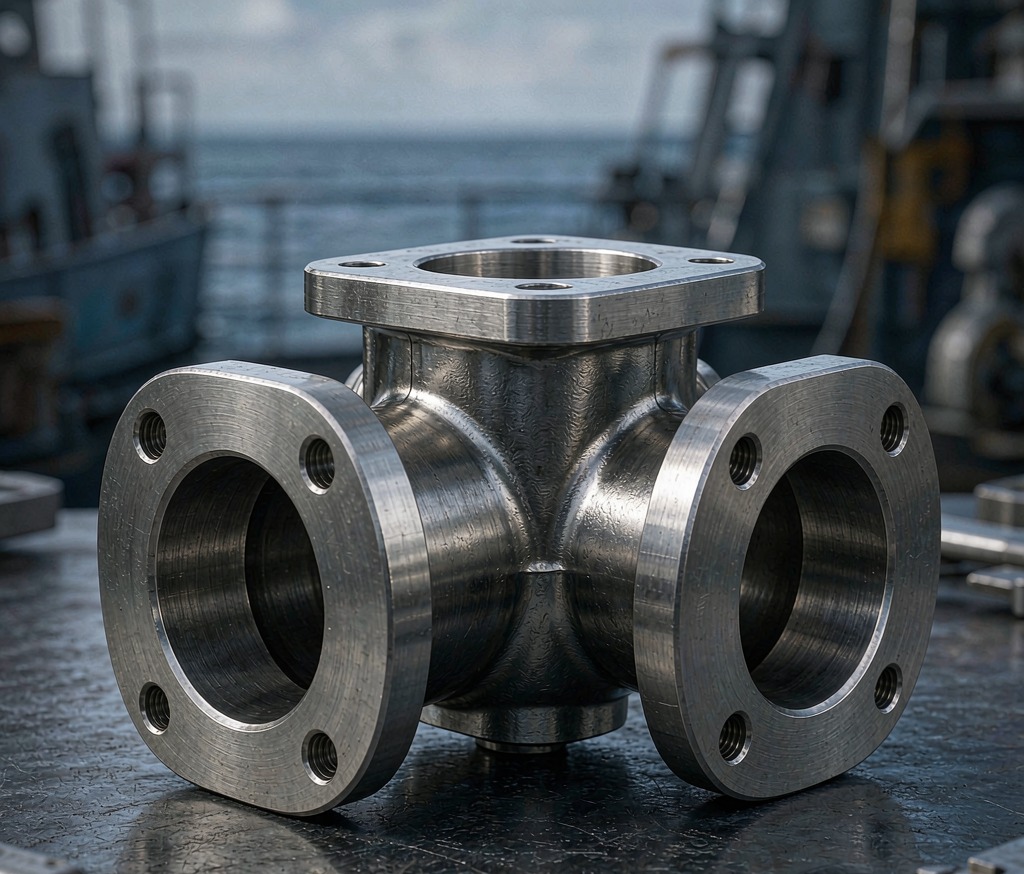
Monel 400 shrugs off seawater, brackish water, and many acids and alkalis, which puts it in propeller shafts, pump impellers, valve trim, and offshore fasteners. Its use in sour and marine environments is well documented—see our marine metal parts guide. For valve-specific geometries, our custom metal valve bodies reference shows typical Monel executions, and the Hastelloy machining guide covers an alternative where higher temperature resistance is required.
Prototyping, inspection, and supply strategy. Monel 400 components usually sit in systems where failure is expensive—subsea, offshore, and chemical service—so inspection and traceability matter as much as the cut itself. We pair machining with first-article checks, surface verification, and material certification so a part arrives ready for weld-up or assembly. For development programs our OEM services support low-volume runs that prove the design before scale-up, and our marine metal parts experience informs allowances for corrosion margins and galvanic isolation. Specifying Monel 400 is rarely about the cheapest quote; it is about a component that still works after decades in seawater.
On cost, Monel 400 is neither the cheapest nor the most expensive corrosion alloy, but its total cost of ownership in seawater is often the lowest because replacements are rare. Buyers should budget for longer cycle times and premium stock, then weigh that against the decades of service life. Our material consulting group can benchmark Monel 400 against duplex stainless or Hastelloy for a specific duty, so the specification is justified by data rather than habit. That comparison step is especially valuable on large or safety-critical orders where a small material saving upfront can be dwarfed by a single in-service failure.
Frequently Asked Questions
Why is Monel 400 hard to machine?
It is gummy and work-hardens; without sharp tools and firm feeds it builds edge and a hardened skin.
What coolant approach works best?
High-pressure through-spindle flood coolant to control heat and clear chips on a tough, seizing alloy.
Where is Monel 400 used?
Seawater and offshore hardware, pump and valve trim, and chemical process parts needing chloride resistance.
Is Monel 400 better than 316 stainless?
In seawater and many acids, yes for corrosion; it is heavier and more expensive but far more durable.
Ready to Start Your Project?
Get a build-ready quote on your custom metal parts within 24 hours. Share your drawing and our engineers will respond with process, lead time, and pricing.

