
In pharmaceutical and biotech lines, a metal part is only as good as its cleanability and its paper trail. Pharmaceutical metal parts must shed residue, survive SIP/CIP, and carry full material traceability. That raises the bar above a normal stainless steel machining job. This guide covers what to specify so your parts pass audit the first time and keep passing it for years.
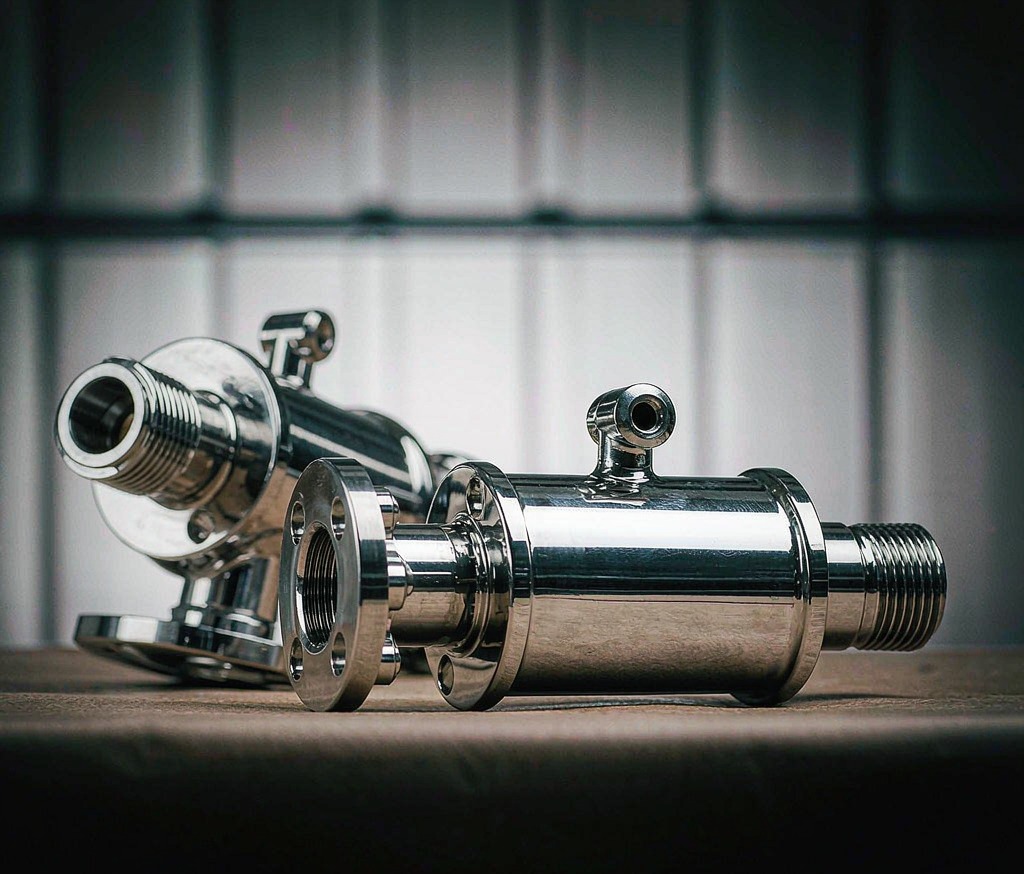
Why Pharma Is Different
Every surface that touches product must be smooth, crevice-free, and documentable. Dead legs, rough welds, and unidentified alloy are audit findings. Food-grade programs use the same finish rules, so the capability already exists; pharma just adds validation, and the validation is what separates a supplier you can defend from one you have to explain.
Materials Buyers Use
316L is the baseline for corrosion and weldability; 304 sees non-contact frames. CNC milling from certified bar with heat numbers protects the chain of custody. Medical-device shops extend this to passivation and DOC control, so the same cell that makes a surgical housing can make a valve body without a new qualification.
Machining and Finish
We turn and mill to Ra ≤ 0.8 µm on contact faces, grind seats flat, and deburr every edge so no pocket traps product. Electropolish-grade finishes are available where the spec calls for it. Passivation restores the chromium-rich layer after cutting, which is what keeps the surface passive in clean-in-place chemistry.
Traceability You Can Hand an Auditor
Each lot ships with mill certs, PMI, and a CMM report tied to the heat number. We keep records for the regulated shelf life your QA team requires, and we can supply a material test report in the format your site master file expects. When the inspector asks where the bar came from, the answer is one lookup, not a scramble.
Design Tips to Save Cost
Mark contact versus non-contact surfaces on the drawing so we finish only what needs it; polishing a non-wetted face is pure cost. Avoid internal threads and blind pockets where product hides, and spec a realistic Ra instead of the mirror finish CAD defaults to. Device programs use the same rule, and it is the fastest way to cut a pharma quote without cutting a corner.
Quality Control and Inspection
We verify Ra by profilometer, confirm passivation by ASTM A967, and bundle the CMM with the heat cert per lot. Welds get dye check or UT where the joint is structural, and we keep a first-article record so a future reorder is identical to the approved one. Documentation is generated with the part, not chased after it ships.
Lead Time and How to Request a Quote
Send the model, the wetted-surface callouts, the Ra values, and the regulation you answer to. Prototypes run in days from certified bar; validation paperwork adds a step we will itemize. We quote with the finish and the certs called out, and a short call on the audit standard usually prevents a rework of the documentation package later.
Passing Audit the First Time
In pharma, the part and its paperwork are one deliverable, and the paperwork is where most suppliers fail. We generate the documentation with the part, not after it ships: mill certs, PMI, and a CMM report tied to the heat number go out per lot, and we keep records for the regulated shelf life your QA team requires. Food-grade programs use the same finish rules, so the capability already exists; pharma just adds validation. The biggest design lever is marking contact versus non-contact surfaces on the drawing so we finish only what needs it—polishing a non-wetted face is pure cost. Avoid internal threads and blind pockets where product hides, and specify a realistic Ra instead of the mirror finish CAD defaults to, because device programs prove that one rule is the fastest way to cut a quote without cutting a corner. For wetted parts we recommend 316L and passivation to ASTM A967 so the surface stays passive in clean-in-place chemistry, and we offer electropolish to Ra 0.4 µm where the spec calls for it. When the model arrives with wetted-surface callouts, Ra values, and the regulation you answer to, the quote is back with finish and certs called out, and a short call on the audit standard prevents a rework of the documentation package later.
Welds get dye check or UT where structural, and a first-article record keeps future reorders identical to the approved part, so your site master file stays consistent year over year. Documentation generated with the part is what lets an inspector sign off the same day instead of chasing records after shipment. We also keep the heat number visible on every cert and tie the CMM report to it, so a single lookup answers any auditor question and turns a stressful requalification into a routine checkbox.
Frequently Asked Questions
Which grade do you recommend?
316L for wetted parts; 304 only for non-contact frames.
Can you electropolish?
Yes, to Ra ≤ 0.4 µm on request for cleanability.
Do you provide passivation certs?
Yes, per ASTM A967 with the lot’s heat number.
How do you avoid dead legs?
DFM review flags pockets and calls out full-penetration welds.
Is documentation audit-ready?
Mill cert, PMI, and CMM are bundled per lot on request.
Ready to Start Your Project?
Get a build-ready quote on your custom metal parts within 24 hours. Share your drawing and our engineers will respond with process, lead time, and pricing.

