
Precision metal stamping forms flat sheet metal into finished parts at high speed using hardened tooling—brackets, terminals, clips, shields, and connectors that appear in everything from cars to circuit boards. When volumes are high and tolerances are tight, stamping is usually the lowest-cost path to identical parts. This guide explains progressive dies, the materials and tolerances involved, and how to decide whether stamping fits your program.

What Precision Stamping Is
Stamping uses a press and die to cut, bend, or form sheet metal in a single stroke. “Precision” means the tooling and process hold tight, repeatable dimensions across very large runs. A shop combining CNC punching for prototypes with press stamping for production can support you from sample to scale.
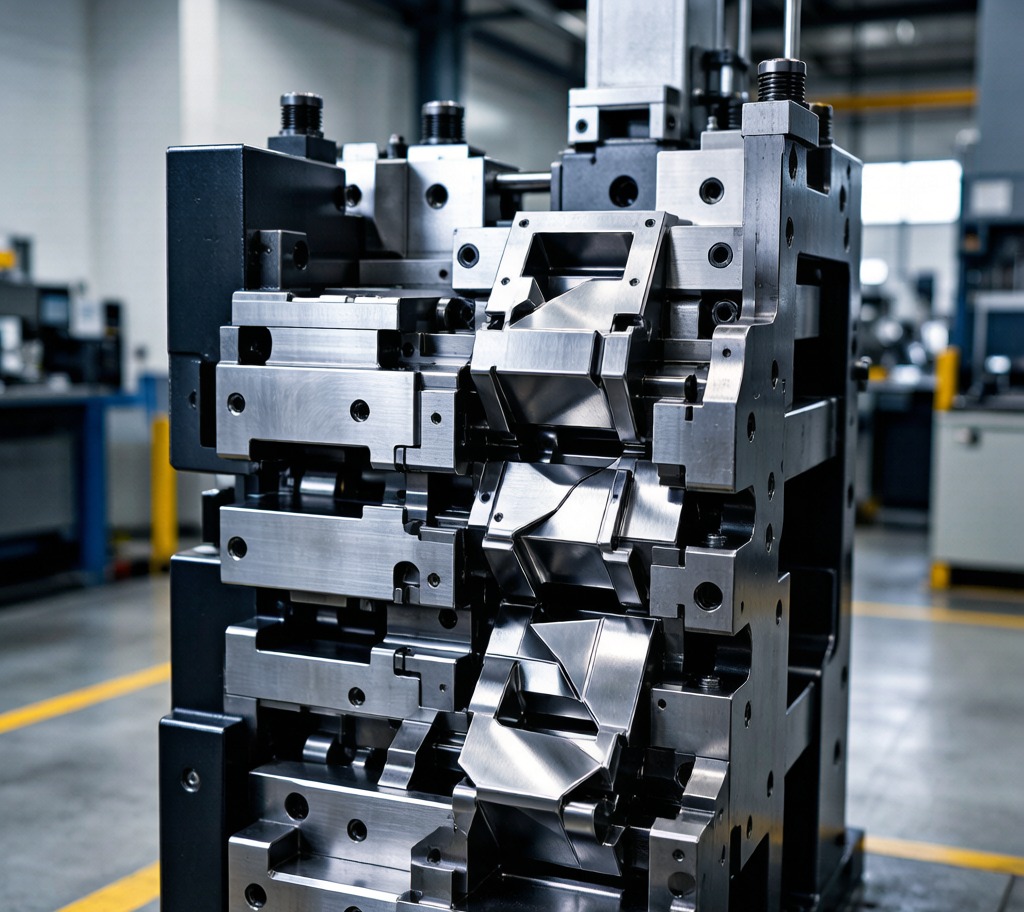
Progressive vs. Compound Dies
A progressive die carries the strip through several stations—pierce, form, bend, cut—so a finished part emerges every stroke. It is the standard for high volume because labor and handling drop to near zero. A compound die performs multiple operations in one station, suiting simpler parts and shorter runs. Both rely on accurate tooling made in-house for control. For cutting the blank before forming, sheet metal laser cutting is a flexible alternative at lower volumes.
Materials
Low-carbon steel, stainless, aluminum, and copper alloys are all stampable. Material choice drives springback, tool wear, and finish. CNC bending of pre-stamped blanks handles parts that need both formed and bent features. For thicker plate, plasma cutting may precede forming where laser access is limited.
Tolerances and Repeatability
Well-built progressive tooling holds dimensions to a few thousandths of an inch across millions of strokes, with SPC confirming stability. Springback and material variation are designed out during die tuning. The consistency mindset is the same as in our sheet metal fabrication guide, but stamped volume multiplies the importance of first-article control.
Secondary Operations
Stamped parts are often finished and assembled after the press. Powder coating and galvanizing add corrosion protection, while tapping, riveting, or welding build sub-assemblies. Keeping these steps in-house shortens lead time and keeps quality under one system—an advantage also emphasized in our metal stamping services overview.
When to Choose Stamping
Stamping wins when annual volume is high enough to amortize tooling and when the part is flat or lightly formed. For low volumes or complex 3D shapes, laser cutting and bending may be cheaper despite higher per-part cost. Our steel fabrication services guide helps compare the routes.
How to Request a Quote
Send the drawing, material, thickness, annual volume, and finish. Note critical dimensions and any forming direction constraints. A sample or existing die information speeds tooling design. Clear volume forecasts let the supplier recommend progressive versus compound tooling.
Tooling Life and Maintenance
A progressive die is a long-term asset, and its life decides the true cost per part. Tool steel grade, coating, and maintenance interval set how many strokes a die delivers before resharpening; well-maintained tooling can produce millions of parts. Wear shows first at pierce and form edges, where burrs or dimension drift appear, so scheduled inspection and predictive maintenance keep the process in control. A supplier that builds and stores its own tooling can resharpen and modify it quickly, avoiding the long lead times of outside die shops. Designing parts with reasonable radii and draft reduces tool stress and extends life further. For programs with changing volumes, knowing the die is reusable protects you from re-tooling charges on reorders. The discipline of tracking tool wear alongside SPC on critical features is what lets stamping deliver identical parts years into a program—a capability our metal stamping services team treats as standard, not optional, for automotive and electronics customers alike.
Stamping economics reward accurate volume planning. Tooling is a fixed cost spread across the run, so a realistic annual forecast lets the supplier size the die and recommend compound versus progressive correctly. Underestimating volume leaves money on the table through a more expensive process; overestimating ties up tooling budget on capacity you never use. Reorders from a maintained die are fast and cheap, so programs with steady repeat business benefit most. Build the reorder cadence into the contract with agreed pricing tiers, and keep the die in the supplier’s storage so a new release never waits on tooling rebuild. This continuity is what makes stamping the backbone of high-volume metal component supply.
Good stamping starts with stamping-friendly design. Uniform wall thickness, generous bend radii, and features that nest efficiently on the strip reduce scrap and tool stress. Holes should sit clear of bends and edges to avoid distortion, and dimensions that do not affect function should be left at commercial tolerance. A short DFM review before the die is cut prevents the most expensive class of problem—rework of hardened tooling—and usually shortens the path to a capable, repeatable process.
Frequently Asked Questions
Is stamping only for huge volumes?
Compound dies make stamping viable at moderate volumes; progressive dies pay off once annual quantity justifies the tool.
What tolerances can stamping hold?
Precision progressive tooling commonly holds a few thousandths of an inch, verified by SPC on critical features.
Can stamped parts be finished in-house?
Yes—coating, plating, tapping, and welding are typically integrated to avoid outside handoffs.
How do I protect my design?
An NDA plus controlled tooling storage keeps proprietary part and die geometry confidential.
Ready to Start Your Project?
Get a build-ready quote on your custom metal parts within 24 hours. Share your drawing and our engineers will respond with process, lead time, and pricing.

