
Prototype machining services turn a CAD file into an accurate, functional metal part in days — not weeks. For engineers validating fit, function, and manufacturability, machined prototypes are the fastest way to hold the real geometry in your hand and test it under real conditions. This guide explains when to machine a prototype, how it compares to 3D printing, and what to specify so the first part is the right part, saving iterations and protecting your development schedule.

What Prototype Machining Is
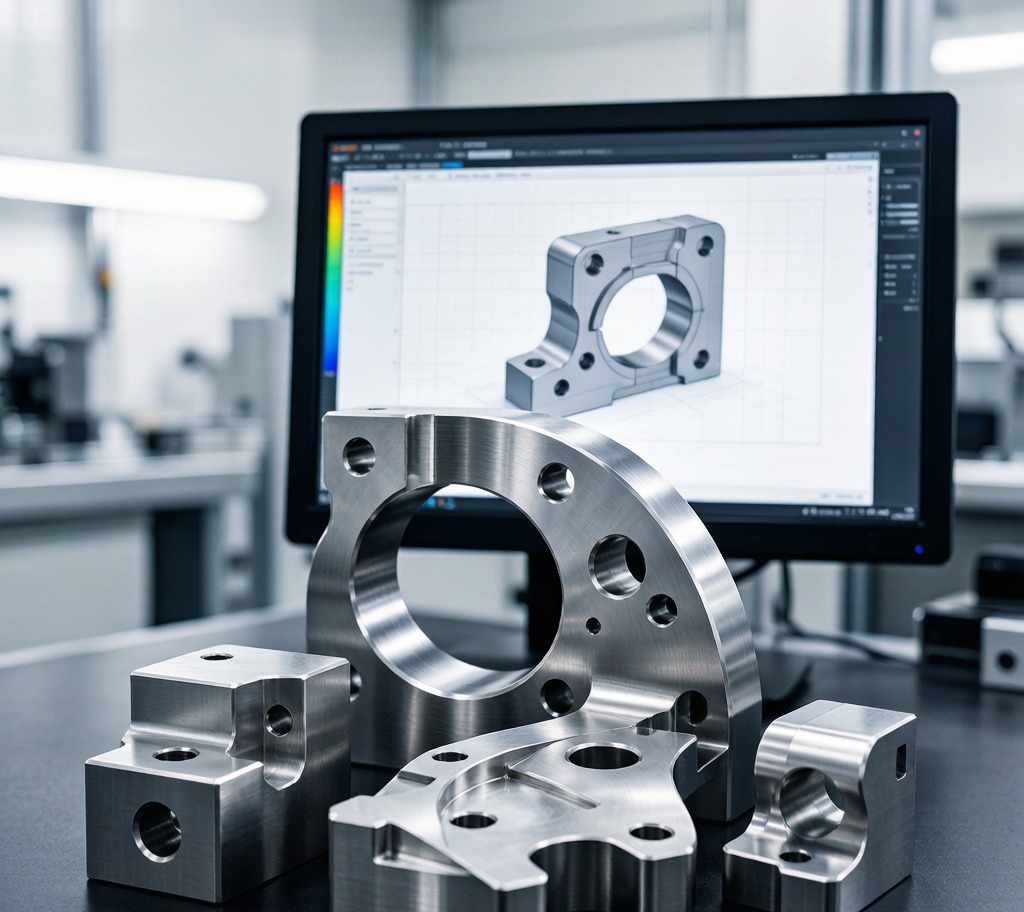
Prototype machining uses CNC milling and turning to cut a part from solid stock to your model’s exact dimensions. Unlike 3D printing, it produces isotropic, full-density metal with real material properties, so test results transfer directly to production. It is the right choice when the prototype must behave like the final part, not just look like it, and when threads, seals, and tight fits must be represented faithfully.
Machined prototypes also let you test the actual production alloy, which matters for corrosion, strength, and thermal behavior. A part that passes in a printed stand-in alloy can fail in production material; machining removes that ambiguity. For any part where material properties are part of the validation, machining is the honest choice.
CNC Machining vs 3D Printing for Prototypes
Rapid prototyping via DMLS printing excels at impossible geometries and no-tooling speed, but printed metal has different microstructure and surface finish. Machined prototypes win on tolerance, surface quality, and material fidelity. Use printing for complex lattices and organic shapes; use machining when fit, threads, and tight tolerances matter, or when the prototype must survive real loads.
In practice, mature programs use both. Print a conceptual or ergonomic model early to check form, then machine a functional prototype in production material to validate performance. Each method answers different questions, and sequencing them correctly is usually faster and cheaper than forcing one tool to do everything.
Materials and Alloys for Prototypes
You can prototype in the exact production alloy — 6061 or 7075 aluminum, 304 or 316 stainless, brass, or steel — because turning and milling handle them all. Machined aluminum prototypes are light, fast, and inexpensive, making them the default for most enclosures and brackets. Matching the prototype material to production removes a variable from your validation and avoids late surprises when you scale.
For higher-performance needs, titanium and specialty alloys can also be machined for prototypes, though cycle times and tooling cost rise. The point is freedom: with CNC you are not limited to what prints well, and you can even prototype near-final surface treatments to confirm both function and appearance before committing tooling.
Tolerances and Lead Time
Machined prototypes routinely hold ±0.05 mm or tighter, with 5-axis CNC enabling complex features in one setup. Lead time is typically 3–7 days from a clean CAD file. Provide a STEP model and a drawing; the cleaner the input, the faster and more accurate the output. DFM feedback upfront prevents features that are hard or impossible to machine and avoids a costly second iteration.
Lead time is also a function of finish. A bare machined part ships fastest; add anodizing, plating, or bead blasting and you add days. Decide early which finishes are needed for the test — if a raw part validates fit, skip the cosmetic finish on the prototype and save time, then apply it on the production version.
Finishing Prototypes
Prototypes often need the same finish as production to test form and function — anodizing for corrosion and appearance, deburring for safe handling, bead blasting for a uniform look. A finished prototype also photographs better for stakeholder reviews and customer demos, which helps move decisions along and can shorten the path to budget approval.
Finishing also reveals issues a raw part hides. A coating might expose a sharp edge, a thin wall, or a tolerance that was fine unmachined but problematic once built up. Prototyping with finish is therefore a more complete validation, catching problems before they reach a production line where they are far more expensive to fix.
From Prototype to Production
A well-run prototype engagement feeds directly into production. Keep the same drawings, inspection plan, and supplier so the jump from ten pieces to ten thousand is a volume change, not a redesign. Discuss quantity breaks early so you understand the cost curve before you commit, and confirm the process scales on the same equipment you validated against.
Frequently Asked Questions
How fast can I get a machined prototype?
With a clean CAD file, most machined metal prototypes ship in 3–7 days. The bottleneck is usually drawing clarity and finish requirements, not machine capacity.
Should my prototype use the production material?
Whenever possible, yes. Machining lets you prototype in the exact alloy, so test results reflect real-world behavior and there are no material surprises at production.
Is CNC prototyping better than 3D printing?
For tolerances, threads, and material fidelity, machining is better. For complex organic geometry and fastest no-tooling turnaround, printing wins. Many programs use both at different stages.
What file format do I need to send?
STEP or IGES for the 3D model plus a PDF drawing with critical dimensions and tolerances. A simplified version for cost discussion helps suppliers quote faster.
Can prototypes be finished like production parts?
Yes — anodizing, plating, powder coating, and deburring are all available on prototypes so you can validate both function and appearance.
How do I move from prototype to production volume?
Use the same supplier and drawings, request quantity-break pricing, and confirm the process scales — CNC machining services handle both prototype and production on the same equipment.
Ready to Start Your Project?
Get a build-ready quote on your custom metal parts within 24 hours. Share your drawing and our engineers will respond with process, lead time, and pricing.

