
Ring Rolling Services: Seamless, Strong Rings
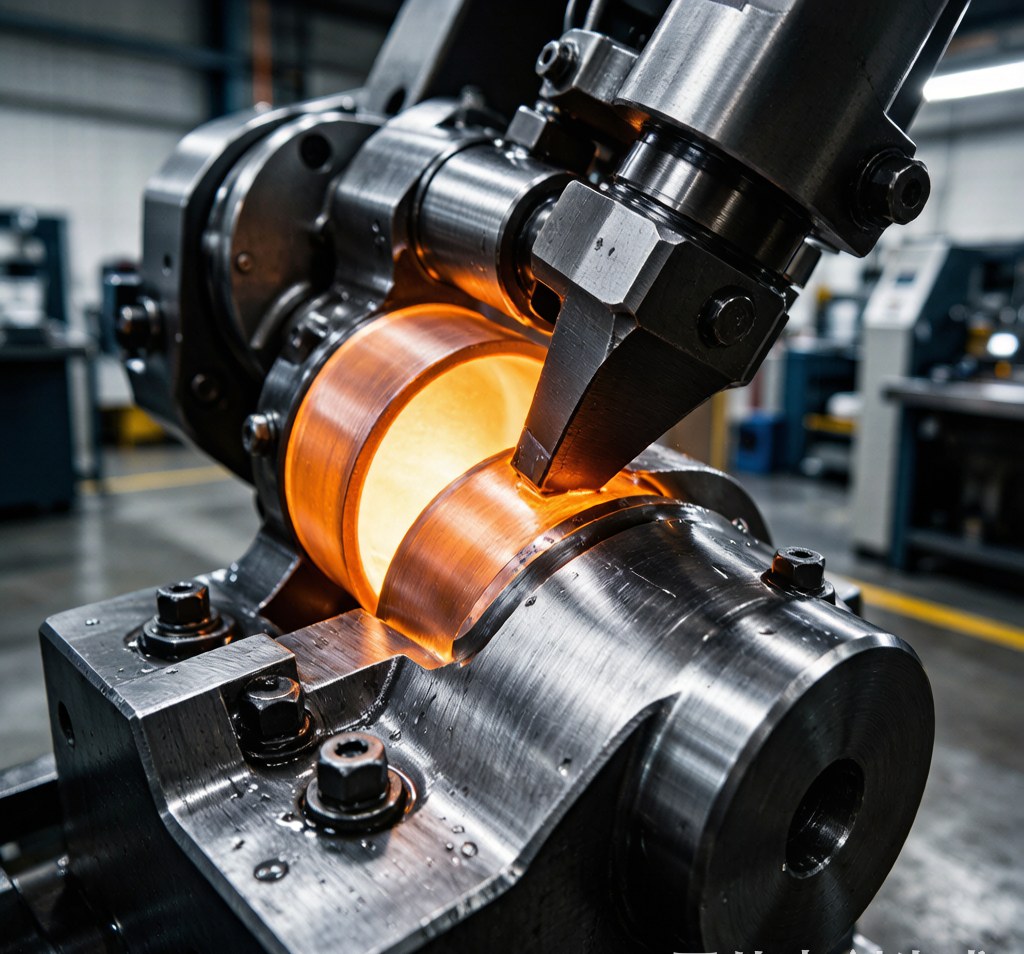
Ring rolling forms seamless rings by rotating a thick blank between a driven roll and a mandrel, thinning the wall and expanding the diameter to a precise, grain-flowed ring. For bearings, flanges, and gears, it’s the efficient way to make strong, round, near-net shapes. This guide covers how it works, when to choose it, the materials, and how to spec your job.

How Ring Rolling Works
A heated, pierced blank is rolled between the main roll and mandrel; the wall thins and the ring grows to size, with grain flowing around the circumference for strength. We follow with heat treatment and CNC milling for faces and bores.
Ring Rolling vs. Solid Forging
Versus a solid disc forged and bored out, ring rolling wastes far less material and gives a continuous circumferential grain—ideal for round, loaded parts. See how it compares with open-die forging for one-offs.
Materials We Ring-Roll
- Carbon and alloy steel—bearings and flanges.
- Stainless steel—corrosion service.
- Titanium and superalloys—aerospace rings.
Industries That Rely on Ring Rolling
Bearings, aerospace engines, energy turbines, and pipe flanges all use rolled rings for strength and economy.
How to Spec Your Ring Rolling Job
- State OD, ID, and wall (or height for flat rings).
- Define the material and grade.
- Set tolerances on diameter and wall.
- Specify heat treatment and hardness.
- Note machined features to follow.
- Share volume for process choice.
FAQ
How precise is the ring?
Tight on diameter and wall; we machine faces after.
Is it seamless?
Yes—no weld seam, continuous grain.
What sizes are possible?
From small bearing races to large flanges.
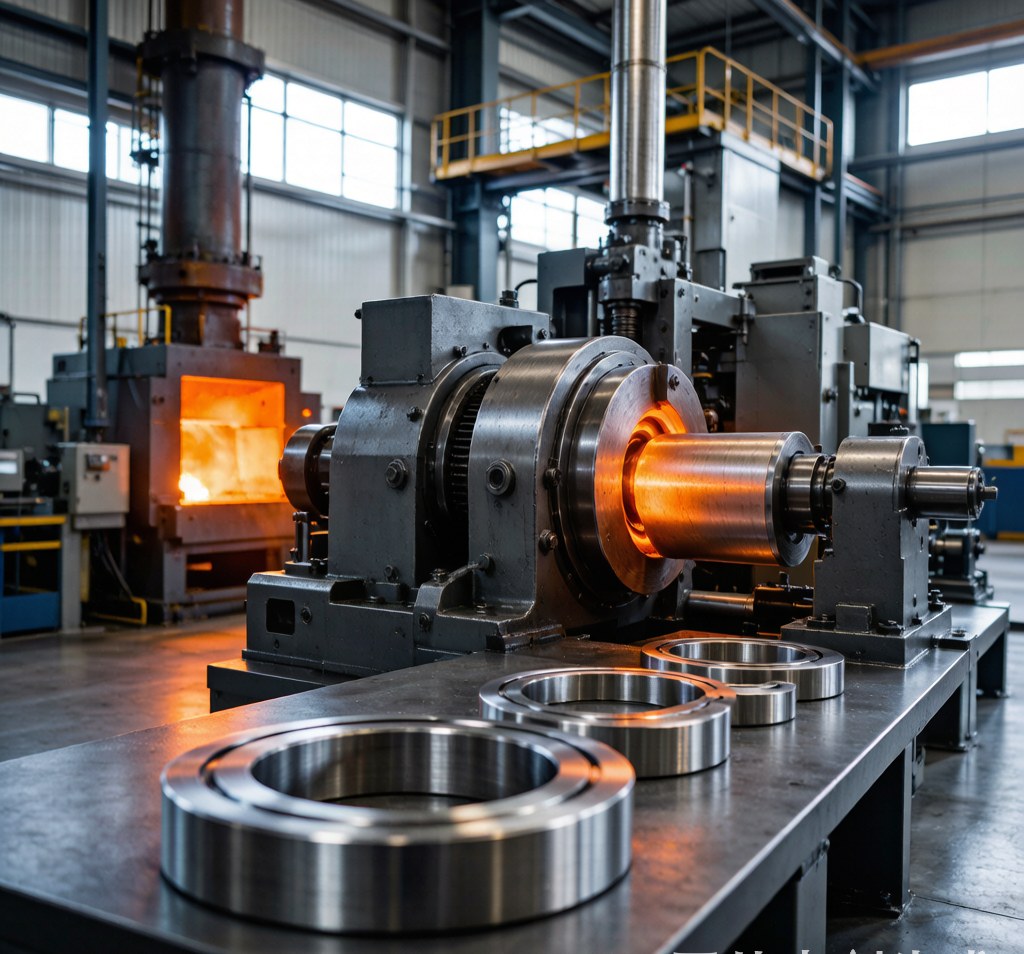
Why Choose Huaxiao for Ring Rolling
Our ring rolling service delivers seamless, grain-flowed rings with integrated machining. Send your drawing for a quote covering the full chain.

