
Swiss screw machining (Swiss-type turning) produces tiny, tight-tolerance cylindrical parts at volume — the method behind surgical pins, connectors, sensor shafts, and miniature fasteners. By supporting the stock right at the cut, a Swiss lathe holds micron tolerances on long, slender parts that a standard lathe would deflect. This guide explains the process, materials, and when Swiss beats conventional turning.
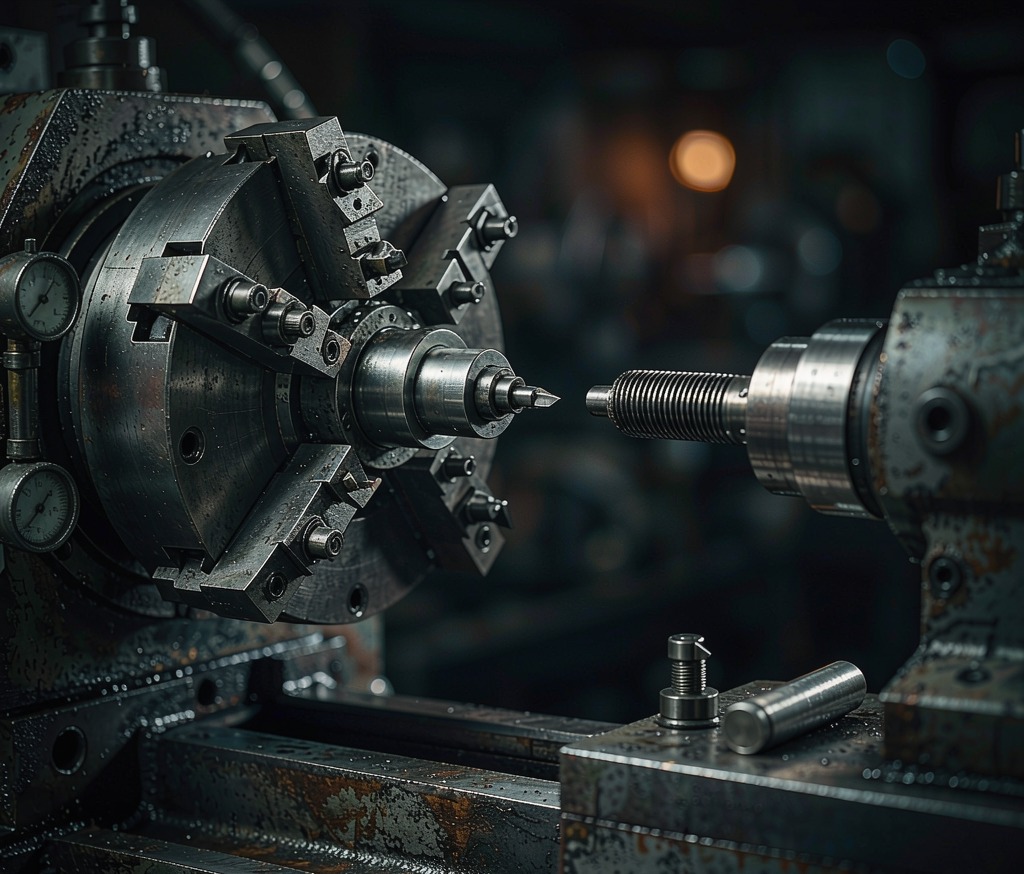
How Swiss Screw Machining Works
A Swiss-type lathe feeds bar stock through a sliding headstock and a guide bushing that supports the material inches from the cutting tool. Because the part is supported at the cut, long, thin features stay straight and round even at small diameters. Swiss turning combines turning, drilling, milling, and threading in one continuous operation, so complex parts leave finished in a single pass rather than moving between machines.
Tolerances and Capability
Swiss screw machining routinely holds ±0.005–0.01 mm on diameter and length, with excellent concentricity and surface finish. For comparison, standard CNC turning is fast and capable but deflects slender parts; Swiss eliminates that deflection. Critical seats can be refined by surface grinding, and stainless parts protected by passivation. Our precision turned parts guide shows typical capability bands.
Materials and Volumes
Swiss machines run brass, stainless, aluminum, titanium, and specialty alloys from bar stock. It shines at high volume of small parts — thousands to millions — where the single-setup cycle and minimal handling beat any alternative. For lower volumes or simpler geometry, conventional CNC milling and turning may be more economical; we help you pick the crossover.
When Swiss Beats Conventional Turning
Choose Swiss screw machining when the part is long relative to its diameter, needs multiple features (holes, flats, threads) in one setup, or must hold micron tolerances at volume. Medical, electronics, and automation suppliers rely on it for consistency across the whole batch. Swiss turning services cover the machine formats and DFM rules that keep cost down.
Frequently Asked Questions
What tolerance can Swiss machining hold?
About ±0.005–0.01 mm on diameter and length, with strong concentricity and finish.
Is Swiss only for tiny parts?
It excels on small, slender parts, but larger Swiss lathes handle diameters up to ~32–38 mm depending on the machine.
What volume justifies Swiss?
Thousands of parts and up; the single-setup cycle and consistency pay off at scale.
Which materials work?
Brass, stainless, aluminum, titanium, and many specialty alloys from bar stock.
Consistency, Inspection, and Volume
Swiss screw machining earns its keep on batch consistency. Because the part is supported at the cut and finished in one setup, the 100,000th piece matches the first, which is why medical, electronics, and automation suppliers rely on it. We verify diameter, length, concentricity, and thread by CMM and thread gauges, with SPC on critical features for high-volume programs. Lead time is typically 5–10 days for prototypes and 2–4 weeks for production runs of thousands to millions. For lower volumes or simpler geometry, conventional CNC turning and CNC milling may be more economical; we will tell you the crossover rather than default to the pricier process. Stainless parts get passivation in-house, and deburring and laser marking are available so the part ships ready to assemble. Send diameter, material, quantity, and critical dimensions; we confirm Swiss versus conventional turning and return a quote with lead time and DFM notes — usually within 24 hours — so you can validate fit before committing to volume.
Choosing a Swiss Supplier
Shortlist a Swiss partner on batch evidence, not brochure claims: CMM and thread-gauge reports, SPC on critical features for high-volume programs, and in-house passivation and deburring so the part ships ready to assemble. Ask for a sample run on a similar micro part so you can judge concentricity and finish before committing to volume. The right shop tells you early when conventional turning would be cheaper for your quantity.
Request a Swiss Quote
Upload your drawing with material, diameter, quantity, and critical dimensions. We will confirm Swiss versus conventional turning and return a quote with lead time within 24 hours.
Ready to Start Your Project?
Get a build-ready quote on your custom metal parts within 24 hours. Share your drawing and our engineers will respond with process, lead time, and pricing.

