
Wire forming services turn raw metal wire into the clips, hooks, brackets, and linkages that hold products together—often invisibly. From seat latches in cars to battery contacts in electronics, custom wire forms are everywhere because they are strong, light, and cheap to produce in volume. This guide explains how wire forming works, which processes and materials to choose, and how to get a quote that reflects real manufacturability.

What Wire Forming Is
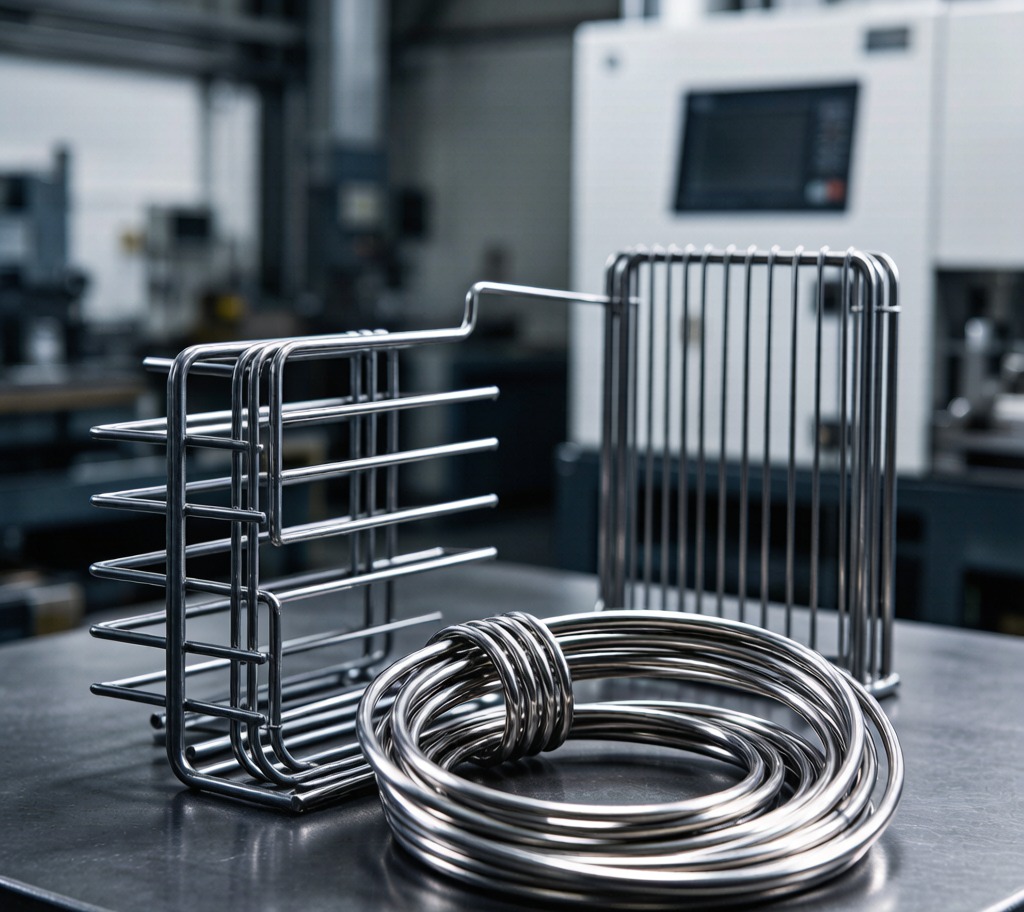
Wire forming bends round or flat wire into a precise two- or three-dimensional shape, typically in a single automated operation. Unlike casting or machining, it adds almost no scrap, which is why it is so cost-effective at scale. A partner with CNC bending and forming cells can also handle the secondary operations that turn a bare form into a finished component.
Processes and Machines
Modern wire forms are made on CNC wire-forming machines that coil, bend, and cut in one pass, handling everything from simple hooks to complex multi-plane shapes. Four-slide and press equipment cover higher-volume or heavier wire. Small precision ends can be turned or threaded on CNC turning lathes for parts that must locate or fasten. The right machine depends on wire diameter, bend complexity, and order quantity.
Materials
Carbon steel is common for structural forms; stainless (302, 304) is chosen where corrosion or hygiene matters; copper and aluminum appear in electrical and lightweight applications. Music-wire tempers give spring-like behavior for clips that must retain tension. Material selection drives both function and finish, and it should be locked before tooling so plating and heat treatment are specified correctly.
Secondary Operations: Welding and Plating
Many wire forms are assembled to other parts. TIG welding and spot welding join forms to sheets or tubes with minimal heat distortion. Corrosion protection and appearance come from zinc plating or powder coating. These steps are best done in-house to avoid handoffs that add lead time and quality risk, a point we also make in our custom metal fasteners guide.
Tolerances and Tooling
Wire forms are held to positional and bend-angle tolerances that depend on springback, which varies by material and wire size. Good suppliers measure the first articles on a CMM and tune the program before release. Tooling for custom forms is modest compared with stamping dies, so prototyping is fast and inexpensive. If your part also needs tubular bends, our tube bending services article explains related forming tolerances.
Applications Across Industries
Wire forms appear in seating systems, cable guides, medical appliance components, battery contacts, and retail displays. Their value is consistency: once the program is set, every part is identical. For bracket-style forms that double as structural supports, see our custom metal brackets guide, which covers similar design thinking for sheet and wire.
How to Request a Quote
Send a drawing with wire diameter, material, finish, and quantity, plus the function the form performs. A sample is ideal. Note any critical locating features and the standard required. Early DFM feedback on bend radii and springback saves tooling revisions later.
Design for Manufacturability in Wire Forms
Wire forms are cheap to produce largely because tooling is minimal, but a few design choices decide whether your part runs cleanly or fights the machine. Generous bend radii reduce springback and tool wear; bends tighter than the material allows crack or require secondary operations. Keeping the form within a single plane, where possible, avoids complex multi-axis tooling and speeds production. Specify the minimum number of critical locating features, and let non-critical dimensions float to commercial tolerance. Chamfered or flattened ends, if needed, should be called out clearly because they change the setup. Early DFM feedback from the forming shop catches these issues before a program is locked, preventing expensive rework and scrap. Because wire forms are often assembled to stamped or machined parts, designing the whole sub-assembly together—rather than each piece in isolation—yields the best total cost and the fewest interfaces to inspect. The same principle guides our CNC bending and spot welding work, where tolerance discipline protects both fit and throughput.
Quality in wire forms is verified at first article and then by in-process checks. Because a single program can run millions of pieces, suppliers use fixtures and gauges matched to functional datums rather than measuring every feature by hand. Critical locating points are checked on CMMs, and springback is tracked so the machine program is corrected before drift becomes scrap. Plating and coating are sampled for thickness and adhesion. A partner that designs its own tooling can also tweak it quickly when a dimension trends, keeping the whole run in tolerance. This statistical mindset is what lets a low-cost form stay consistent across a long production life—exactly the reliability buyers expect from a production supplier.
Frequently Asked Questions
What wire diameters can be formed?
Typical ranges run from roughly 0.3 mm up to about 11 mm depending on machine and material, with flat strip forms also available.
Can wire forms be welded to other parts?
Yes—TIG and spot welding are standard, and in-house welding keeps the assembly under one quality system.
How fast can I get prototypes?
Simple forms are often sampled within days because tooling is minimal compared with progressive dies.
Which finish resists corrosion best?
Zinc plating or powder coating on steel, or stainless with passivation, cover most corrosive environments.
Ready to Start Your Project?
Get a build-ready quote on your custom metal parts within 24 hours. Share your drawing and our engineers will respond with process, lead time, and pricing.

