
Aluminum extrusion services push heated aluminum billets through a die to create long profiles with a fixed cross-section—rails, enclosures, heat-sink fins, and structural frames. Extrusion is the most economical way to make a complex aluminum shape because the die does the heavy forming work once, then repeats indefinitely. This guide walks through alloys, die tolerances, secondary machining, and finishing so you can order custom profiles with confidence.

What Extrusion Is
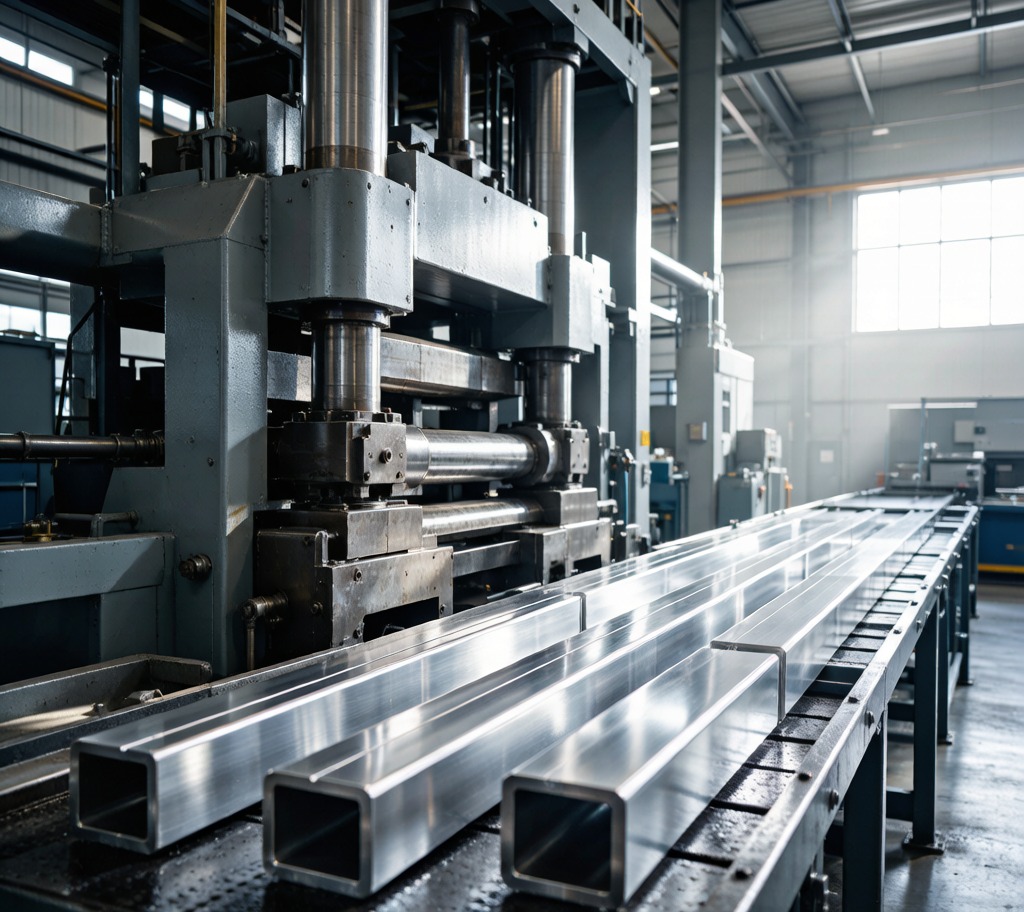
In extrusion, a ram forces softened aluminum through a steel die, producing a continuous profile that is then cooled, straightened, and cut to length. Because the shape is defined by the die rather than by cutting, material waste is minimal and wall thickness can be thin. A full-service partner offering aluminum extrusion plus in-house machining can take you from die to finished part without outside vendors.
Alloys: 6061 vs. 6063
6063, the “architectural” alloy, offers the best surface finish and anodizing response—ideal for visible trim and enclosures. 6061 is stronger and better for structural and load-bearing sections such as frames and brackets. Temper matters too: T5 and T6 heat treatments set strength and machinability. Our aluminum CNC machining guide expands on how temper affects cutting and tolerance.
Die and Tolerances
A custom die is the heart of the job. Die design sets the profile accuracy, and extrusion tolerances are typically quoted as a percentage of dimension—commercial extrusions run around ±0.5%, with precision dies holding tighter. Critical features often need post-extrusion correction on CNC milling centers. For round or tubular profiles, CNC bending can form them after cutting.
Secondary Machining
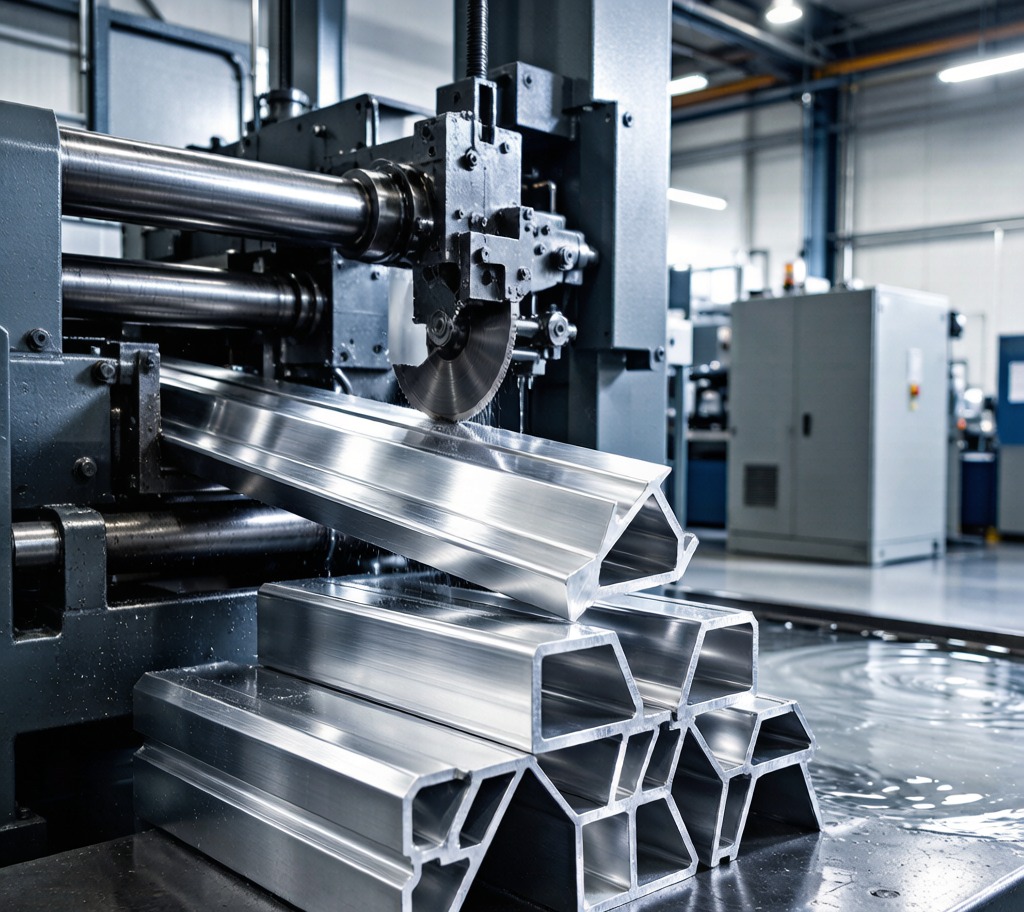
Most profiles need holes, slots, threads, or cut features that extrusion cannot produce. CNC milling and drilling add those precisely, while deburring cleans edges for safe handling and assembly. Keeping machining in the same facility as extrusion avoids shipping and inspection handoffs, which protects both lead time and consistency.
Anodizing and Finish
Extruded aluminum is usually finished for corrosion resistance and looks. Anodizing builds a hard, dyeable oxide layer and is the standard for architectural and electronic parts; powder coating adds durable color for tougher environments. The choice affects both cost and lead time, and our metal surface treatment comparison helps you decide between anodize, coat, and plate.
How to Order Custom Profiles
Start with a dimensioned cross-section drawing (CAD preferred), the alloy and temper, the finish, cut lengths, and quantity. Confirm truly critical dimensions and avoid calling for tolerances tighter than the function needs. Reorders from an existing die ship far faster than first articles, so plan volume accordingly.
Wall Thickness, Balance, and Die Cost
Extrusion quality begins with wall thickness and symmetry. Thin walls extrude slowly and can distort as they cool, so a practical minimum—often around 0.8 to 1.0 mm depending on alloy—keeps the profile stable. Balanced wall sections flow more evenly through the die, reducing warpage and the straightening effort afterward; grossly uneven walls are the most common cause of reject rates. The die itself is the main upfront cost, so designing a profile that several future parts can share, or that needs minimal post-machining, pays back quickly. Features like internal cavities, very tight tolerances, or threads cannot be extruded and must be added by CNC milling afterward—designing those features to be machinable in one operation protects lead time. A small increase in wall thickness or a slight change in fillet radius can move a profile from difficult to robust without affecting function. Our engineers review cross-sections for these factors during quoting, so the die you pay for produces good parts from the first run rather than after several corrections.
Lead time divides cleanly into first article and reorder. The first run carries die design, die manufacture, sampling, and finish setup, so expect several weeks; reorders from a stored die skip most of that and ship in a fraction of the time. Planning annual volume up front lets the supplier hold die and stock strategy that shortens your repeat deliveries. Surface treatment typically adds one to two weeks and fifteen to forty percent to base cost, so specify finish deliberately rather than as an afterthought. If your program needs both extrusion and machined features, combining them with one supplier collapses two lead times into one and removes the inspection handoff between processes—often the difference between hitting a launch date and missing it.
Aluminum extrusion is also one of the more sustainable metal processes. Aluminum is infinitely recyclable, and extrusion scrap is routinely melted back into billet, so material efficiency is high. For programs with environmental targets, specifying recycled-content alloy and anodizing—which needs no heavy solvents—supports greener declarations without compromising performance. The long service life of aluminum parts further offsets their production footprint, making extrusion a pragmatic choice where both cost and sustainability are scored.
Frequently Asked Questions
How long does a custom extrusion take?
Die design and manufacture typically add one to three weeks before samples; reorders from a stored die can ship in three to four weeks.
What is the minimum order quantity?
Stock dies may have no real minimum, while custom profiles usually require a few hundred kilograms to justify tooling.
Can you machine the extrusion after cutting?
Yes—holes, threads, and pockets are added on CNC centers, often in the same building as the press.
Which finish is best for outdoor use?
Anodizing or powder coating both protect outdoors; powder coat offers more color options and thicker films.
Ready to Start Your Project?
Get a build-ready quote on your custom metal parts within 24 hours. Share your drawing and our engineers will respond with process, lead time, and pricing.

