
Surface finish is not cosmetic—on rotating and sealing components it decides how long the part lives. Superfinishing takes a already-machined surface and refines it one last step further, replacing random grinding marks with a uniform, cross-hatched texture that traps lubricant and slashes friction. The payoff is longer bearing life, quieter operation and far less early failure. Huaxiao offers superfinishing as the final stage of a precision chain that can include cylindrical grinding and surface grinding so the part arrives ready to run.

What Superfinishing Is and How It Works
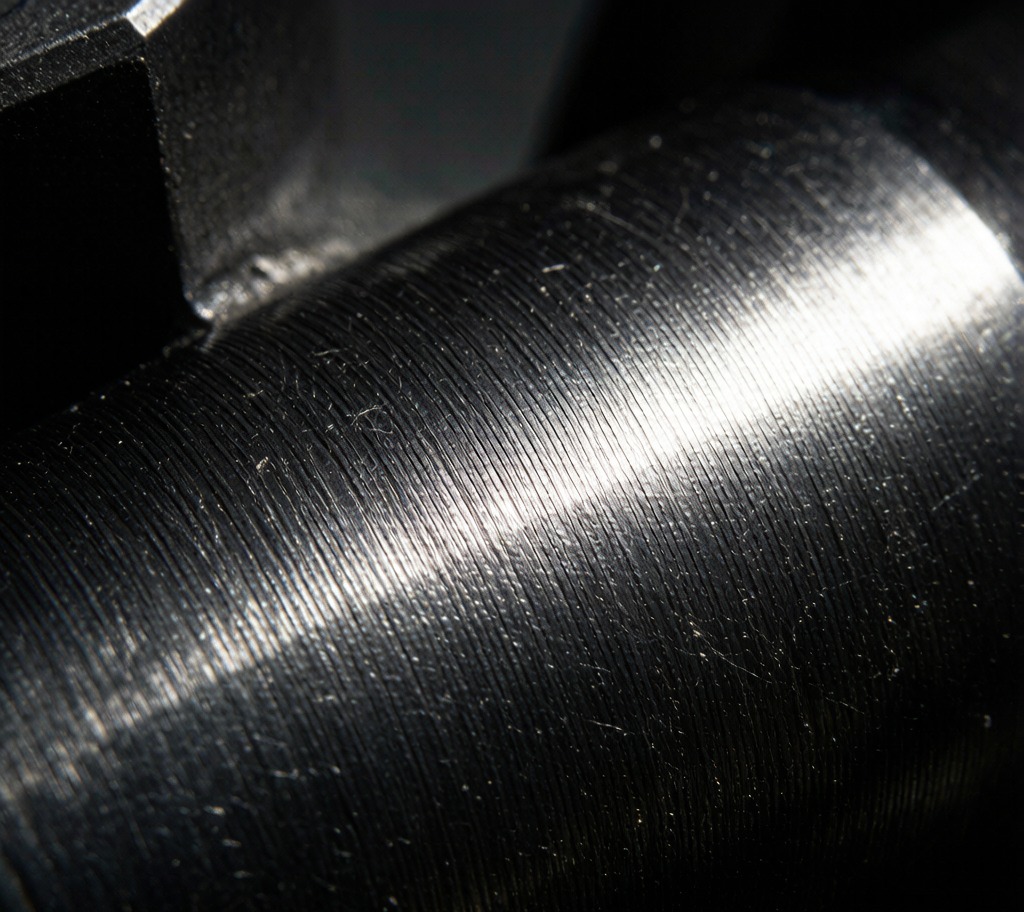
Superfinishing (sometimes called microfinishing) uses a fine abrasive stone pressed against the rotating part with a small, controlled oscillation. The stone removes the tiny peaks left by grinding and lays down a consistent cross-hatch pattern. The stock removed is microscopic—microns—but the change in performance is large. Our centerless grinding line often feeds parts straight into superfinishing for round bars and pins.
Superfinishing vs Honing, Lapping and Polishing
All four improve finish, but they are not interchangeable. Honing corrects geometry (roundness, straightness) inside bores; lapping achieves flatness and extreme accuracy on faces; polishing brightens and reduces roughness without much geometry control; superfinishing specifically refines the texture of a rotating outer surface for tribology. As our lapping services guide notes, the choice depends on which property—geometry, flatness or surface texture—matters most.
Surface Texture and How It Improves Performance
The cross-hatch acts like a reservoir for oil, so the bearing or seal stays lubricated even under start-stop and boundary conditions. Lower roughness also means less friction heat and less micropitting. After superfinishing we can verify the result on our honing and polishing equipment or with profilometry, depending on the spec you supply.
Components That Benefit Most
Crankshafts, camshafts, transmission shafts, bearing races, fuel-injection components and hydraulic rods are the classic candidates. Any part where metal rotates against metal gains from a controlled finish. Many are produced through our precision shaft manufacturing process, where superfinishing is the last value-adding step.
Industries and Applications
Automotive powertrain, aerospace actuators, hydraulic and fluid power, medical implants and high-speed spindles all rely on superfinished surfaces. The process is quietly essential wherever reliability and noise targets are strict. Our honing services team handles the bores while superfinishing handles the journals on the same shaft program. For tight-tolerance shafts this combination is often the difference between a part that passes inspection first time and one that needs rework.
The business case for superfinishing is usually framed in warranty and lifecycle cost rather than unit price. A bearing or shaft that fails early from micropitting costs far more in downtime and recall than the small added step of refining its surface. By laying down a consistent oil-retaining texture, superfinishing reduces the friction and heat that trigger those failures, and it lowers noise and vibration that customers notice. For precision spindles and automotive powertrains, where every decibel and every hour of life is specified, the process is effectively mandatory.
Superfinishing also pairs naturally with grinding in a single flow, which removes handling and queue time between operations and keeps the part clean for the finish step. Because only microns are removed, the diameter you hold on the grinder is essentially the diameter you ship, with the texture—not the size—being what changes. That predictability is why production engineers specify superfinishing as a fixed operation rather than an optional upgrade.
Design and Tolerance Considerations
- Specify the target Ra and Rz, not just “smooth”—the numbers drive stone selection.
- Hold diameter to the pre-finish tolerance; superfinishing removes only microns.
- Avoid hard steps or keyways in the finish zone that the stone cannot follow.
- Tell us the lubricant and duty cycle so we set the cross-hatch angle correctly.
We routinely combine superfinishing with CNC grinding so the part is machined, finished and inspected in one flow, and our polishing services article covers the brighter alternative when appearance also matters.
Customers sometimes ask whether superfinishing can be skipped on non-critical parts, and the honest answer is yes for low-duty applications. The process earns its place where the surface actually sees load, speed or sealing, and we will tell you when a standard grind is enough. That judgment—applying the right finish to the right feature rather than finishing everything to the same spec—is part of how we keep your cost down while protecting the parts that matter.
Frequently Asked Questions
How much material does superfinishing remove?
Only a few microns. It refines texture rather than correcting size, so the part must already be at near-final dimension from grinding.
Is it the same as polishing?
No. Polishing mainly reduces roughness and brightens; superfinishing creates a controlled cross-hatch optimized for lubrication and wear, which is why it is used on bearings.
What finish can I achieve?
Typical results are well below Ra 0.1 µm on suitable materials, with a consistent lay pattern that grinding cannot produce.
Can you superfinish a bore?
Bores are usually honed rather than superfinished; we use honing for internal geometry and superfinishing for external rotating surfaces.
Which materials work best?
Hardened steels, cast iron and many alloys finish well. Very soft or gummy materials are harder and need a different approach.
Does it improve bearing life?
Yes—studies and field data consistently show meaningful gains in fatigue life and reduced noise when the cross-hatch is correctly applied.
Ready to Start Your Project?
Get a build-ready quote on your custom metal parts within 24 hours. Share your drawing and our engineers will respond with process, lead time, and pricing.

