
Gear hobbing gets most of the attention, but when the tooth geometry lives on the inside of a ring, or several gears share one blank, hobbing simply cannot reach it. That is where gear shaping earns its place. A shaping cutter—essentially a gear-shaped hob with reciprocating motion—cuts internal teeth, cluster gears and shoulders that a hob would collide with, holding tight tooth-form accuracy. Huaxiao runs gear shaping alongside CNC milling and CNC turning so the blank and the teeth come from one supplier.

What Gear Shaping Is and When to Use It
A gear shaper uses a cutter shaped like the conjugate gear, stroking it in and out of the workpiece while both rotate in a synchronized roll. Each stroke removes a sliver of material until the full tooth profile is cut. Because the cutter approaches axially rather than tangentially, it can cut teeth that are recessed, internal or blocked by a shoulder. Our Swiss turning line often pre-turns the blank before it reaches the shaper.
Internal, Spur and Cluster Gears Explained
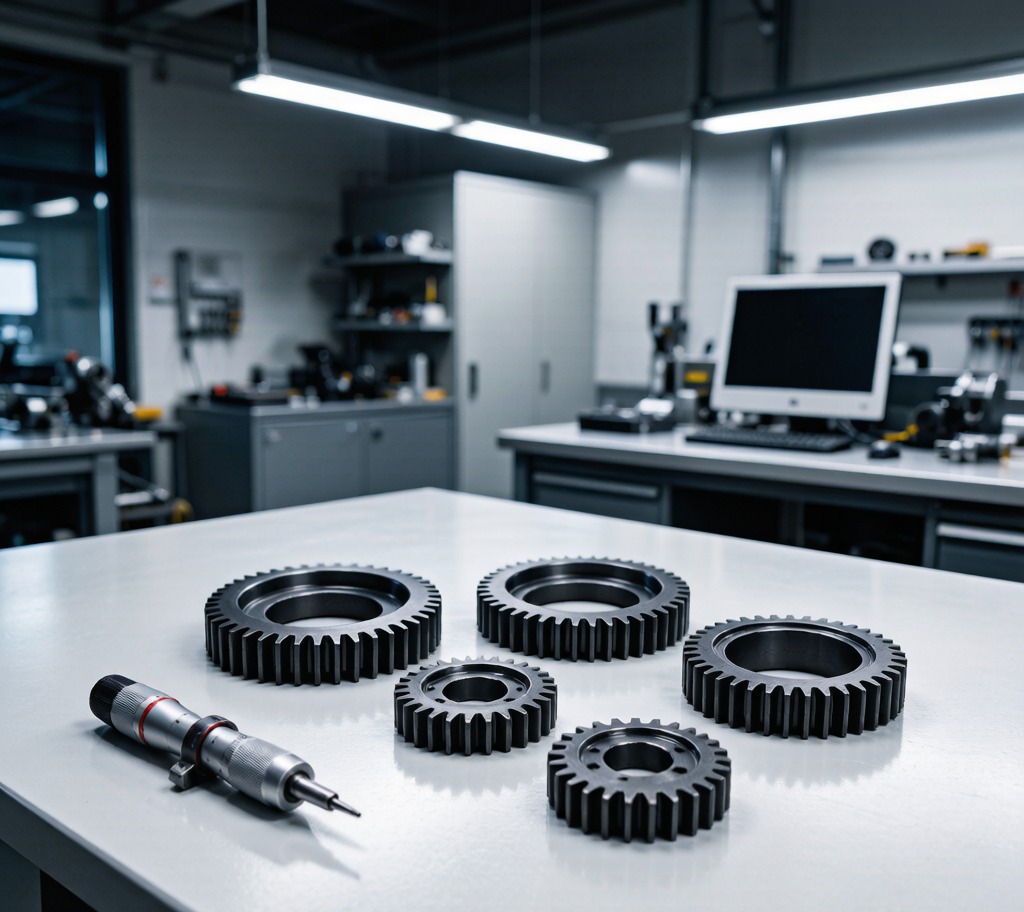
Internal gears—ring gears with teeth on the bore—are the signature shaping job; a hob cannot cut them. Cluster gears (two or more tooth sections on one shaft) and close-shouldered spur gears are also natural fits because the axial cutter clears features a hob would hit. After cutting we finish on our surface grinding line for tight faces and runout.
Gear Shaping vs Gear Hobbing
Hobbing is faster for long runs of external spur and helical gears; shaping is the method of choice for internal, clustered and shouldered geometries that hobbing cannot access. As our gear hobbing services article explains, the two are complementary, and we pick based on the part rather than habit.
Materials and Quality Grades
Steel, stainless, cast iron, brass and engineered plastics all shape well. We hold AGMA and DIN quality classes suitable for power transmission and instrumentation, and can heat-treat after shaping when hardness is required. Many of these parts are produced as custom metal gears built to your drawing and bore specification.
Industries That Rely on Shaped Gears
Automotive transmissions and starters, power tools, pumps and compressors, robotics and office equipment all use internal and cluster gears shaped to fine tolerance. Where a broached feature is also needed, our broaching services can add keyways and splines on the same component.
Getting the blank right is half the battle. Because shaping cuts teeth that are often internal or clustered, the pre-machined blank must hold tight concentricity and a clean shoulder so the cutter can register and roll correctly. We typically turn and face the blank first, then shape, then finish-grind the faces and bore, so the gear arrives as one coordinated part rather than a sequence of disconnected operations. Holding runout between the teeth and the bore is what separates a gear that meshes quietly from one that whines and wears.
Volume and flexibility both favor shaping for the right geometries. While a single external spur gear may be faster to hob, a family of internal and cluster gears is most economical on a shaper that simply swaps cutters and fixtures. For prototype and low-volume runs this avoids the long lead time and cost of a custom hob, letting you validate a gear design quickly before committing to hard tooling, and we often run shaping alongside hobbing so each feature uses the most economical method.
Design and Tolerance Guidance
- Allow clearance above the internal teeth for the cutter to retract—shaping needs axial access.
- Keep tooth count and module within the machine range; we will confirm during quoting.
- Specify the class of accuracy and any runout limits so we set the roll and fixturing.
- Plan heat treatment after shaping if you need hardened teeth; we can coordinate it.
Finished gears are inspected for profile, lead and runout, and our precision machined parts process ensures the bore and shoulders they sit on are equally accurate.
For buyers, the practical takeaway is to design the gear and its neighbors together. If an internal or cluster gear can share a blank with a shoulder or hub you already need, shaping lets you cut them in one setup instead of welding or pinning separate pieces. That consolidation removes joints, reduces part count and improves concentricity—small wins that add up across a transmission or gearbox. We are happy to review your assembly and suggest where shaping can simplify it.
Frequently Asked Questions
Can gear shaping cut internal teeth?
Yes—internal ring gears are the classic shaping job and something hobbing cannot do because the cutter cannot fit inside the bore.
Is shaping slower than hobbing?
Generally yes for simple external gears, which is why we hob those and shape the geometries hobbing cannot reach.
What accuracy can you hold?
We hold standard AGMA and DIN transmission classes; tell us the class and we will select cutter and setup to match.
Which materials work?
Steel, stainless, cast iron, brass and engineering plastics all shape well; hardened parts are shaped then heat-treated or shaped with a suitable cutter.
Can you make cluster gears?
Yes. Shouldered and multi-section cluster gears are a key strength of shaping because the axial cutter clears the steps.
Do you finish and inspect the gears?
We grind faces and check profile, lead and runout, and can heat-treat if your design calls for hardened teeth.
Ready to Start Your Project?
Get a build-ready quote on your custom metal parts within 24 hours. Share your drawing and our engineers will respond with process, lead time, and pricing.

